Showing posts with label telecommuting. Show all posts

Saturday, March 16, 2024

The Power of Loafing

Introduction

I am not a lazy person and don’t consider myself an expert loafer. Nor do I advocate sloth in general. That said, I will argue that being judicious about when to take your foot off the gas can turn loafing into a superpower.

Who, what, where, when, why, and how?

This post is for the modern knowledge worker who nowadays has a lot of flexibility in his or her workday. The what herein is to explain how this freedom can be an issue. It doesn’t overmuch matter where this work is done, but the ability to work from home is part of the equation. When is of course right now and going forward, and the why is because I sense the encroachment of so-called “grind culture” and want to help spare you from it, just as I continually attempt to spare myself. Now, there is plenty of literature out there about the evils of grind culture, but I’m going to illustrate, through what I hope is a potent metaphor, how to convince yourself to passively fight it—that is, to loaf strategically.

Some background

If you haven’t come across the term “grind culture” (aka “hustle culture”), you either lead a blessed work life, or (like me up until recently) you have been missing out on a handy way to describe something you’ve surely noticed, probably pondered, and—I hope—have found yourself questioning. The New York Times, in this article, calls grind culture “performative workaholism” and cites Elon Musk’s pro-grind tweet, “Nobody ever changed the world on 40 hours a week.” It’s worth pointing out that Musk, who advocates working at least 80, is a douchebag.

Grind culture promotes unabashed ambition, supported by long hours and what its proponents like to call “grit” (though “self abasement” would be more accurate in this case). Its adherents don’t seem to realize, or at least don’t tend to acknowledge, that a company’s executives are the main beneficiaries of this culture. Grinders also apparently don’t grasp (or perhaps simply don’t care) that this relative minority of highly ambitious people can set a new productivity standard for a workplace, that spills over onto colleagues who might prefer greater work/life balance.

The Times article I just cited was written before the COVID-19 pandemic. Since then, I fear things have only gotten worse. These days, a lot more knowledge workers work from home, and the flexibility this gives them to tend to personal matters (e.g., picking up a kid from school, putting in a load of laundry) also gives management a reasonable basis for expecting employees to be available for a much longer period of time each day. As another Times article explains, “Cellphones and laptops have made it impossible for many people to wall off eight hours of the day for paid labor and another eight for everything else, and they threaten to return all of us to an era of nonstop, undercompensated labor.” And as this Forbes article asserts, even as productivity has increased with teleworking, management doesn’t often perceive this; a study by Microsoft found that “49% of managers of hybrid workers struggle to trust their employees to do their best work.” In this climate, perhaps the nervousness we may have about the visibility of our output (since we’re not observed to be in the office at our post) contributes to our temptation to send emails or Slack messages at 10 p.m.

So how do we combat this impulse to work longer and more? How do we fight the trend toward performative workaholism? For me, it’s a matter of differentiating between doing more and doing my best. Since this is a vague notion, I will now proceed to my metaphor.

Life imitates sport

I’m an assistant coach for a high school mountain bike racing team. Unlike a track coach who just stands around on the infield with a clipboard and shouts instructions, we cycling coaches actually ride with the kids, the whole time, every practice. This gets progressively, inevitably more difficult every year. The kids obviously never age because it’s a rotating crop: every year a quarter of them graduate and are replaced by incoming freshmen. I, on the other hand, am not getting any younger, or stronger, and my bike gearing isn’t getting any lower. Needless to say, the hills around here aren’t getting any flatter.

It’s been such a wet winter, there are only a few trails we can reliably ride without getting bogged down in mud. This leaves two main routes we can ride right now: Big Springs Trail and Seaview Trail. The summit of Seaview, at 1,905 feet elevation, is the highest point in the Berkeley hills, and the climb up it is a bitch. In fact, there’s a section I can barely make.

Let me describe how this works for me, with my last trip up it as an example. There’s this long, steep opening bit that is a total grind, but doable, and then we descend for a bit and catch our breath. Then it the trail starts climbing again, and this time of year we’re dodging puddles and so forth, and then, just before the grade gets truly brutal, there’s a very shallow, almost flat bit. I happen to have a photo.


After the slow slog up to this shallow bit, it’s always tempting to pick up the pace, but I never take the bait. For this reason, I frequently get passed at this spot, as happened last time. One of the kids I coach had been nipping at my heels the whole way, and when I laid off the pace here he blew right by me. I cared not a whit. He’s inarguably faster than I am, and after all my job isn’t to beat him, it’s to coach him. Moreover, my job in this moment was just to get up the damn hill.

I continued to loaf, and before long could hear another rider behind me. And now the grade suddenly became almost unbearably steep. I had no choice but to dig deep. I could still hear the kid behind me, gears whirring and panting increasing, and I now faced the hardest part of the climb: a very rocky place with a lot of tree roots, which don’t actually look so bad in this photo but can easily stop a middle-aged rider dead when he’s barely handling the climb to begin with.


Over the years I’ve compared notes with other coaches about the best path through this notoriously difficult section. On this last trip, I managed to thread my way through, just barely, through a combination of the perfect line and an all-out, leg-searing effort that bumped my bike over the inevitable rocks and roots I couldn’t steer around. And now here’s my point: the rider behind me didn’t manage it. I heard the distinctive sound of a cleat clicking out of a pedal (so he wouldn’t tip all the way over after losing all momentum) and the inevitable whuff of frustration. A rock or root had stopped him cold. And this didn’t happen because he’s less strong than I am (after all, in the group I ride with these days, they’re all stronger than I), nor because he’s less skilled. It’s almost certainly because he was closer to being redlined than I was when he reached that section: because he was already drilling it before the steep stuff began. On the shallow section, I wasn’t just loafing to loaf. It was a matter of survival. That steep, rough part is so hard, I have to be rested—physically and psychologically—before giving it my all to get through it. When a 100% effort is required, you (or at least I) cannot already be maxed out before reaching it. That pause to collect myself was as important as the odd, protracted centering routine a high-diver goes through before starting his or her dive.

Alas, the grade doesn’t ease up: this section of climbing demands several more minutes of excruciation. But you know what’s worse? Trying to get rolling again on a rocky, pebbly, loose, root-infested 16% grade with only one foot clipped in. It’s awkward and frustrating and saps your will. There’s a world of difference between making it the whole way in one shot, and getting stymied and starting over. Having to unclip from your pedal is how you lose a mountain bike race.

I trust this metaphor isn’t particularly hard for you to decode. Just as I would advise you, on your first-ever bike ride up Seaview, to ease up and rest your legs before the really steep part, I  want to convey to you how important I think it is to pace yourself elsewhere in life. Alas, the metaphor falls flat pretty quickly, because life does not  always imitate sport. In real life, you’re not heading up a known trail; you can’t plan ahead where you’re going to strategically loaf.

When to loaf in life

My workplace, which I suspect is typical of a modern American corporation in a fast-changing industry, is unpredictable. It’s generally impossible to predict when the hammer will come down. (I sometimes envy tax accountants or line cooks who know in advance when things are going to get crazy.) In my industry we’re conditioned to see change as opportunity, and to embrace the ethos of “disruption,” to figure out new schemes to go take more market share, and blah blah blah. We don’t have the luxury of cooling our jets just ahead of a big effort because we never know when that will be—or, more to the point, we’re supposed to be bringing it about ourselves, constantly. That is the essence of grind culture. (This extends beyond the workplace, of course, unless you’re a childless bachelor(ette) and orphan. Families introduce countless opportunities for entropy to throw us into a tailspin, particularly if we’re trying to run our family like a CEO would run a business.)

So, without guideposts like a really steep, rough section of trail, and with the constant pressure to find more work to do, how are we supposed to know when to loaf? My answer is “whenever we reasonably can.” Of course this will vary from job to job, and from life to life, but the point is, we are all free to pause and question, throughout our workday, what truly needs to be done next, and when, and why. Who is waiting on it? Am I doing this because somebody is counting on me, or am I trying to show somebody up?

In my experience, we’re not always given deadlines, but instead are asked how soon we can have something done. This question can feel like a version of “How good are you?” It can seem to force a reckoning: am I going to do right by my employer no matter what the personal cost, to prove I’m a team player and the kind of baller Elon Musk would praise? Or do I stick up for my right to work a normal day? Actually, I think this is a false dichotomy. Over-committing yourself and failing to deliver doesn’t help anybody. We have to accept—actually, to understand and to some extent define—what is sustainable for us. I define “sustainable” not as “the outer limit of what I am capable of” but “what I can sustain without wearing myself down, making mistakes, and spinning my wheels.” To return to my cycling metaphor, I don’t want to overextend myself, grind to a halt, and have to clip out of my pedal.

Strategic loafing isn’t just about how we run our day, but how long we run our day: when we decide to shut down and what shutting down means. Just as a physical workplace used to help us segregate work and life, the act of powering off our computers became the more modern way to close the door on the workplace, even for telecommuters. Now, as the Times has pointed out, cellphones can tether us for our entire waking life. Strategic loafing means the courage to close down Slack (etc.) at a reasonable hour and resolve not to open our work email until tomorrow. (Ideally we’d resolve also to limit indulgence in our digital “feed,” that fusillade of incoming crap so many invite in for their poor brains to grapple with on personal time. But that’s another post.)

More cycling metaphor

Cycling has taught me more than just how to pace myself in the moment. It has also taught me how to pace myself through the season. There is a time for rest, and a time to hammer. Yes, I can give it my all, that heralded 100%, but only for about two hundred meters until I go anaerobic. And I can dial my effort up until I’m at my anaerobic threshold (e.g., like when going up Seaview), but I can’t keep that up for hours at a time. And not every ride can be a hammer-fest; some days need to be mellow—a conversational pace. Time off is necessary, to let the body recover. The analogy here to resting our minds and psyches throughout our workweeks and careers should be pretty obvious to anyone who doesn’t brag about how long he’s gone without a lunch break or a vacation. What if all that world-beating doesn’t end up enabling a person to make a killing and retire at 45? Then what? Twenty more years of the same? I guess Elon Musk has never heard of base miles.

Call to inaction?

When I entered the corporate workforce, I was terribly afraid of workaholism. What if it ran in families? My dad was a hopeless workaholic. Every morning he was in the office by 8:30, came home promptly at 7:45 for dinner, then left again and wasn’t home until after 10pm … seven days a week. It was the rare week he didn’t put in at least 80 hours. Alas, this didn’t result in a particularly brilliant career; in fact, when he was right about the age I’m at now, he burned out completely and fell out of the workforce. (All three of his marriages had already ended.) That was my example of what not to do.

Such was my paranoia about falling into bad work habits, I made a point not to put in too many hours. I was willing to risk not meeting some vague expectation; I figured if my hours were too low my manager would let me know. Obviously my output had to be on par with my overworked colleagues, which meant working fast. Cycling had given me an obsession with efficiency, and I applied that to my career. Hoping that MO would be enough, I didn’t layer overlong workdays on top of it.

So did this approach work out? Well, here’s a telling anecdote. A few years into my career, I was at a team-building offsite in Palm Springs (back in the days of such things) and management presented a bunch of awards. I don’t remember the categories, etc. but toward the end our branch director presented a big one, and started describing the winner: he’s this, he’s that, and (this is the part that jumped out at me), “He is no stranger to working long nights and weekends.” At this, I started to feel something like sour grapes—as in, “Is that what it takes to get recognized around here?” but then I caught myself and reflected on my principles. I reminded myself, “Hey, I don’t need to be the big winner. There’s more to life than career ambition. I have work/life balance. Let this guy have his glory, he’s made sacrifices for it.” My rumination was suddenly interrupted when the director called out the name of the winner: “Dana Albert!”

I was absolutely stunned. Me? Long nights? Weekends? Huh? It wasn’t until I reflected on this later that I realized the director wouldn’t have been around in the evenings or weekends to see me hard at work, any more than my dad’s bosses had witnessed him. That I put in long hours was just an assumption. My reputation was based more on results than on rudimentary metrics like hours worked. So: if what ultimately matters is our output, who needs the performative workaholism of grind culture?

Let me be clear: I’m not advocating naps throughout the day, or only working eight hours a day as a golden rule. I’ve used the word “loafing” here somewhat flippantly, to get your attention. What I am talking about is more of a return to a work life with guardrails. If the traditional work/life boundaries are no longer available, at least we should have an awareness of the need to set new ones. I want to take care of myself first, and my employer second, because this serves us both better in the long run. Professionally speaking, I want to be the guy who, when a bomb is dropped, isn’t already overwhelmed, isn’t sleep-derived, won’t get frazzled, knows how to work fast, and can quickly put his hands on all the resources he needs. In a nutshell, I want to be the guy who’s not gonna clip out and tip over. To the tired old cliché “I work hard and I play hard,” I would add a crucial third element: “I rest hard.”

—~—~—~—~—~—~—~—~—
Email me here. For a complete index of albertnet posts, click here.

Thursday, December 15, 2022

Consumer Reviews: Videoconferencing Platform

Introduction

Companies like to measure the quality of “customer experience,” or CX, that they’re providing, but gaining feedback can be difficult. I hate it when I’m asked to submit a “very brief” survey and then several minutes in I have to bail because it’s obviously not brief. I prefer the happy/neutral/frowny, green/yellow/red buttons in airport restrooms for reporting the cleanliness level.

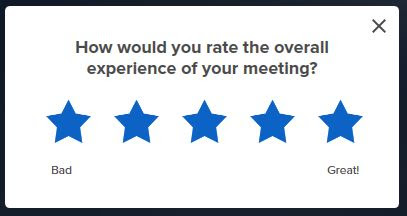
A videoconferencing platform that I use a lot, at the end of every meeting, prompts me to “rate the overall experience of [my] meeting,” from 1 to 5 stars. What if they also had a notes field to type in, since their query is so incredibly general? Here’s what that might look like. (What follows is a blend of fact and fiction.)


The good

BEST. MEETING. EVER. We had one of those guys who turns on his camera even though everyone else’s is turned off, and based on your platform’s default settings, he ended up being on my screen the whole time (and everyone else’s too, I’ll bet). I actually got kind of tired of looking at him, but then he abruptly got up and left the room. So now we were all just looking at his empty chair, and people started talking shit about him! Freakin’ glorious. Nice bit of comic relief during a long, boring day of online meetings.

--~--~--~--~--~--~--

OMG, I will never forget the “overall experience” of this meeting. It was our All-Hands Call with like 60 or 70 people, and we all assumed we’d be muted by default but we weren’t. Most of us figured this out (I mean, it’s been like three years since we all started working from home, right?) but a few didn’t, so there was a bit of background chatter as people were joining. And then we all hear, clear as a bell, “Do you need to go potty outside?” I was already laughing and then, a second later, some other guy comes off mute and says, “Nah, I’m good.” I almost cried.

--~--~--~--~--~--~--

I really love the half-assed way your platform handles audio buffering when somebody’s Internet connection is bad. I mean, yeah, perfect buffering would make it easier to understand people, but who cares? Some motivational speaker once said, “Nobody will remember what you said but everyone will remember how you made them feel.” As cheesy as that is, it’s pretty much true. The highlight of my workday is usually when something goes wrong, so I love love love it when somebody’s speech slows down to this incredibly low-pitched crawl, like when something terrible happens on a stupid TV action show and they show a super-slo-mo of, like, somebody striking out with a knife and another guy throwing himself in the way yelling, “N-O-O-O-O-O-O” in the super-slow, low voice. And even better, when your buffering then catches up it overcorrects and the second half of the person’s sentence is like Alvin and the Chipmunks! I have to scramble for the mute button because I’m totally cracking up. Keep up the “good” work!

--~--~--~--~--~--~--

This meeting made my day. It started off with the usual BS, with people talking over each other and a lot of mansplaining going on, and then this blowhard named Bruce takes over the screen and starts sharing some dumb slide and blathering about it, and then someone else takes the discussion way off track but without taking over the screen share. So Bruce is still screen-sharing when he totally zones out and starts multitasking. He’s typing up some email on a totally unrelated topic and we all stop talking and just watch him for a bit. He’s so checked out he doesn’t notice how quiet it’s gotten until somebody tells him, “Uh, Bruce, you made a typo.” Bust-ed! Everyone starts laughing and I’ll bet he pretty much died of embarrassment. Which is good, because he’s such a tool. He got what he deserved!

--~--~--~--~--~--~--

The bad

Look, I really like your platform, but since you asked, my overall experience was not good. There’s this douchebag Carl who always commandeers our meetings to go off about animal rights. He refers to animal husbandry as “rape,” etc. and once he gets revved up it’s almost impossible to stop him, even when the professor cuts in and says, “We’re trying to learn Photoshop here.” I’m tempted to say, “Carl, whenever you open your mouth about animals, I add ‘veal’ to my shopping list. And I make good.” So anyway, couldn’t you install a feature where participants could vote to expel someone from the meeting? Like, you could have some AI widget monitoring the chat and if enough people type in “Eject Carl” it’ll just do it? I would be the biggest evangelist for your product if you built that feature…

--~--~--~--~--~--~--

I’ve just about had it. I work for a tech company in Silicon Valley and yet in this meeting that just ended, I could only understand about half the people because the other half had crappy Internet connections. I like how your software shows little green or red bars, so we at least know what the problem is, but couldn’t you take that a little further and speed-shame these people? Like, change their title banner to “TOTAL LOSER” if their throughput sucks? It’s 2022, people. Get a real Internet connection. I’d understand if this were some little school district in Cat Butt, Wyoming, but come on. This is Silicon Valley.

--~--~--~--~--~--~--

Overall a good audio/video experience, but I can’t give you more stars because I totally lost my focus during the meeting. Why? Because some guy was presented with this big award, and in his little impromptu acceptance speed he said, “I’m truly humbled to win this award.” In what universe is that true? Winning an award doesn’t humble anybody. It goes right to their heads, and then they probably feel all sanctimonious when they graciously say, “I’m humbled.” What a bunch of shit.

--~--~--~--~--~--~--

The main presenter in this meeting actually had a lot of interesting stuff to say, but I could barely understand him because a) the audio wasn’t that great to begin with, and b) he was wearing a frickin’ COVID mask! I mean, WTF? Does he really think he can spread an actual, non-metaphorical, living virus over the Internet? I never realized how much I rely on lip-reading when the sound is bad. Maybe this guy just wanted to make sure we couldn’t understand him? Whatever, dude.

--~--~--~--~--~--~--

Every meeting I’m on, we get people showing up late or not at all, and then apologizing because their PC rebooted  or their home Internet went down. It’s like the modern day equivalent of “the dog ate my homework.” I guess it’s not enough that you have a great conferencing app that runs on a smartphone so they don’t need their PC or WiFi. Could you offer a deluxe conferencing package with shock ring collars to remind people to use their fricking phones when their PCs are down? I’d totally pay extra for that.

--~--~--~--~--~--~--

How do I lock out late arrivals? I cannot find this in your help menu. Today some guy showed up 26 minutes late for a 25-minute meeting and then proceeded to hold the floor for the next ten minutes and I really had to pee.

--~--~--~--~--~--~--

Could you make the audio mute and video mute buttons farther apart, and/or more distinctive? Today I had both my audio and video muted, and then someone asked me a question, and I scrambled to un-mute and accidently un-muted my video but not my audio. So then I suddenly appeared onscreen, with my disheveled hair and 3-day beard, my mouth going 90 mph but no sound, and five people all saying at once, “You’re muted!” So embarrassing.

--~--~--~--~--~--~--

Can you improve the noise-canceling? So many of my colleagues work from home, the virtual meeting room sounds like a fricking day care. Just a suggestion since apparently some teleworking parents don’t believe in telling their kids to shut the hell up.

--~--~--~--~--~--~--

The ugly

Your video conference experience is mostly great. I like how I can tile all the participants, because with that other mode where it keeps switching to whoever is talking, I start to get dizzy. But could you add a feature where I can selectively mute someone’s video feed from my end? God forgive me, but some of these people are pretty homely.

--~--~--~--~--~--~--

Mostly great platform but man, you guys have got to do something about the fake background. It’s not just that I get sick of looking at a cheesy backdrop like the beach (though I do), but the way your software figures out the outline of the person just isn’t effective enough. Sometimes it looks like a person’s head is cut out of construction paper, or rendered with really bad VR like that “Money for Nothing” video from the ‘80s. There’s this one guy in my meetings who gestures a lot with his hands, and when he gets animated his hands keep vanishing and then reappearing on the screen and it’s totally distracting.

--~--~--~--~--~--~--

I want to start by saying your videoconferencing is amazing! I’m one of those people who can remember the very early days of this technology when the resolution was terrible, all grainy and pixilated with stops and starts and gaps and everything, and now it’s so smooth and hi-res. In fact, it’s actually a bit too hi-res. Which brings me to my request. You know how you can blur the background, so nobody can tell your home office is a mess? Well, could you maybe have a feature to blur the foreground, as in me? My HD camera is mercilessly clear and I’m ashamed of my eyebrow dandruff.

—~—~—~—~—~—~—~—~—
Email me here. For a complete index of albertnet posts, click here.

Monday, May 9, 2022

Has Any Good Come From the COVID-19 Pandemic?

Introduction

The columnist Marilyn vos Savant was asked recently if anything good has come from the COVID-19 pandemic. Her answer was woefully incomplete so I aim to provide a better one here. Before I begin, though, I want to acknowledge that the pandemic has been tragic and of course I don’t want to minimize that. I merely hope that looking at silver linings can help us feel some gratitude.


Marilyn who??

Marilyn vos Savant is a columnist for Parade magazine, which comes tucked inside the Sunday paper. (Reading Parade is admittedly a waste of time, but the writing is so brain-dead simple, you can read the whole thing in about 40 seconds.) I’m often struck at how wrong Marilyn is, for being a supposed genius. For example, she explained the 40% college freshman attrition rate by saying, “In college, students must study subjects in which they have no interest and will never put to use.” This is both false and not the point. Students drop out because so many of our high schools don’t prepare students properly. (Given Marilyn’s defeatist attitude about college as an institution, should we be surprised she herself dropped out?)

On the topic of good coming from COVID, Marilyn acknowledged only that it might encourage people to wear masks when they’re sick. That was her whole answer, and it’s more of a hope (and probably a vain one) than a reality. And yet, there are a number of good things to come out of the pandemic, and the world’s response to it. What follows are just the more obvious silver linings.

The vaccine

Can you imagine the situation if there had never been a COVID-19 vaccine? Today, according to this article, the World Health Organization estimates that “nearly 15 million people were killed either by coronavirus or by its impact on overwhelmed health systems during the first two years of the pandemic.” But it would obviously have been worse without the vaccine. When’s the last time a vaccine was created on the fly, with a great reduction in governmental red tape, in time to save countless millions of lives? Hint: never. As described here, the worst five pandemics in history ended thus:

  • Plague of Justinian—“No one left to die”
  • Black Death—The invention of quarantine
  • The Great Plague of London—Quarantine
  • Smallpox—The first epidemic ended by a vaccine, but only after more than two centuries and countless millions dead
  • Cholera—The discovery that bacterial infection was spreading via contaminated drinking water

The COVID-19 vaccine totally saved our bacon. Without it, we might have no end in sight with countless dead, and/or we’d all still be sheltering-in-place. The vaccine represents a giant leap forward in the development of vaccines in general; a tremendously encouraging example of scientific cooperation; and, despite a lot of whining I choose to ignore, a triumph in governments’ ability to produce and deliver the vaccine at scale. Today, two thirds of Americans have received the vaccine.

Granted, I’m accustomed to great medical care because I live in an affluent community and have top notch insurance, but I was astonished to be able to get all four of my shots with very little trouble scheduling appointments, and moreover without having to provide any insurance information, and without paying a dime. For those of us sufficiently clear-headed to appreciate all this, it’s cause for cautious optimism that our healthcare system isn’t completely hopeless.

Telecommuting

At the outset of the pandemic, I worked for a division of a company that officially disallowed working from home. Nevertheless, due to a special dispensation  I’d managed to negotiate with my management, I was allowed to telecommute four days a week (and yes, it made me plenty nervous to be the outlier). From March 2000—when my employer went entirely remote due to the pandemic—straight through to last month, my colleagues and I only went in to an office once. Our entire division now follows a “hybrid” working model of visiting the office just twice a month.

I am super stoked because my commute, from the Berkeley area to Sunnyvale, was absolutely soul-crushing. My colleagues—all of them—are similarly delighted with the new arrangement. And this change is permanent—our former HQ building was sold off. (When we want to meet in person, we do “hoteling,” which means finding an empty cubicle in a corporate building shared among divisions.) The pandemic forced my employer to try out the telecommuting model, and it ended up working far better than anyone had expected.

This isn’t an isolated case. According to this article, before the pandemic only 6% of employed Americans worked from home; by May 2020, over a third were telecommuting. And as of last October, according to this article, 25% were still telecommuting all the time, and another 20% part of the time. And as of April, according to this article, roughly 25% to 35% of workers are still working from home, though only 10% cite COVID-19 as the reason.

Think of how many hours of commuting are saved. By my rough math, about 38 million Americans are teleworking who used to commute, and we’re each saving an average of an hour of commuting per day. Given that transportation is the largest contributor to carbon pollution, this telecommuting arrangement is a huge benefit to the environment … and it was brought about by the pandemic. How could Marilyn vos Savant not mention any of this? For a genius, she sure doesn’t seem very thoughtful.

Less illness outside of COVID-19

Did you find you seldom got sick during shelter-in-place? I used to dread the cold and flu season every year, but since March of 2020 I’ve only been sick twice, and both times it was pretty mild. There’s not a ton of nationwide reporting on minor colds and such, but this article notes a sharp drop in flu cases during the pandemic. So that’s been something of a silver lining.

Of course it’s hard to get excited about not getting sick when we were stuck indoors and tolerating masks all the time, but I think there may be lasting benefit. All that emphasis on hand washing could engender permanent behavioral change. I for one always wash my hands thoroughly when I get home from being out and about, and I’m not thinking about COVID per se when I’m doing it: it’s truly automatic. And who knows, maybe Marilyn is right and many sick people will be masking up from now on before they go out in public.

More outdoor recreation

Obviously COVID has killed a lot of Americans—almost a million, as of this posting—but heart disease (as described here) is the leading cause of death in this country, claiming about 659,000 lives every year. Unlike COVID, rampant heart disease in the U.S. shows no signs of going away. With the obesity epidemic closely tied to heart disease numbers, I think it’s significant that outdoor recreation increased significantly during the pandemic, even during shelter-in-place.

This was my own observation, from encountering crazy numbers of hikers along the trails in our regional parks, but is also substantiated by various data. For example, this article declares that “in 2020, 53 percent of Americans ages 6 and over participated in outdoor recreation at least once, the highest participation rate on record,” and that “7.1 million more Americans participated in outdoor recreation in 2020 than in the year prior.” And this article cites a 63% increase in bicycle sales in June 2020 vs. the previous year and a 31% increase in camping gear sales.

Perhaps some of this change will be permanent, now that so many more people have discovered the joy of being outdoors. Suffice to say the pandemic did a better job exposing people to exercise than PSAs ever did.

More outdoor dining

Where I live, in the Bay Area, lots of restaurants dealt with the shelter-in-place by creating outdoor seating areas, taking advantage of relaxed restrictions on things like putting tables on sidewalks or building seating areas out into the road, with barriers to protect diners. Traffic and parking have not become noticeably more difficult; what you mainly notice is how much fun people seem to be having and how many of them (about 100%, by my count) say things like, “How come nobody thought of this before?”

Actually, all kinds of people thought of this before but were stonewalled by the various interests who put motor vehicle accommodation above all other priorities. In this article, a state lawmaker from San Francisco explains:

If a city had come forward before the pandemic and said, “Let’s dramatically expand outdoor dining,” there would have been a lot of pushback. Like, “Whoa, what’s going to happen to the neighborhood? We need parking.” This is not a mysterious unknown now. Not everybody likes it, but most people do. They love it. And cities will go through their own local decision-making. In San Francisco, the mayor has proposed an ordinance to make the outdoor dining program permanent.

Silver linings for high school kids?

It is widely understood that the pandemic has been particularly hard on teenagers (and I even provided an albeit jocular coping guide in these pages). But in terms of silver linings, I’ll ask you to consider that not all teenagers would call the pandemic a purely negative thing. For example, I asked my younger daughter, a high school senior, if she feels like anything good came of the pandemic. She immediately replied, “I got to see my friends more.”

This probably sounds pretty close to unbelievable, but her explanation matches what I observed myself of her behavior. The shelter-in-place didn’t forbid people from getting together outdoors in small numbers, and for the better part of two years my daughter constantly went for long walks with her friends. Before the pandemic, most of these kids’ lives were booked solid with extracurricular activities so they seldom got to just hang out. To me, their less structured pandemic days looked like a time machine, taking these kids back to my generation when kids did what they felt like instead of only what would look good on their college apps.

Obviously I won’t be able to cite all kinds of articles supporting any notion that my daughter’s experience was widespread, but I do note this article pointing out that “Suicide rates for all ages dropped by 5.6% in 2020 compared to 2019. But this is not entirely unusual. Known as the ‘pulling together’ effect, suicide rates tend to dip during shared experiences of catastrophe.” And this report on a survey on the wellbeing of families states that although 31% of children reported that their emotional/mental health got worse during the pandemic, 16% report that it actually got better. Again, the pandemic still sucked, but 16% is a silver lining. (I say “sucked” instead of “sucks” … is it really the case we can now start speaking of the pandemic in the past tense?)

Online schooling, though it has been almost universally assailed as a big negative overall, also has its positive side. A Johns Hopkins University article from May of 2020 quotes Beth Marshall, associate director of the Johns Hopkins Center for Adolescent Health and an assistant scientist at the Bloomberg School of Public Health:

The pandemic has given schools a push to move everything online. There will be an incredible utility for this even after the pandemic has ended. For instance, schools may now be able to tailor learning to specific kids by supplementing their classroom education with online material. It is often a struggle to meet the learning level of all students. With virtual content, students can access gifted and advanced learning opportunities that are otherwise unavailable…. The same is true for districts that are resource-poor and do not have enough textbooks for their students. Many of the texts that accompany curricula are now online. If we can continue to access these when we return and have a hybrid of online and in-person education, it might start to reduce some of the inequities we have in school systems.

Another thing my younger daughter mentioned as a positive is that with online schooling, she no longer had to get up as early and finally started getting all the sleep she needed. Her experience is corroborated by the same Johns Hopkins article. Tamar Mendelson, director of the Johns Hopkins Center for Adolescent Health and Bloomberg Professor of American Health at the Bloomberg School of Public Health, states:

Adolescents’ sleep clocks are programmed to go to sleep later in the night and wake up later in the day than children’s sleep clocks are. Adolescents can follow these rhythms to a greater extent now that they are not forced to wake up early to get to school, as long as they're getting an adequate amount of sleep.

(The article does caution that lack of routine can throw off a sleep schedule and lead to reduced sleep overall.)

Silver linings for college kids?

I asked my older daughter, a college junior, if she saw any benefits from the pandemic. Right off the bat, she cited three opportunities it created for her. Since she’s pre-med, for years she’s been on the lookout for healthcare-related volunteering opportunities, and was stoked to get work at a vaccination clinic. She was then able to find a paid position working a COVID hotline for students and parents, which led to a volunteer position at a hospital emergency department. She was able to handle all three gigs only because online schooling provided so much flexibility: with all her lectures recorded, she no longer had to work in the volunteer stuff around any kind of class schedule. In fact, she can even work a ten-hour shift on a weekday, which would have been unheard of pre-pandemic.

This flexibility also made getting required classes much easier, because she could double-book classes (i.e., enroll in classes that theoretically met at the same time). She also corroborates Beth Marshall’s comments about online schooling supplementing the classroom education with additional material for advanced students.

Meanwhile, since my daughter stayed on campus during remote learning due to these jobs, she made all kinds of new friends from among the international students who couldn’t go home. Sure, she’d have made friends anyway, but this widened the demographic from what she’d had in high school.

In closing

Next time somebody goes on a little long griping about the pandemic, or asks you if you see any silver lining, you can just … wow, I was about to suggest you refer him or her to this post. But of course that’s absurd, this essay is 2500 words! You’re a pretty special person to make it to the end … don’t kid yourself that your hypothetical interlocutor has that kind of patience. Just send him or her to Marilyn vos Savant’s column. Sure, it’s woefully incomplete and misses the most important points, but it’s only 100 words and she’s really, really smart.

More reading on the pandemic

—~—~—~—~—~—~—~—~—
Email me here. For a complete index of albertnet posts, click here.

Saturday, August 8, 2020

Teleworking During the COVID-19 Pandemic


Vlog

This post is available as a vlog. Watch on your phone, tablet, Jumbotron, or in IMAX theaters everywhere. If the sight of my face bothers you, switch to podcast mode by closing your eyes. Or, scroll down for the traditional Gobs-O’-Text version.


Introduction

As companies continue to ask employees to telework in response to COVID-19, you might find yourself in unfamiliar territory—your own home. What is this place called “home” where you’re suddenly spending so much time? Who are these people called “family”? And how do we keep this “new normal” from destroying our careers? This post walks you through a menagerie of best practices.

Define your workspace

Sure, your kitchen, dining room, bedroom, and garage may seem totally familiar—but take some time to explore other areas of the house that may seem new to you. Who sleeps in these other bedrooms? What is this strange space called the “living room”? What goes on in the basement?

It might be tempting to involve your whole house in your teleworking. You could take your laptop to the sofa, the La-Z-Boy armchair, or your back deck and expect to get work done. Experienced teleworkers will tell you they tried this and it simply doesn’t work! Sofas are made for sleeping, not marching toward quarterly performance goals. As for taking your conference call out to the back deck, nobody wants to overhear birdsong—that’s just depressing. What’s next, taking your laptop into the bath? Don’t take the bait. Dock your laptop in the home office, and act like you’re chained to your desk—just like good old days before teleworking and COVID-19.

Prioritize privacy

Whether you work from your home or in a common area, take five minutes to assess the privacy of your workspace. Can someone standing behind you read your computer screen? What if your spouse, or your kid, is hunting for trade secrets? It may seem like “all in the family” now, until your teenager suddenly has a coveted internship with your competitor and they start poaching your customers!

Is it okay to work from Starbucks? Well, that depends. Is your local Starbucks even open? If you broke in, or pushed past their ad hoc takeout window, that may strike your colleagues as unprofessional behavior. Conversely, if your local Starbucks is open, because you live in one of these benighted cities that don’t believe in COVID, your colleagues may be shocked, during a videoconference, to see unmasked idiots seated near you. This could be a major distraction, so it’s probably best to work from your actual home.

Have a good Internet connection

Set up your workspace near your wireless access point (WAP). If the WAP is in the kid’s room, and you’re out working in the garage with the furnace duct blocking the signal, you won’t have a good WiFi experience and neither will your colleagues. Trade places with your children, even if banishing them to the garage—with all its toxic cleaners, solvents, and sharp tools—presents a significant risk. At this point you may wonder why you installed the one WAP in the house in their room to begin with. Or did your children do the install? How old, exactly, are these hypothetical kids? A couple sentences back they seemed like children or toddlers, and now they’re high school seniors with internships at Cisco. You can see how complicated teleworking gets!

You might want to splurge on a true business-grade Internet connection. A fully redundant setup such as dedicated concentric Synchronous Optical Network (SONET) rings can be acquired for just a few thousand dollars a month. You can defray this cost by installing an outdoor, all-weather WAP that your neighbors can tap into—for a fee. Just remember to let them know when you change the SSID password, or they might soon be offline and out of a job!

Audiovisual presence

Many first-time teleworkers commit the “rookie move” of failing to optimize their video conferencing setup. For example, the angle of their laptop screen—where the built-in camera is housed—might be set such that their nostrils seem to gape, or the age-related folds in their neck are accentuated. Take some time to set this up right. This might mean sitting with your back to a brightly lit window, so that you appear as just a silhouette, which creates an air of mystery even as it hides signs of ageing, frustration, or boredom.

Don’t neglect your audio connection either. The built-in mic on your modern laptop might be quite good, so it’s tempting to just use that—but then you lose the opportunity to show off your wealth and status by rocking Apple AirPods during videoconferences. Not feeling that flush? Here’s a simple hack: snip off the cords from a cheap pair of white earbuds and wear those, while actually using the audio from your laptop’s speakers and built-in mic. Trust me, your colleagues will never know the difference!

Note that in some cases, your video camera shouldn’t be used at all. For example, if your manager and director both approved the purchase of an external monitor for your home, but they see you plain as day on the video conference, they’ll know you’re just using your undocked laptop. They’ll figure out right away that that expensive hardware billed to their cost center is being used by your kids for gaming. Don’t get fired just because you’re a “cool dad!”

The mute button

Perhaps no other technology has stymied as many people as the mute button. Whether it’s a physical button on a telephone handset, or an onscreen button you click or tap, it seems to have a mind of its
own. Does anything erode your professional reputation as badly as colleagues telling each other, “I think he’s on mute” and yelling, “Bob, can you hear me? You’re on mute!”? Why, yes: forgetting to mute before screaming at your children or muttering profanities to yourself. (And you thought that was a rhetorical question!)

Take some time to master this “mute button” technology. Practice with your colleagues, or even with your kids, outside of scheduled calls. Also, learn to spot the telltale signs that you’re accidentally muted: nobody answers your question, or nobody responds to your statement, or people talk right over you. If these things are happening, it’s time to un-mute. (Now, if you’re already un-muted and these things are still happening, it may be time to find a new job.)

Eliminate distractions

Alas, teleworking can mean pets, children or a favorite hobby are only a few feet away. If you give in to temptation, you might find yourself totally distracted, doing something you actually enjoy or talking to people who really care about you and have interesting things to say. This can derail your career as surely as a three-martini-lunch habit. It’s best to nip these distractions in the bud. Chase your cat around the house screaming until she’s terrified of you, and she’ll steer well clear of your workspace going forward. Alienate your children by bawling them out over petty offenses—or better yet, get all Tiger Mother on them. They’ll stop coming around to chat, no matter how bored they get. Harsh, yes, but sometimes career’s got to come before family.

Sometimes the distractions can come from just outside the home. It seems like every city in America is taking advantage of shelter-in-place to fast-track civic projects like road maintenance and sewer main overhauls. Construction sounds aren’t just distracting—they’re unprofessional. Nobody wants to overhear a jackhammer or earth-moving machine during a conference call. A polite letter to your city council can work wonders—maybe they’ll put their projects on hold until your next vacation. If that doesn’t work, talk to the construction workers themselves. Explain to them how important your business calls are, and how much revenue is at stake. You might be surprised how accommodating they are. Many foremen will be happy to reschedule their work crews until after business hours.

Despite your best intentions and practices, you’re bound to get distracted from time to time, especially during long conference calls. Inevitably, somebody will ask you a question and catch you off-guard. This happens time and time again, and often the distracted party will try to save face by pretending he or she was paying attention. “I’m not sure I understand the question” is one such ruse, another being, “Can you provide a little more context?” Or, the person will try to win points by “coming clean” and saying, “I’m sorry … I [was multitasking] [zoned out] and didn’t hear the question.” Neither of these is acceptable. The first two are transparently disingenuous, and the  last one disrespectful—as if it’s okay to be distracted.

The only truly professional response is a sincere apology: “I’m sorry, I didn’t hear the question because I was totally distracted. I don’t even have the context. I know this is unacceptable and I promise to try harder. When you consider how many people are on this call … let’s see, there’s ten of us, and this is an hour-long call, which equates to about $400 in wages … gosh, it’s such a waste for anybody not to be bringing his A-game. Which is why, starting now, I’m going to turn over a new leaf. From now on, you will have my complete and undivided attention, and what’s more…” Keep on like this for as long as you can, like a filibuster. That way, it’s highly likely nobody will ever ask you a question during a conference call again.

Be intentional

As the pandemic creates new and uncomfortable ways of working, setting up regular routines and workflows can help you stay effective. Being intentional means “doing things with intent.” For example, joining a videoconference or working on a spreadsheet is something you would do “on purpose,” which is to say intentionally. Knocking your coffee over on your keyboard would be unintentional. Know the difference. You can’t be an effective teleworker if most of your actions are accidents.

Nurture workplace socializing

Many of us truly miss the water cooler and employee lunchroom. Teleworking can be lonely, especially when you’ve totally alienated your family, so be creative about how to interact with your colleagues. Consider making time for “virtual coffee breaks” using video chat. Please note that the coffee, in these instances, does not need to be virtual. Drinking an actual steaming mug of your favorite beverage is more enjoyable than settling for an icon, GIF, or even a high-res JPG file depicting it. If possible, get that “cuppa joe” into the video frame, to make your coffee break seem more real! But don’t get carried away … try to consolidate your virtual coffee klatches, to cover all your colleagues at once. Otherwise, by the time you’ve “made the rounds,” you’ll have had like eight cups and will be shaking, irritable, and unable to focus. (That is, more so than usual.)

Consider if teleworking is actually appropriate

Yes, we all take orders from management and tend to comply. But if you think teleworking really isn’t right for your role, speak up! For example, if you are an EMT and have shifted to working only from home, your customers—that is, your patients—will definitely feel the difference. If you can help your employer to understand that your job performance is suffering, and that in fact lives could be lost, they may well heed your advice. If they don’t, though, just back off … consider that they may have a more nuanced understanding of these things.

Go easy on yourself

Especially with the added stress of the pandemic, teleworking can be stressful. You might not always feel as productive working all alone in your home office, and nowadays the fact that you actually showed up to work is not always visible to your colleagues. If you find your focus lacking, maybe it’s time for a break. If your employer doesn’t offer paid sabbaticals, try to get an unpaid one. If that doesn’t work, sometimes it’s best to simply resign.

As with all workplace adjustments, don’t take any rash steps until you look at the big picture. If you have a sizable trust fund and your spouse’s employer offers healthcare, it’s a slam dunk … otherwise, you might want to consider if unemployment is right for you. Sure, the stigma if being “on the dole” has greatly diminished in this new era, but many people find that a stable income and benefits may actually be worth the stress of employment.

Separate the personal and professional

Video conferencing tools like Google Meet, WebEx, and Zoom are now being used for both our professional and social activities. In many cases, people are socializing with far-flung friends more often than before the pandemic took hold. But there’s a downside to this: all that teleworkplace videoconferencing can lead to “Zoom fatigue,” where you spend so much time looking at faces on screens, your socializing starts to seem like work. Take stock of your situation and decide if this is a good time to even have a personal life. After all, is it worth the risk that you’ll spoil friendships by equating your pals with workplace stress? Maybe it’s best to cut off all contact with friends and family until after the pandemic. Don’t worry, they’ll almost certainly still remember you when all this is over.

Other reading on the pandemic 
—~—~—~—~—~—~—~—~—
Email me here. For a complete index of albertnet posts, click here.