Showing posts with label corporate America. Show all posts

Sunday, February 8, 2026

Glossary of Corporate-Speak for College Grads

Introduction

Lately it has occurred to me, amidst all the bad news about the job market, that it’s still technically possible for young college grads to land a spot in corporate America. Instead of bemoaning the loss of entry-level jobs to AI—a topic that has already received plenty of attention—I figured I’d help out those who have been hired, who are probably rather mystified by all the corporate jargon.


[Art by ChatGPT. No rights reserved.]

The glossary

AI (artificial intelligence): Of course we all know what this is, but it’s useful to define it in the specific context of the white-collar workforce: to wit, AI is the software capability that is purportedly rendering humans increasingly unnecessary. That you, recent college grad, have landed a job demonstrates that your new employer believes you possess capabilities that AI hasn’t developed—yet.

Alignment: The state of a company when all the stakeholders (e.g., Sales, Finance, Marketing, Engineering) are working well together toward the same goals. You will generally encounter this term when there is an alignment gap, that being a disconnect between what leadership is prioritizing and what employees are doing day-to-day. This could signal trouble in the form of a reorg, which can cause distraction to say the least.

AOP (annual operating plan): This is a comprehensive 12-month roadmap for how the company will turn its long-term strategic goals into specific targets, usually financial, for the coming year. It shouldn’t directly concern a new hire like you, other than to recognize that, in keeping with the adage “man plans, God laughs,” these plans can and do fail to come to fruition, which in the modern cutthroat realm can lead to swift and often severe consequences.

ATS (applicant tracking system): If you managed to get a job, you’re probably well versed with this recruiting tool, which is essentially a bot that screens résumés so humans don’t have to. Since it lacks the acumen of a human who can discern subtleties, such as a candidate’s rise through the ranks of a company or industry, it is basically screening for skills—that is, buzzwords—on the assumption that recruiting an intelligent, hardworking person you can train on the job is a hopelessly outdated and obsolete notion. If you possess actual intelligence and a real work ethic on top of having obviously mastered the art of listing desirable skills, you may well thrive in your new job.

Attrit: The linguistically unsupportable verb form of “attrition.” Its main purpose is to imply that downsizing at a company is the result of some natural phenomenon akin to erosion. For example, leadership might say, “The workforce is bound to attrit over time.” See also Downsizing, Rightsizing, Managed attrition

Bandwidth: Except in obvious technical contexts, this generally means an employee’s capacity for taking on more work. It is not only a handy metaphor, but adds to the overall conception of employees as basic implements of labor, in this case pipes through which you can shove workloads. See also Resource

Bias for action: A mindset that favors swift decision-making over careful, analysis-driven planning. Its popularity reflects growing impatience among executives, whose compensation is often based on the short-term results demanded by stockholders. In the current layoff-forward business climate, this bias can present serious risks to rank-and-file employees. Note that there is no longer any corresponding bias for analysis. See also Data-driven

BAU (business as usual): This is used to describe the routine, day-to-day operation of a company. In general this idea is threatening to ambitious leaders who want to “disrupt” business and turn existing models on their heads. If you find yourself using the term BAU, make sure to adopt an air of derision. See also Disrupt

Boomerang hire: This refers to the rehiring of an employee who was previously either laid off or coaxed into quitting but who the company has realized it actually needs. Oftentimes in the case of voluntary severance (i.e., a buyout), the boomerang hire is only permitted to return as a contractor, meaning the company is paying more for him or her than it used to, while he or she earns less. See VSP, Involuntary attrition, Voluntary attrition

Data driven: This refers to the idea that decisions should be made based on analyzing real-world data rather than going by somebody’s hunch. Unfortunately, the amount of available data is increasing much faster than any human’s ability to analyze it. Thus, when leadership wants to act quickly, they will lean on AI for answers, e.g., “Read these documents and advise whether I should shut down Project Unicorn.” See also Bias for action

DEI (diversity, equity, inclusion): These all add up to workplace fairness, which—though it may seem an unalloyed good thing—has become a political football. Depending on where you work, you should be careful how you use this term. The tech sector in particular is a minefield here, having tacked to the right with tech bros like Mark Zuckerberg and Elon Musk seeking favorable treatment from the candidly anti-DEI Trump administration.

Disrupt: To use technology, especially in the absence of regulation, to upend a traditional business model and corner a market. Probably about 1% of businesses are actually in a position to disrupt anything, while about 99% only pretend they can. Watch out for force-fits like connected bidets or autonomous razors.

Downsizing: Euphemism for a round of layoffs. In times past, downsizing was reluctantly performed when a company was failing to produce a profit because too much money was going toward salaries. Oddly, the current fashion is for companies that are producing record profits to downsize anyway, just to show off.

EAP (employee assistance program): This is a type of voluntary intervention program designed to help employees cope with the mental health problems caused by their workplace. An EAP is generally easier and less expensive for corporations than treating employees well, and is useful in keeping them from harming themselves and/or becoming less productive.

Efficiency: In Corporate-speak this is generally used as a euphemism for layoffs, and may even be used to indicate a person laid off, as in “We are forecasting about 3,000 efficiencies in the fourth quarter.” See also Impact, RIF, Reduction, Synergy

Flattening the organization: The strategy of reducing the number of layers of management in order to speed up decision-making and facilitate layoffs.

Follow the puck: This is a fairly meaningless bit of advice resulting from the erosion of a pithy aphorism from the hockey great Wayne Gretzky, “I skate to where the puck is going, not where it’s been.” It’s a nice example of how a corporate-speak cliché can get mangled over time without losing popularity. Another example would be “peel back the onion,” which means essentially nothing but perhaps started out as something meaningful from, like, Julia Child.

Forced distribution: Also called stack ranking, this is the practice of requiring managers to categorize their employees by performance rating. It may mandate, for example, that only 10% can be “top performers,” 80% must be considered “average,” and 10% must be classified as “low performers.” Since the job market is currently so tight, and so many corporations have had massive layoffs, it’s kind of hard to believe anyone who has managed to land or keep a job is a low or even average performer. Still, that quaint notion cannot get in the way of the benefits of this practice: namely, that a company doesn’t have to give very many good raises, and can instantly lay off employees en masse by telling managers, “Jettison all your low performers.” See also Stack ranking

FTE (full-time equivalent): A unit of measurement representing the workload of a 40-hour-per-week employee. This is often used as a synonym for “employee,” to suggest that these are not so much humans as machineries of work that are essentially interchangeable, and by extension expendable. See also Resource

Ghost posting: This is a fake job posted to LinkedIn or a company’s recruiting web page, usually to create the illusion of growth or to frighten current employees into thinking their employer is seeking to replace them. Such postings cause countless hours of soul-crushingly pointless activity by job seekers. See also Requisition aging

Guidance: Refers to the predictions, aka “forward-looking statements,” that publicly traded companies make to Wall Street. If the guidance is too conservative, the stock will suffer, yet if a company realizes it won’t deliver on its guidance (i.e., “misses guidance”), it has to backtrack and “restate guidance.” This leads to severe punishment from investors, resulting invariably in layoffs. It doesn’t actually matter that the employees being laid off had nothing to do with the guidance; Wall Street tends to respond favorably to layoffs and that’s all that matters.

HR (human resources): This is the department that manages employee’s affairs beyond the recruitment phase, including “organizational health.” In theory it gives employees a way to pursue remediation in the event they are mistreated. In practice, HR employees can easily be punished by leadership for making waves, whereas rank-and-file employees cannot harm anyone in HR. For this reason, distrust of HR is commonplace if not ubiquitous.

Impact: As a verb, indicates a person was laid off, e.g., “Unfortunately, Tom has been impacted.” There is no need to say by what; staff reduction is always implied. See also Attrit, Downsizing, Efficiency, Involuntary attrition, RIF, Rightsizing, Synergy

Involuntary attrition: Euphemism for laying off employees. See also Voluntary attrition

KPI (key performance indicator): A measurable contribution to a company, the absence of which suggests that an employee is underperforming. Corporate America doesn’t seem to see any issue in pretending that all employee contributions are easily measurable. If marriage partners adopted this same mindset, divorce could be prevented only by documenting specific marital deliverables like income generated, sex acts committed, chores completed, and hours of childcare performed.

Leaning in: Generic term for actively engaging instead of stepping back or hiding out. This started out as the Facebook executive Sheryl Sandberg’s call to action for women to stop being reticent, but was genericized to mean “take initiative,” regardless of gender, and then further genericized to simply mean “work harder.” I suspect that this term’s popularity stems partly from the word “lean” lurking in there, implying “trim the fat,” which is to say a smaller workforce.

Managed attrition: A workforce-reduction strategy of resolving not to replace employees who leave voluntarily. A hiring freeze, especially when accompanied by unpopular changes such as eliminating perks or eschewing raises, is much easier and cheaper than laying people off. See also RTO, Voluntary attrition

Missed guidance: see Guidance

North Star metric: This is the single most important measurable result of a company’s efforts, and rather than being about the revenue received, tends to focus on what customers have gotten; e.g., Airbnb nights booked, Spotify time spent listening, WhatsApp messages sent. When a company needs to justify underpaying employee bonuses, it’s useful to have a solid-numbers goal that employees are powerless to meet, since it’s based on the whims of customers. Needless to say, this is a very northern-hemisphere-centric term. There is no southern-hemisphere equivalent, such as “Southern Cross metric.” South of the equator people still use the term “North Star metric,” which might feel a little strange, but then these people also celebrate Christmas in the summer.

OKR (objectives & key results): Similar to KPIs, except these are assigned in advance as the way an employee’s performance will be measured. These tend to be quantitative (e.g., “grow revenue 10%) and “stretch goals” meaning they’re conveniently unachievable. If you achieve 100% of your OKR, it will be deemed “not enough of a stretch” and increased for the next measurement period. The main benefits of the OKR model are, obviously, justification for underpaying bonuses and assigning a poor stack ranking. See also Forced distribution, Involuntary attrition, KPI, Stack ranking

Parking lot: This is a metaphorical space where tangential ideas introduced during a meeting are set aside for a separate discussion. It is more polite than telling a colleague to shut up. See also Take it offline, HR

Pre-wire: This is an informal discussion between two or more leaders before a formal meeting to make sure they already agree on the way forward. This prevents them from embarrassing each other during the meeting by having different strategies. It also prevents the meeting from generating friction-inducing embellishments to the existing plan, while giving non-leaders the feeling of being involved. See also Alignment

Requisition aging (aka Req aging): This is a measurement of how long a job posting has been open and unfilled. Traditionally this was a way to see if a company’s recruiter was doing a good job of finding candidates, and was an input into deciding to revise the salary offer or requirements as needed. In the modern climate, however, this metric is essentially meaningless because most reqs are fake and there is actually no job on offer. See also Ghost posting

Resource: A generic word for employee, which is used to imply that all employees are interchangeable; e.g., “We will get a resource on that task right away.” See also FTE

RIF (reduction in force): Standard term for a wave of layoffs, frequently used as a verb; e.g., “Unfortunately, Tim was the only one who understood that system and he just got RIF’d.” See also Attrit, Downsizing, Impact, Efficiency, Rightsizing, Synergy, Involuntary attrition

Rightsizing: This is just a euphemism for downsizing, emphasizing that if you don’t like it, you’re simply wrong. See also Downsizing

RTO (return to office): This refers to the growing practice of companies requiring teleworkers to return to offices despite widespread acknowledgement that remote work is highly effective. There is a generally accepted theory that RTO mandates are imposed solely to erode employee morale as part of a managed attrition strategy. See also Managed attrition, Voluntary attrition

Skip-level: This is a meeting with your boss’s boss, so that he or she can get candid feedback about the health of the team and the effectiveness of middle management. Of course, you need to be very careful about just how candid to be, and channel your inner Dirty Harry by asking yourself, “Do I feel lucky today?”

Stack ranking: See Forced distribution

Synergy: This formerly described the way in which partnerships or mergers could deliver more value than the sum of their parts, but has lately evolved to simply mean layoffs, and usually indicate a person laid off, as in “We are forecasting about 3,000 synergies in the fourth quarter.” See also Downsizing, Efficiency, Impact, RIF, Reduction, Rightsizing

Take it offline: This is a way, during a meeting, to table a side discussion. It can be confusing because it suggests data network connectivity but is actually totally unrelated to being online or not. What does it mean to be “offline” when so many meetings are conducted via videoconference? Don’t overthink it. See also Parking lot

Ventilate: To lay off employees. This term suggests that downsizing is required because the workplace is being stifled by too many people. Leadership might say something like, “It’s no secret this workforce needs to be ventilated.”

Voluntary attrition: This is when employees leave a company of their own volition. Quite often they are either nudged along with unpopular changes (e.g., lack of raises, RTO mandates), or offered an attractive severance package. In the past, HR would analyze voluntary attrition levels as a way to measure company health and morale, but in the modern workplace it is widely considered the desired outcome of a well-played rightsizing strategy. In other words, practically a gift. See also Attrit, Managed attrition, Rightsizing, RTO, VSP

VSP (voluntary severance program): Also referred to as “buyout,” this can be an attractive alternative to a RIF, because it lets a company save face while downsizing. With a VSP, a company pays a severance that is generally better than what an employee would get if laid off, and is often tied to years of service, meaning the employees with the most tenure have the most to gain from it. It’s also particularly attractive to top performers who know they can find employment elsewhere, vs. the deadwood the company really hopes to lose. However, to the extent those left behind by a VSP are ill-equipped to cope, this strategy fits in nicely with subsequent managed attrition programs. See also Attrit, Boomerang hire, Downsizing, Efficiency, Impact, Managed attrition, RIF, Rightsizing, Synergy

—~—~—~—~—~—~—~—~—
Email me here. For a complete index of albertnet posts, click here.

Saturday, March 16, 2024

The Power of Loafing

Introduction

I am not a lazy person and don’t consider myself an expert loafer. Nor do I advocate sloth in general. That said, I will argue that being judicious about when to take your foot off the gas can turn loafing into a superpower.

Who, what, where, when, why, and how?

This post is for the modern knowledge worker who nowadays has a lot of flexibility in his or her workday. The what herein is to explain how this freedom can be an issue. It doesn’t overmuch matter where this work is done, but the ability to work from home is part of the equation. When is of course right now and going forward, and the why is because I sense the encroachment of so-called “grind culture” and want to help spare you from it, just as I continually attempt to spare myself. Now, there is plenty of literature out there about the evils of grind culture, but I’m going to illustrate, through what I hope is a potent metaphor, how to convince yourself to passively fight it—that is, to loaf strategically.

Some background

If you haven’t come across the term “grind culture” (aka “hustle culture”), you either lead a blessed work life, or (like me up until recently) you have been missing out on a handy way to describe something you’ve surely noticed, probably pondered, and—I hope—have found yourself questioning. The New York Times, in this article, calls grind culture “performative workaholism” and cites Elon Musk’s pro-grind tweet, “Nobody ever changed the world on 40 hours a week.” It’s worth pointing out that Musk, who advocates working at least 80, is a douchebag.

Grind culture promotes unabashed ambition, supported by long hours and what its proponents like to call “grit” (though “self abasement” would be more accurate in this case). Its adherents don’t seem to realize, or at least don’t tend to acknowledge, that a company’s executives are the main beneficiaries of this culture. Grinders also apparently don’t grasp (or perhaps simply don’t care) that this relative minority of highly ambitious people can set a new productivity standard for a workplace, that spills over onto colleagues who might prefer greater work/life balance.

The Times article I just cited was written before the COVID-19 pandemic. Since then, I fear things have only gotten worse. These days, a lot more knowledge workers work from home, and the flexibility this gives them to tend to personal matters (e.g., picking up a kid from school, putting in a load of laundry) also gives management a reasonable basis for expecting employees to be available for a much longer period of time each day. As another Times article explains, “Cellphones and laptops have made it impossible for many people to wall off eight hours of the day for paid labor and another eight for everything else, and they threaten to return all of us to an era of nonstop, undercompensated labor.” And as this Forbes article asserts, even as productivity has increased with teleworking, management doesn’t often perceive this; a study by Microsoft found that “49% of managers of hybrid workers struggle to trust their employees to do their best work.” In this climate, perhaps the nervousness we may have about the visibility of our output (since we’re not observed to be in the office at our post) contributes to our temptation to send emails or Slack messages at 10 p.m.

So how do we combat this impulse to work longer and more? How do we fight the trend toward performative workaholism? For me, it’s a matter of differentiating between doing more and doing my best. Since this is a vague notion, I will now proceed to my metaphor.

Life imitates sport

I’m an assistant coach for a high school mountain bike racing team. Unlike a track coach who just stands around on the infield with a clipboard and shouts instructions, we cycling coaches actually ride with the kids, the whole time, every practice. This gets progressively, inevitably more difficult every year. The kids obviously never age because it’s a rotating crop: every year a quarter of them graduate and are replaced by incoming freshmen. I, on the other hand, am not getting any younger, or stronger, and my bike gearing isn’t getting any lower. Needless to say, the hills around here aren’t getting any flatter.

It’s been such a wet winter, there are only a few trails we can reliably ride without getting bogged down in mud. This leaves two main routes we can ride right now: Big Springs Trail and Seaview Trail. The summit of Seaview, at 1,905 feet elevation, is the highest point in the Berkeley hills, and the climb up it is a bitch. In fact, there’s a section I can barely make.

Let me describe how this works for me, with my last trip up it as an example. There’s this long, steep opening bit that is a total grind, but doable, and then we descend for a bit and catch our breath. Then it the trail starts climbing again, and this time of year we’re dodging puddles and so forth, and then, just before the grade gets truly brutal, there’s a very shallow, almost flat bit. I happen to have a photo.


After the slow slog up to this shallow bit, it’s always tempting to pick up the pace, but I never take the bait. For this reason, I frequently get passed at this spot, as happened last time. One of the kids I coach had been nipping at my heels the whole way, and when I laid off the pace here he blew right by me. I cared not a whit. He’s inarguably faster than I am, and after all my job isn’t to beat him, it’s to coach him. Moreover, my job in this moment was just to get up the damn hill.

I continued to loaf, and before long could hear another rider behind me. And now the grade suddenly became almost unbearably steep. I had no choice but to dig deep. I could still hear the kid behind me, gears whirring and panting increasing, and I now faced the hardest part of the climb: a very rocky place with a lot of tree roots, which don’t actually look so bad in this photo but can easily stop a middle-aged rider dead when he’s barely handling the climb to begin with.


Over the years I’ve compared notes with other coaches about the best path through this notoriously difficult section. On this last trip, I managed to thread my way through, just barely, through a combination of the perfect line and an all-out, leg-searing effort that bumped my bike over the inevitable rocks and roots I couldn’t steer around. And now here’s my point: the rider behind me didn’t manage it. I heard the distinctive sound of a cleat clicking out of a pedal (so he wouldn’t tip all the way over after losing all momentum) and the inevitable whuff of frustration. A rock or root had stopped him cold. And this didn’t happen because he’s less strong than I am (after all, in the group I ride with these days, they’re all stronger than I), nor because he’s less skilled. It’s almost certainly because he was closer to being redlined than I was when he reached that section: because he was already drilling it before the steep stuff began. On the shallow section, I wasn’t just loafing to loaf. It was a matter of survival. That steep, rough part is so hard, I have to be rested—physically and psychologically—before giving it my all to get through it. When a 100% effort is required, you (or at least I) cannot already be maxed out before reaching it. That pause to collect myself was as important as the odd, protracted centering routine a high-diver goes through before starting his or her dive.

Alas, the grade doesn’t ease up: this section of climbing demands several more minutes of excruciation. But you know what’s worse? Trying to get rolling again on a rocky, pebbly, loose, root-infested 16% grade with only one foot clipped in. It’s awkward and frustrating and saps your will. There’s a world of difference between making it the whole way in one shot, and getting stymied and starting over. Having to unclip from your pedal is how you lose a mountain bike race.

I trust this metaphor isn’t particularly hard for you to decode. Just as I would advise you, on your first-ever bike ride up Seaview, to ease up and rest your legs before the really steep part, I  want to convey to you how important I think it is to pace yourself elsewhere in life. Alas, the metaphor falls flat pretty quickly, because life does not  always imitate sport. In real life, you’re not heading up a known trail; you can’t plan ahead where you’re going to strategically loaf.

When to loaf in life

My workplace, which I suspect is typical of a modern American corporation in a fast-changing industry, is unpredictable. It’s generally impossible to predict when the hammer will come down. (I sometimes envy tax accountants or line cooks who know in advance when things are going to get crazy.) In my industry we’re conditioned to see change as opportunity, and to embrace the ethos of “disruption,” to figure out new schemes to go take more market share, and blah blah blah. We don’t have the luxury of cooling our jets just ahead of a big effort because we never know when that will be—or, more to the point, we’re supposed to be bringing it about ourselves, constantly. That is the essence of grind culture. (This extends beyond the workplace, of course, unless you’re a childless bachelor(ette) and orphan. Families introduce countless opportunities for entropy to throw us into a tailspin, particularly if we’re trying to run our family like a CEO would run a business.)

So, without guideposts like a really steep, rough section of trail, and with the constant pressure to find more work to do, how are we supposed to know when to loaf? My answer is “whenever we reasonably can.” Of course this will vary from job to job, and from life to life, but the point is, we are all free to pause and question, throughout our workday, what truly needs to be done next, and when, and why. Who is waiting on it? Am I doing this because somebody is counting on me, or am I trying to show somebody up?

In my experience, we’re not always given deadlines, but instead are asked how soon we can have something done. This question can feel like a version of “How good are you?” It can seem to force a reckoning: am I going to do right by my employer no matter what the personal cost, to prove I’m a team player and the kind of baller Elon Musk would praise? Or do I stick up for my right to work a normal day? Actually, I think this is a false dichotomy. Over-committing yourself and failing to deliver doesn’t help anybody. We have to accept—actually, to understand and to some extent define—what is sustainable for us. I define “sustainable” not as “the outer limit of what I am capable of” but “what I can sustain without wearing myself down, making mistakes, and spinning my wheels.” To return to my cycling metaphor, I don’t want to overextend myself, grind to a halt, and have to clip out of my pedal.

Strategic loafing isn’t just about how we run our day, but how long we run our day: when we decide to shut down and what shutting down means. Just as a physical workplace used to help us segregate work and life, the act of powering off our computers became the more modern way to close the door on the workplace, even for telecommuters. Now, as the Times has pointed out, cellphones can tether us for our entire waking life. Strategic loafing means the courage to close down Slack (etc.) at a reasonable hour and resolve not to open our work email until tomorrow. (Ideally we’d resolve also to limit indulgence in our digital “feed,” that fusillade of incoming crap so many invite in for their poor brains to grapple with on personal time. But that’s another post.)

More cycling metaphor

Cycling has taught me more than just how to pace myself in the moment. It has also taught me how to pace myself through the season. There is a time for rest, and a time to hammer. Yes, I can give it my all, that heralded 100%, but only for about two hundred meters until I go anaerobic. And I can dial my effort up until I’m at my anaerobic threshold (e.g., like when going up Seaview), but I can’t keep that up for hours at a time. And not every ride can be a hammer-fest; some days need to be mellow—a conversational pace. Time off is necessary, to let the body recover. The analogy here to resting our minds and psyches throughout our workweeks and careers should be pretty obvious to anyone who doesn’t brag about how long he’s gone without a lunch break or a vacation. What if all that world-beating doesn’t end up enabling a person to make a killing and retire at 45? Then what? Twenty more years of the same? I guess Elon Musk has never heard of base miles.

Call to inaction?

When I entered the corporate workforce, I was terribly afraid of workaholism. What if it ran in families? My dad was a hopeless workaholic. Every morning he was in the office by 8:30, came home promptly at 7:45 for dinner, then left again and wasn’t home until after 10pm … seven days a week. It was the rare week he didn’t put in at least 80 hours. Alas, this didn’t result in a particularly brilliant career; in fact, when he was right about the age I’m at now, he burned out completely and fell out of the workforce. (All three of his marriages had already ended.) That was my example of what not to do.

Such was my paranoia about falling into bad work habits, I made a point not to put in too many hours. I was willing to risk not meeting some vague expectation; I figured if my hours were too low my manager would let me know. Obviously my output had to be on par with my overworked colleagues, which meant working fast. Cycling had given me an obsession with efficiency, and I applied that to my career. Hoping that MO would be enough, I didn’t layer overlong workdays on top of it.

So did this approach work out? Well, here’s a telling anecdote. A few years into my career, I was at a team-building offsite in Palm Springs (back in the days of such things) and management presented a bunch of awards. I don’t remember the categories, etc. but toward the end our branch director presented a big one, and started describing the winner: he’s this, he’s that, and (this is the part that jumped out at me), “He is no stranger to working long nights and weekends.” At this, I started to feel something like sour grapes—as in, “Is that what it takes to get recognized around here?” but then I caught myself and reflected on my principles. I reminded myself, “Hey, I don’t need to be the big winner. There’s more to life than career ambition. I have work/life balance. Let this guy have his glory, he’s made sacrifices for it.” My rumination was suddenly interrupted when the director called out the name of the winner: “Dana Albert!”

I was absolutely stunned. Me? Long nights? Weekends? Huh? It wasn’t until I reflected on this later that I realized the director wouldn’t have been around in the evenings or weekends to see me hard at work, any more than my dad’s bosses had witnessed him. That I put in long hours was just an assumption. My reputation was based more on results than on rudimentary metrics like hours worked. So: if what ultimately matters is our output, who needs the performative workaholism of grind culture?

Let me be clear: I’m not advocating naps throughout the day, or only working eight hours a day as a golden rule. I’ve used the word “loafing” here somewhat flippantly, to get your attention. What I am talking about is more of a return to a work life with guardrails. If the traditional work/life boundaries are no longer available, at least we should have an awareness of the need to set new ones. I want to take care of myself first, and my employer second, because this serves us both better in the long run. Professionally speaking, I want to be the guy who, when a bomb is dropped, isn’t already overwhelmed, isn’t sleep-derived, won’t get frazzled, knows how to work fast, and can quickly put his hands on all the resources he needs. In a nutshell, I want to be the guy who’s not gonna clip out and tip over. To the tired old cliché “I work hard and I play hard,” I would add a crucial third element: “I rest hard.”

—~—~—~—~—~—~—~—~—
Email me here. For a complete index of albertnet posts, click here.

Thursday, March 7, 2024

From the Archives - Bits & Bobs Volume XIII

Introduction

This is the thirteenth installment in the “From the Archives – Bits & Bobs” series. Volume I is here, Volume II is here, Volume III is here, Volume IV is here, Volume V is here, Volume VI is here, Volume VII is here, Volume XIII is here, Volume IX is here, Volume X is here, Volume XI is here, and Volume XII is here. (The different volumes have nothing to do with one another and can be read in any order, or underwater, or not at all.)

The Bits & Bobs series is the reason I’ve been called “a master of the short, short form” by … nobody! These are excerpts from emails, letters, etc. that I wrote to friends and family before I started this blog and channeled all my literary compulsion into this single endeavor. Read on if it’s bedtime and you’re jittery, or even better, read this aloud from your phone to some rando on the bus.

October 13, 1995

Thanks for offering me the TV, but no thanks, I’m good. I don’t miss having one, and when someone asks something like, “Did you see ‘Friends’ last night?” I kind of enjoy replying, “No, I don’t have a TV.” No matter how offhandedly I deliver this message, I probably come off sounding sanctimonious and superior, which causes my interlocutor to judge and despise me, which of course everyone enjoys doing, so I can feel good about doing someone a favor in giving him that pleasure. Often, I’ll be asked, “No TV?! How do you keep up with the news?” The answer is, I mostly don’t, since we don’t get a newspaper either. I figure if something’s important, I’ll hear about it one way or the other. I get enough news by reading the headline thru the window of the newspaper vending machine while I’m waiting for the bus. What’s the point of being more informed than that? What am I going to do about anything? Is there a cautionary tale in the OJ Simpson murder case? As long as I understand that 1) our country is a vicious planet-plundering machine, and 2) people are dying all over the world and I have it so good, and 3) we won’t know how the Raiders will stack up this season until we see them play Dallas, then I think I’m informed enough.

November 12, 1996

Since I’m not hosting Thanksgiving, I guess it’s really not my call as to whether you invite B—. But since you asked, my personal opinion is ABSOLUTELY NOT. First of all, in the best of scenarios, the guy is a jerk, a pain in the ass to have around, he’s ugly, and he stinks. I know that it’s customary that one’s parent is automatically entitled to bring his or her spouse to a holiday gathering, but with a divorce pending it really seems like we ought to have some wiggle room here. Of additional consideration are the specific facts of the case: B— has zero tact, zero hygiene, and zero sense of humor, and he has shown rising resentment at the fact that we Albert boys are typically kind, tactful, humorous, fun to have around, inoffensive visually, and known either for no odor at all, or for a swarthy, masculine sweat smell that isn’t unpleasant (lacking, as it does, that strange and somehow non-human scent element that makes you want to hurl, that afflicts certain men perhaps at random, or perhaps as a form of punishment). If you said you were considering inviting Charles Manson, I would be more ambivalent; after all, he would at least be interesting company. We could interview him and gain insight into the life of a sociopathic, psychotic killer. But with B—, we’d just have a whining, complaining, jittery, humorless little pot-bellied man lashing out against everything and everyone in his environment, wishing he could be somewhere else—playing bridge, perhaps, accumulating the points necessary to be an All-Time Grand Master Great King and Grand Poobah of that discipline. Finally, I offer you one additional consideration: if B— were to attend (and I don’t know why he’d even accept other than to deliberately be a pain in the ass, in addition to having nowhere else to go), I might be tempted to tell him what I really think of him, without the extraordinary tact and restraint I’ve demonstrated here. But of course, it’s all up to you as you’re the host. So please do feel free to invite him, in which case I will simply cancel my flight and make other arrangements, such as biking over to McDonalds on Thanksgiving, even if I can’t be sure it’ll even be open.

December 12, 1996

Did you hear about this woman who sued DEC for her carpal tunnel syndrome? It’s kind of odd. The reason she won her case is that DEC had done employee training on ergonomics & stress-injuries, but didn’t give the same training to its customers, and didn’t post a carpal tunnel syndrome warning label on the keyboards they manufactured for sale. Flagrant disregard for health and safety! So why didn’t this woman sue her own employer for not giving her ergonomics training? Probably because DEC has deeper pockets. So I’m going to sue UPS (both because I hate them and because I like money). The way I figure it, there’s no way they don’t train their employees to lift heavy objects with bent knees, using the leg muscles and not the back muscles. And yet I’ve received many a heavy box from UPS without a warning label of any kind. I’m also considering a lawsuit against the novelist Danielle Steele because her novels are famously “impossible to put down,” are usually well over an inch thick, and come out a couple of times a year. That’s a lot of reading, and it’s a known fact that too much reading causes myopia (heck, John Milton went blind from it), and yet not one of Ms. Steele’s books (so far as I know) has a warning label about too much reading causing eye strain. Ms. Steele is loaded (her Pacific Heights home is right next to a member of Metallica’s) so she’ll probably settle out of court and I can quickly make some pretty good money.

December 17, 1996

Well, our office holiday party just finished. It was at this place called MacArthur Park, a restaurant with a large lobby area that my company rented. E— wasn’t able to come because she had a city council meeting to go to. Because of my injured foot I spent most of the time sitting down instead of milling about. There were these “crab” cakes that tasted kind of like tuna salad—they were definitely stretched. There were also these ribs that were remarkably bland given that MacArthur Park is famous for its ribs. There were also these sautéed mushroom sandwiches, open-faced, which were startlingly good. Finally, there were these half-baked apples with bacon around them that were okay. You’ve never seen such a sober bunch, not in terms of spirits but . . . boy, it’s hard not to commit double-entendres here. Let’s just say that nobody was even one sheet to the wind. Very non-drunk, and therefore non-rude and non-embarrassing, which I like. Still, it’s not quite as festive as when you have a sit-down dinner and people get up and make sentimental, half-clocked, maudlin speeches like at my old work, where people were desperate to eat as much food and drink as much booze on the company’s dime as possible, out of spite. Anyway, I behaved myself as well; that is, I managed to keep from eating so many mushroom sandwiches that I became gassy or hurled or something. The only problem is that now my best suit smells a bit like cigarette & cigar smoke. But I’m back in the office and it’s not even 7:00 p.m. (And what am I doing in the office? That’s a very good question and I’m afraid I have no answer other than I decided to walk home and it’s on the way.)

Undated, ca. 2004

We are up visiting Mom. When we arrived here, I was surprised by two things. First, she was not here to greet us—turns out she’d been called in to work at the hospital. Second, there was something really wrong with S— [her cat]. His entire body was trembling, and he struggled to stand up. There was a frightening jerkiness to his movements, like early Hollywood animatronics or first-generation CGI. He had a wild, feral look in his eyes and was emitting low, metallic yowls. He was like half cat, half Terminator, and it seemed he could be capable of anything.

E— led the kids to safety while I called Mom at work. She told me S— had been recently diagnosed as diabetic and put on new medication, and given the crisis she’d come right home. In the meantime I called the veterinarian, who determined that the cat’s blood sugar had crashed and that he probably wouldn’t survive the trip to her clinic. She told me to try rubbing corn syrup into the cat’s gums with a Q-tip. It was his only chance, she advised. Corn syrup? Seriously?

Hoo boy. This wasn’t going to be easy because as you know, S— is a bit of a tricky cat to begin with, having that strange tendency to occasionally turn on you. Like, he’ll be contentedly sitting in your lap, relaxed as could be, and then will suddenly try to bite you. And that’s when he’s behaving normally, not when he’s having a life-threatening blood sugar issue. Heck, if my own life were in danger I might try to bite people, too.

I set out the Q-tips, poured corn syrup from the jug into the cap, and steeled myself for the ordeal.

The beast must have known that his life was in danger but without understanding why. His reaction was to mount a strong defense. In other words, he was in full kill mode. As I approached him, he lunged, narrowly missing, his teeth snapping audibly together. “Aren’t you afraid he’ll bite you?” E— asked. Um, yeah. Of course.

I wrestled the poor creature onto my lap, trying to pin down his windmilling hind legs. S— was making good headway on my forearms with his barbed-wire claws. My base impulse was to hurl him away from me, but with great resolve I stayed at it. When I was able to overpower the animal and hold him still, I felt less panicky. A human, I reminded himself, is stronger than a cat.

A long moment passed, S— straining uselessly. Still pinning him down, I inspected the deep scratches he’d made on my arms and considered the etymology of “cat-o’-nine-tails.” Eventually S—, exhausted, went limp and I set about rubbing the corn syrup into his gums with the Q-tip. I worked quickly, carefully pulling back his lips with one hand and working the Q-tip with the other.

Suddenly the stricken creature came back to life, as though hit with a thousand volts, snarling and trying again to bite his tormentor. I got a good grip on his body. I could feel the knobby bones across his back. His front legs were a blur as he flailed, and I jerked myself back to keep my face out of biting range. This attack, too, petered out and he slumped again. I pried his jaws open and rubbed some more syrup in. He still trembled, and periodically he weakly tried to bite, but he was too weak to fight anymore. Eventually, amazingly, as I continued rubbing the syrup into his upper and lower gums, the treatment began to work. S—’s shaking stopped, and in time he seemed to relax. By the time Mom arrived, he seemed stable, and he survived the trip to the animal hospital. They gave him some basic treatment and now he’s sound as a pound. It seems he had developed some kind of fleeting diabetes, and when it went away, the medication he was still on messed up his (now non-diabetic) blood sugar. Wacky!

—~—~—~—~—~—~—~—~—
Email me here. For a complete index of albertnet posts, click here.

Thursday, February 8, 2024

From the Archives - Bits & Bobs Volume XII

Introduction

This is the twelfth installment in the “From the Archives – Bits & Bobs” series. Volume I is here, Volume II is here, Volume III is here, Volume IV is here, Volume V is here, Volume VI is here, Volume VII is here, Volume XIII is here, Volume IX is here, Volume X is here, and Volume XI is here. (The different volumes have little or nothing to do with one another.)

“Bits and bobs” are little anecdotes from my letters and emails to friends and family, which comprised most of my writing before starting up this blog. The dispatches in this volume were to my brother Bryan, written when I was newly married and living in San Francisco. He was still living in our hometown of Boulder, Colorado. Here is a photo of the two of us from around the time I wrote these.


January 25, 1995

I bought the Mavis Beacon Teaches Typing program for DOS. (I call it “Mavis & Butthead.”) It was supposed to run on 560K of RAM, & they recommended a “meg.” Now this is really confusing: how much is a meg? I’ve heard it’s 640,000 bytes, but I’ve also heard it’s 1,000,000 bytes. Very confusing. Anyhow, it wouldn’t even run when installed, although I have a meg. I made a DOS bootable diskette with modified AUTOEXEC.BAT and CONFIG.SYS files to get past its memory verification, and was therefore able to run it. However, it really was slow. I couldn’t make it keep up with me. I would type, “Mavis Beacon, your program stinks!” and on the screen I’d get, “Mvi Bn, yr pgm sk!” It was absurd, a total disaster. I took it back.

So, instead I bought this cheesy el cheapo Typing Tutor software. It only requires 512K of RAM; an IBM XT, AT, 286, 386 or higher; hard drive optional. Now that’s my kind of program. Its proudest feature is the Typing Lobster Sea Adventure game:

The Lobster Sea Adventure(TM) is an exciting game of chase and it’s an incredibly fast way to increase your typing accuracy and speed. Avoid being “pinched” by the lobster while typing in full sentences and using the shift keys. So many users have increased their typing speed and accuracy with the lobster and had fun at the same time!

Pretty much the most amazing video game ever. Not. 

Feb 1, 1995

Thanks for clearing up the meg issue. I grasp now that there is no standard. Say, that reminds me: at work I sent around these Computer Information Forms to get an inventory of what software people have, and what they want. I put a checkbox for “I need Microsoft Office” and another for “I only need Word.” On one form, an engineer had drawn in a new box and written “I need a new computer” and checked it. That inspired me. Our office manager (or “Director of Marketing and Administration,” a lofty title designed to boost her morale on the cheap) is using a petrified HP fossil called a Vectra. It’s so slow I made a special computer information form just for her; instead of having her fill in the RAM, ROM, MHz, CPU, etc. I just made one checkbox next to the text: “My computer is a tired, crippled old thing that barely runs anything at all. I’m surprised it doesn’t use 8-track tapes instead of diskettes. Somebody should just take it out and shoot it. But please, back it up first.” She put a huge check mark in that box. Alas, as it turns out nobody’s PC seems powerful enough to switch from WordPerfect to Word. Cash flow is too tight. We’ll all have to wait.

March 22, 1995

Things are pretty stressful at work. My boss, the company president, totally dissed me. He’d promised a paper to a magazine called the Inspectioneering Journal, but totally forgot to write it. At the last minute, realizing he had nothing to write, he kicked the project down to me, telling me to write a paper on Mechanical Integrity, on the double. I wrote one, in a huge rush, and I thought it came out pretty well … I even put in some neat visual things, like a table and a pie chart showing the types of issues discovered by OSHA during inspections. I sent the finished article to the journal’s editor for review; if it passed muster, he’d submit it to a panel of other editors for final approval. There wasn’t time to run it by my boss first—we were literally right against the deadline. Well, my boss read it after the fact, and totally bagged on it, freaking out that it would be torn apart by the editorial panel and this would make him look bad (since he was the alleged writer). He said I needed to extensively revise it immediately before the editor could pass it along. He didn’t say one positive thing about it.

One of my boss’s main demands was that I eliminate my entire introduction, which was an overview of OSHA’s Process Safety Management standard (upon which the guts of the paper were based). He also wanted the whole article put into the passive voice (e.g., “we determined” becomes “it was determined”) which of course violates one of the most fundamental principles of style. There were a few more nitpicky “corrections,” all of which were equally wrong. So, my morale being in the gutter, I just didn’t bother making any of the revisions and sending along a new version. I did call the editor and left him a voicemail saying, “With the benefit of hindsight we’ve determined that our initial paragraph may have been needless so I’d like to revise the paper before the panel review.” I didn’t hear back right away, but when I did, it was a message on my voice mail saying, “Well, I wanted to let you know that I got the paper and ... congratulations, you did a great job, it’s just perfect for our journal. I’m really impressed with the clarity of your writing and I am very excited about working with you on more projects. As for the introduction, I wouldn’t change a thing. It’s all appropriate. Further, I would like you to submit a photo of yourself along with the one of your company’s president, to accompany the article, since I’m listing you as a co-author.” Needless to say I feel totally vindicated. I’ve been leafing through The Joy of Cooking for a good crow recipe to give my boss. I need a low-cal one because he really ought to be eating this all the time.

April 27, 1995

You might remember my cool Benrus analog wristwatch with the fancy rotating bezel on it. I’ve known for well over a year that that ring is in fact kind of like a slide rule. Yesterday an engineer at work ripped it out of my hands when I showed it to him, and fairly drooled all over it. In the course of two or three minutes he demonstrated like twenty different calculations you can do with it. But “slide rule bezel” is confusing because it doesn’t slide and that doesn’t sound cool. So I call it the “hyper-alloy detonator depth-charge bezel.” The only problem is, it only rotates one way. Does that mean you can add but you can’t subtract? Multiply but not divide? Clearly I did not retain the engineer’s lesson; I only use the bezel to time parking meters, but rarely, and I usually forget I’ve used it and just go by sixth sense anyway. Besides, I don’t use parking meters that often, since I don’t have a car.

May 11, 1995

I can’t believe you actually complained about the poor bike racing coverage in the [Boulder] Daily Camera. You’ve got to be kidding me. That paper has the best racing coverage I’ve ever seen. We’re lucky to get a list of top ten results in the back pages of the Sunday sports section, next to the bowling results. I can get a little bit of information from CompuServe, the online information service, but my main source is forwarded messages from my friend who can get complete results from America On-Line, which has a Bicycling Magazine forum or some such thing.

October 29, 1995

On a cold, blustery day we went to the San Francisco Center and poked around. One of the things I looked at was a thick wool button-down shirt from Woolrich, just like the ones we all wore back in high school (and which are featured in our Four Brothers portrait that hangs proudly above my desk as I sit here typing).


Lo and behold, I did finally find some wool button-down shirts, but the price tag was staggering … close to $100. Just for a shirt! (Okay, a nice, thick one, but still.) You’ll certainly recall that we bought ours at the Factory Outlet in Broomfield, back when Factory Outlet meant slightly irregular and overstocked stuff that was really cheap, instead of what it means now (which is nothing more than a company-run store that sells only their brand of product and nobody else’s, for a price that is supposedly cheaper, but usually not by much). I’m sure there was something wrong with our Woolrich shirts, but I never could figure out what. A friend of mine back in high school once hit upon a theory: my shirt was defective because the front pockets didn’t have buttons. Well, they did: I just hadn’t buttoned them. So much for that. I have to wonder: now that factory outlet stores generally sell all first-quality stuff, what do companies do with their seconds? Surely they must have seconds. Do they just pitch it? Or do they pretend it’s fine and put some extra tag on there talking about how such variations give the garment character or something?

Finally I came upon some reasonably priced shirts but they looked really cheesy. I was lamenting the downfall of this once proud brand when I realized I’d drifted right out of Woolrich and into the Dockers store. I guess I’m just not cut out for shopping

November 25, 1995

My job is slowing down somewhat. Now that I’ve given notice, I’ve been branded a treacherous backstabber, not to be trusted. I’m having my projects taken away from me and given to people who don’t know how to do them, which leads to these people tearing their hair out while they come up to speed. At least I’m around to help for a while. (“Like this,” I’ll tell them, grabbing a huge hunk of hair in both hands. “You want to tear as violently as possible.”) I’m also helping to interview the candidates for my replacement. This is good too, because I get to ask those probing questions: “You’re walking in the desert, and you see a tortoise flipped up on its back, its stomach baking in the hot sun. You could flip it back over, but you don’t … why is that?”

December 12, 1995

Well, I hope y’all had a good time at Dad’s birthday dinner. I talked to him today briefly. To have an excuse to keep the call short, I used a long-distance calling coupon that the cash register at Safeway spat out when I bought some gum. I dialed the 800 number and a recorded message said, “Thank you for buying Carefree gum at Safeway!” and gave me directions for entering my PIN, etc. The coupon was good for five minutes, which was really kind of strange because you feel like you can’t think of anything to say since you’re so hurried. I managed to remind Dad to reimburse me for Max’s b-day present; Dad had called me on Max’s birthday to say, “Give Max $50 for me and I’ll reimburse you.” But when I reminded him, he claimed he didn’t know what I was talking about. Could he be that scatterbrained? It was only three weeks ago! I’m trying to convince myself I haven’t just been scammed by my own dad.

December 12, 1996

Yeah, I know what you mean about web pages. I could make one using this CompuServe web page wizard, but what’s the point? The only reason I could think of is that by doing a search engine (i.e., AltaVista) search, a long-lost friend could find me. But I got no friends.

—~—~—~—~—~—~—~—~—
Email me here. For a complete index of albertnet posts, click here.

Thursday, December 15, 2022

Consumer Reviews: Videoconferencing Platform

Introduction

Companies like to measure the quality of “customer experience,” or CX, that they’re providing, but gaining feedback can be difficult. I hate it when I’m asked to submit a “very brief” survey and then several minutes in I have to bail because it’s obviously not brief. I prefer the happy/neutral/frowny, green/yellow/red buttons in airport restrooms for reporting the cleanliness level.

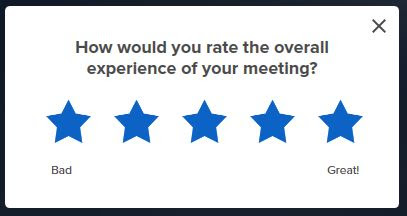
A videoconferencing platform that I use a lot, at the end of every meeting, prompts me to “rate the overall experience of [my] meeting,” from 1 to 5 stars. What if they also had a notes field to type in, since their query is so incredibly general? Here’s what that might look like. (What follows is a blend of fact and fiction.)


The good

BEST. MEETING. EVER. We had one of those guys who turns on his camera even though everyone else’s is turned off, and based on your platform’s default settings, he ended up being on my screen the whole time (and everyone else’s too, I’ll bet). I actually got kind of tired of looking at him, but then he abruptly got up and left the room. So now we were all just looking at his empty chair, and people started talking shit about him! Freakin’ glorious. Nice bit of comic relief during a long, boring day of online meetings.

--~--~--~--~--~--~--

OMG, I will never forget the “overall experience” of this meeting. It was our All-Hands Call with like 60 or 70 people, and we all assumed we’d be muted by default but we weren’t. Most of us figured this out (I mean, it’s been like three years since we all started working from home, right?) but a few didn’t, so there was a bit of background chatter as people were joining. And then we all hear, clear as a bell, “Do you need to go potty outside?” I was already laughing and then, a second later, some other guy comes off mute and says, “Nah, I’m good.” I almost cried.

--~--~--~--~--~--~--

I really love the half-assed way your platform handles audio buffering when somebody’s Internet connection is bad. I mean, yeah, perfect buffering would make it easier to understand people, but who cares? Some motivational speaker once said, “Nobody will remember what you said but everyone will remember how you made them feel.” As cheesy as that is, it’s pretty much true. The highlight of my workday is usually when something goes wrong, so I love love love it when somebody’s speech slows down to this incredibly low-pitched crawl, like when something terrible happens on a stupid TV action show and they show a super-slo-mo of, like, somebody striking out with a knife and another guy throwing himself in the way yelling, “N-O-O-O-O-O-O” in the super-slow, low voice. And even better, when your buffering then catches up it overcorrects and the second half of the person’s sentence is like Alvin and the Chipmunks! I have to scramble for the mute button because I’m totally cracking up. Keep up the “good” work!

--~--~--~--~--~--~--

This meeting made my day. It started off with the usual BS, with people talking over each other and a lot of mansplaining going on, and then this blowhard named Bruce takes over the screen and starts sharing some dumb slide and blathering about it, and then someone else takes the discussion way off track but without taking over the screen share. So Bruce is still screen-sharing when he totally zones out and starts multitasking. He’s typing up some email on a totally unrelated topic and we all stop talking and just watch him for a bit. He’s so checked out he doesn’t notice how quiet it’s gotten until somebody tells him, “Uh, Bruce, you made a typo.” Bust-ed! Everyone starts laughing and I’ll bet he pretty much died of embarrassment. Which is good, because he’s such a tool. He got what he deserved!

--~--~--~--~--~--~--

The bad

Look, I really like your platform, but since you asked, my overall experience was not good. There’s this douchebag Carl who always commandeers our meetings to go off about animal rights. He refers to animal husbandry as “rape,” etc. and once he gets revved up it’s almost impossible to stop him, even when the professor cuts in and says, “We’re trying to learn Photoshop here.” I’m tempted to say, “Carl, whenever you open your mouth about animals, I add ‘veal’ to my shopping list. And I make good.” So anyway, couldn’t you install a feature where participants could vote to expel someone from the meeting? Like, you could have some AI widget monitoring the chat and if enough people type in “Eject Carl” it’ll just do it? I would be the biggest evangelist for your product if you built that feature…

--~--~--~--~--~--~--

I’ve just about had it. I work for a tech company in Silicon Valley and yet in this meeting that just ended, I could only understand about half the people because the other half had crappy Internet connections. I like how your software shows little green or red bars, so we at least know what the problem is, but couldn’t you take that a little further and speed-shame these people? Like, change their title banner to “TOTAL LOSER” if their throughput sucks? It’s 2022, people. Get a real Internet connection. I’d understand if this were some little school district in Cat Butt, Wyoming, but come on. This is Silicon Valley.

--~--~--~--~--~--~--

Overall a good audio/video experience, but I can’t give you more stars because I totally lost my focus during the meeting. Why? Because some guy was presented with this big award, and in his little impromptu acceptance speed he said, “I’m truly humbled to win this award.” In what universe is that true? Winning an award doesn’t humble anybody. It goes right to their heads, and then they probably feel all sanctimonious when they graciously say, “I’m humbled.” What a bunch of shit.

--~--~--~--~--~--~--

The main presenter in this meeting actually had a lot of interesting stuff to say, but I could barely understand him because a) the audio wasn’t that great to begin with, and b) he was wearing a frickin’ COVID mask! I mean, WTF? Does he really think he can spread an actual, non-metaphorical, living virus over the Internet? I never realized how much I rely on lip-reading when the sound is bad. Maybe this guy just wanted to make sure we couldn’t understand him? Whatever, dude.

--~--~--~--~--~--~--

Every meeting I’m on, we get people showing up late or not at all, and then apologizing because their PC rebooted  or their home Internet went down. It’s like the modern day equivalent of “the dog ate my homework.” I guess it’s not enough that you have a great conferencing app that runs on a smartphone so they don’t need their PC or WiFi. Could you offer a deluxe conferencing package with shock ring collars to remind people to use their fricking phones when their PCs are down? I’d totally pay extra for that.

--~--~--~--~--~--~--

How do I lock out late arrivals? I cannot find this in your help menu. Today some guy showed up 26 minutes late for a 25-minute meeting and then proceeded to hold the floor for the next ten minutes and I really had to pee.

--~--~--~--~--~--~--

Could you make the audio mute and video mute buttons farther apart, and/or more distinctive? Today I had both my audio and video muted, and then someone asked me a question, and I scrambled to un-mute and accidently un-muted my video but not my audio. So then I suddenly appeared onscreen, with my disheveled hair and 3-day beard, my mouth going 90 mph but no sound, and five people all saying at once, “You’re muted!” So embarrassing.

--~--~--~--~--~--~--

Can you improve the noise-canceling? So many of my colleagues work from home, the virtual meeting room sounds like a fricking day care. Just a suggestion since apparently some teleworking parents don’t believe in telling their kids to shut the hell up.

--~--~--~--~--~--~--

The ugly

Your video conference experience is mostly great. I like how I can tile all the participants, because with that other mode where it keeps switching to whoever is talking, I start to get dizzy. But could you add a feature where I can selectively mute someone’s video feed from my end? God forgive me, but some of these people are pretty homely.

--~--~--~--~--~--~--

Mostly great platform but man, you guys have got to do something about the fake background. It’s not just that I get sick of looking at a cheesy backdrop like the beach (though I do), but the way your software figures out the outline of the person just isn’t effective enough. Sometimes it looks like a person’s head is cut out of construction paper, or rendered with really bad VR like that “Money for Nothing” video from the ‘80s. There’s this one guy in my meetings who gestures a lot with his hands, and when he gets animated his hands keep vanishing and then reappearing on the screen and it’s totally distracting.

--~--~--~--~--~--~--

I want to start by saying your videoconferencing is amazing! I’m one of those people who can remember the very early days of this technology when the resolution was terrible, all grainy and pixilated with stops and starts and gaps and everything, and now it’s so smooth and hi-res. In fact, it’s actually a bit too hi-res. Which brings me to my request. You know how you can blur the background, so nobody can tell your home office is a mess? Well, could you maybe have a feature to blur the foreground, as in me? My HD camera is mercilessly clear and I’m ashamed of my eyebrow dandruff.

—~—~—~—~—~—~—~—~—
Email me here. For a complete index of albertnet posts, click here.