Showing posts with label Internet. Show all posts

Sunday, April 21, 2024

Can We Unplug our Kids?

Introduction

A new book is out, The Anxious Generation: How the Great Rewiring of Childhood Is Causing an Epidemic of Mental Illness, by the N.Y.U. professor Jonathan Haidt. Both The New York Times and The New Yorker have reviewed it recently, here and here respectively. The book decries the effect of social media and constant smartphone use—citing their role in widespread anxiety, depression, and other mental-health disorders—among Gen Z. As the Times sums it up, “Mr. Haidt lays out an ambitious set of interventions in his new book, which include: no smartphones before high school, no social media before age 16 and no phones in schools.” With regard to these goals, the New Yorker writer declares, “All of these strike me as not just reasonable but irrefutably necessary. What is less clear is whether there is enough collective and institutional will to accomplish them.”

But what if society cannot make these adaptations? Is the next generation doomed, or can parents reverse this digital tide and create appropriate boundaries for their children? Can iconoclastic families go it alone and not get swept up in this modern miasma? The answer, I can tell you from experience, is yes. That’s what this post is about.

How parents are complicit

As is typical, the New Yorker review wasn’t so much a review of the book but an examination of its overall topic: the mental health crisis faced by Gen Z, and the role of the Internet, social media, and smartphones in it. The New Yorker writer cited the role parents play in this quagmire:

By the time that smartphones and social media were becoming omnipresent, in the late two-thousands and early twenty-tens, children were also spending less and less time engaged in unstructured, largely unsupervised play with their peers. This deprivation owed to their parents’ concerns for their safety—a fretfulness known as “safetyism”—and to a competitive, college-fixated mind-set that prioritized adult-led, résumé-building, and “enrichment” activities. Unaccompanied kids doing normal kid things like walking home from school or visiting a playground became conspicuous, strange, perhaps even the subject of a 911 call or a C.P.S. investigation.

It’s disconcerting to see how helicopter parenting and Internet technologies have dovetailed such that parents cannot resist not only allowing but expecting their kids to have smartphones. It’s a true codependence. Kids are willing to surrender their autonomy by letting their parents track them; in return, kids get unfettered access to a virtual realm that distracts them from the real world, to say the least. Meanwhile, parents (perhaps succumbing to FOMO) set poor examples by being glued to their own smartphones as well … maybe not engrossed in Instagram and Snapchat, but in their doom-filled “feeds,” which is probably worse.

Well, not me. You may find this annoying, but I shall now explain how I’ve not only eschewed all this, but successfully opted my kids out of it for their entire childhoods. If you still have young children, perhaps you can find some inspiration here.

My Internet & phone policy

Almost eleven years ago, arguably before the Gen Z mental-health crisis was widely acknowledged, I blogged about my concern that smartphones, with their steady stream of engrossing social traffic and bite-sized entertainment content, were teaching our kids impatience. I proposed three ways parents could combat this: 1) set the right example; 2) work deliberately to teach patience; and 3) don’t let your teens have cellphones or social media accounts. I wrote that post when my older daughter was twelve; I hope a few readers at that time chuckled at my pledge and assumed I’d fall short of actually enforcing it. Here’s how it actually went.

As I explained in a later post, I think every family should have an Internet acceptable use policy, just like corporations do, and here is the one my wife and I laid out from Day One:

  • No social media as long as you’re under our roof
  • No video gaming (the exception being, briefly, an arithmetic game assigned for school)
  • Limits on video entertainment
  • No Internet after 9:00 p.m.
  • No cellphone until high school
  • No smartphone until college

This wasn’t just aspirational; we stuck to our guns. On our home WiFi network, I blocked all social media for all users, other than allowing LinkedIn for myself. (I use it as a digital Rolodex.) I blocked all video gaming as well (the only wrinkle being that my firewall erroneously blocked https://www.aerobie.com/ which isn’t video gaming but for outdoor products like Frisbees; I had to whitelist that one).  Until they were in middle school, my daughters had to log their Internet time on paper, noting when they were online and for what purpose. The idea wasn’t to give me reason to cut them off, per se, but rather to get them thinking about their use vs. letting it be as automatic as a smoker lighting up.

To make video less appealing, I throttled the bandwidth down to 250 kbps, which is a trickle by modern standards—it turned YouTube (etc.) into a pointillist slide show. This wasn’t quite effective enough, so I monitored the usage and blocked specific sites as needed, including gostream, watchcartoonsonline, 123movies, gogomovies, and dailymotion. (I did eventually increase the bandwidth allocation during the COVID-19 pandemic, to support video conferencing.)

I configured my WiFi network to shut off my daughters’ Internet at 9:00 p.m., to start with. My daughters were on separate networks, so later on I changed the older one’s cutoff to 10:00 p.m. When they reached high school and used the Internet for a majority of their class assignments, I allowed them to request an extension on an ad hoc basis if they had a paper to write or something. Eventually, I moved out the shutoff time to 11. So I guess maybe I caved a little on that one.

Meanwhile, as strict as my cellphone policy may seem to you, I really did apply it. I’m not going to lie: my older daughter was not a fan of this aspect of my parenting. She often entreated me to relent. On one occasion, I asked her, “Why is it that you even want a phone? How would that benefit you?” She replied, “Well, it could lead to greater freedom. I could go to more places by myself, and you and Mom wouldn’t have to worry.”  I told her that our merely knowing where she is won’t keep her out of trouble, and added, “Besides, if your parents can reach you whenever they want, that’s not really freedom at all.  Freedom is having enough trust that we don’t need to know where you are.”

Against her protests, I held firm and didn’t get her a cellphone until high school, and even then it was a cheesy feature phone I bought on the cheap from Amazon. I was curious to see how much texting she’d end up doing, and it turned out to be almost none: she basically scrapped the phone entirely. Part of the reason is that it embarrassed her by ringing randomly when she was in class. The ringer volume wasn’t actually adjustable, as far as we could ever figure out, and she struggled to silence it while her classmates laughed. The situation worsened as she struggled to find, in the phone settings, where to turn off the ringer. This phone was so weirdly designed that as you pressed its buttons it would read out the name of each function, as though the user were blind. Some words were pronounced with a British accent; others were in this very annoying, braying female American voice. Our entire family enjoyed mimicking how the phone would sternly yell out, “SETTINGS.” This phone was a complete dud. I only ever received one text from it: “This Is A Message For Dad. Maybe You Can Reply!”

Perhaps with her sister’s experience in mind, my younger daughter never did show any interest in a cellphone. So all through high school, she had nothing.

The result

So how did this work out? Were my unsupervised daughters abducted and sold into slavery? Did they get lost somewhere, for lack of GPS, and never turn up? Did they become total pariahs, scorned by their peers for not being tech-savvy? Or have they made up for lost time and become utterly enslaved by the technology, having not been inoculated against it during their formative years?

The results were a bit mixed. Only one of my daughters was abducted. Kidding! In seriousness, my younger daughter totally embraced the non-digital life. In fact, I have a very fond memory of something I overheard (from the next room) when she had a bunch of friends over for dinner. They were gathered around the table and my daughter said, “Dammit, P—, put away your phone now!”

My older daughter, other than being embarrassed by her feature phone as described above, didn’t tend to complain unless she happened to overhear me describing my family’s draconian policies to another parent. My smug anti-tech priggishness was as annoying to her then as this blog post surely is to you now. But she made do throughout high school without social media, gaming, or a phone, and when she got a smartphone the summer before leaving for college (so we could have some visibility into her nascent habits), she appreciated the utility without getting totally dragged into the virtual-first life. She’s never glued to her phone, at least in her mom’s and my presence. As far as I know, the only social media she’s on is Instagram, and she says she only posts occasionally. (I’ll take her word for it.)

I will say that I do a lot of texting with my older daughter these days—far more than I’d ever expected. But I still don’t think I’m setting a bad example; for one thing, she knows not to expect an immediate response, and I don’t either. Also, the majority of our texts fall into just a few categories: photos of my cat from me to her; the daily exchange of our Wordle scores & snapshots; the occasional snapshot from a bike ride, hike, etc. That’s really about it. The social media culture of broadcasting a curated version of yourself and hoping for a lot of likes does not enter the equation.

As for my younger daughter, she’s now in college, and she still doesn’t have a smartphone. My wife exhorted her to accept one (we’d even pay the bill), but got nowhere. Our daughter eventually agreed to accept a prepaid feature phone (albeit a decent one that doesn’t yell “SETTINGS”). For roughly 90% of her two years at college, the phone has been lost. (I think she’s on her third one … good thing they’re cheap!) For the remaining 10% of the time, the phone has mostly been powered off. If we propose a phone call over the weekend, and our daughter remembers, she’ll turn it on and call us. I periodically ask her if her offline approach has caused any social friction. She maintains that it hasn’t and doesn’t. During her freshman year, in the dorms, she said, “It’s great—the only way people can reach me is to come knock on my door, so I never have to make plans—I just get whisked away.”

The bonus effect

The Internet/phone policy my wife and I devised was based on a few principles: a) nobody should be glued to a screen; b) virtual life should not take priority over real life; c) nobody should be on a social dopamine drip, craving constant affirmation from a wide but shallow network of quasi-friends; and d) we should all avoid the shrinking of our attention span that is afforded and ultimately created by these technologies. My wife and I have been very satisfied with the outcome as we look at our adult daughters’ online behavior.

We perhaps took for granted how important it also was to eschew the safetyism described earlier in this post: the impulse for parents to monitor their children’s whereabouts and activities through their phones, almost like a digital leash. That safetyism washes both ways, I think: the offspring learn not only to expect but to accept and even welcome their parents’ supervision and assistance. Of course kids can text (etc.) their friends for support, but these friends are a shared resource among a wider group, whereas parents are fully invested in their children and ready to bend over backwards. I’ve talked to several parents who were kind of surprised at how closely their kids kept in touch during college, via texting etc. … even to the point where these parents became a bit concerned about the kids’ lack of autonomy.

I think it’s worse when a parent isn’t worried about a lack of autonomy. A few weeks ago my wife and I enjoyed a getaway with a few other couples at a glorious guest house near the ocean. We were out on this back deck taking in the first really sunny day of spring, nibbling fancy snacks and enjoying a rambling conversation, except for one guest, a friend of a friend. She was on her phone the entire time, which I originally took for shyness (she knew only one person there) but which turned out to be a crisis her son was having that she was trying to mitigate. If it had been a real crisis, of course she should have gone off to a private place and phoned him. But it was just the unfolding drama of the kid believing he’d just flunked a college Statistics midterm. To the kid and his mom this was an absolute disaster that threatened to unravel his entire future. Every twenty minutes we’d get an unsolicited update from the mom. “He needs this class to graduate!” she cried out at one point. I replied, “Maybe he should change his major to Drama.” I realized in saying this that I was burning to the ground any chance of ever getting to know this person better, not just for myself but for all those who burst out laughing. But I don’t regret it.

And that’s an effect of this no-phone policy that I hadn’t expected or consicously intended: that it would make my kids more autonomous and resilient. My wife and I haven’t become these de facto fixers who are just a quick digital poke away. Curious as to how true this assessment truly is, I fact-checked myself by going through all my texts and emails from my daughters, to compile the instances of them reaching out for help. Here’s what I came up with:

Daughter A:

  • A request to order her a sketchbook (before I’d given her my Amazon login)
  • A photo of some well-cleaned road rash (doesn’t appear I replied), either to ask how she did or just to flex
  • A solicitation for money (before we worked out a standard practice of 80% reimbursement for necessities, payable several times a year upon request)
  • An email on March 10, 2020 telling my wife and me to suspend our plan to visit over spring break: “There is a very real possibility that there won’t be classes next quarter due to the coronavirus.” (I thought she was crazy … this was about a week before the pandemic asserted its grip on everyone’s lives.)
  • A request to review an English paper
  • An invitation to an awards ceremony, the day before graduation, for exceptional academic performance
  • A request to review a cover letter for a job application

Daughter B:

  • The following requests sent via text: “I’d like another pillow and something to microwave tea in”; “Tell freya I said hi”; “whats the water to rice ratio again”; “Could you give me tha grandmas phone number?”
  • An email request for some books needed for a class that aren’t available at the bookstore
  • A request for my “Southwestern corn goo” recipe
  • A request for money (i.e., to settle up, as described above)
  • This text: “yo could you send me the link/give me the name to your party megamix and other music collections you’ve made?  I’m looking to expand my list”
  • An email asking how to send a camera in for repairs

This isn’t to say my wife and I are totally immune to the impulse toward safetyism. In my case, sometimes I text my younger daughter and when I don’t get a reply (i.e., most of the time), I think, “Dang, I hope she didn’t lose her phone again.” For my wife’s part, she does worry, being a mom after all. She’ll say of our younger daughter, “I haven’t heard from her in like a week and a half. I hope nothing’s happened.” I’m always very supportive, reminding her that in the vast majority of cases, when a college kid doesn’t respond to her parents it’s because she’s been abducted, either by human traffickers or space aliens. I also reminder my wife that this daughter was on the wrestling team: “I pity the fool who messes with her—she’ll go full Hunger Games on they ass.”

Conclusion

If you have young children or teenagers, you don’t need to wait for Jonathan Haidt’s proposed utopia to become reality, such that all of society embraces limits on digital culture. If you have the chutzpah to decry this modern tend toward safetyism, and you have the rapport and authority with your kids to impose limits of your own, you don’t have to wait around and hope that society corrects. You can carve out a family culture, starting right now, that doesn’t put your kids at the mercy of for-profit technocrats. Yes, you’ll have to give up the irresistible prospect of remotely babysitting your teenagers, but after all, you came out okay … right?

—~—~—~—~—~—~—~—~—
Email me here. For a complete index of albertnet posts, click here.

Thursday, February 8, 2024

From the Archives - Bits & Bobs Volume XII

Introduction

This is the twelfth installment in the “From the Archives – Bits & Bobs” series. Volume I is here, Volume II is here, Volume III is here, Volume IV is here, Volume V is here, Volume VI is here, Volume VII is here, Volume XIII is here, Volume IX is here, Volume X is here, and Volume XI is here. (The different volumes have little or nothing to do with one another.)

“Bits and bobs” are little anecdotes from my letters and emails to friends and family, which comprised most of my writing before starting up this blog. The dispatches in this volume were to my brother Bryan, written when I was newly married and living in San Francisco. He was still living in our hometown of Boulder, Colorado. Here is a photo of the two of us from around the time I wrote these.


January 25, 1995

I bought the Mavis Beacon Teaches Typing program for DOS. (I call it “Mavis & Butthead.”) It was supposed to run on 560K of RAM, & they recommended a “meg.” Now this is really confusing: how much is a meg? I’ve heard it’s 640,000 bytes, but I’ve also heard it’s 1,000,000 bytes. Very confusing. Anyhow, it wouldn’t even run when installed, although I have a meg. I made a DOS bootable diskette with modified AUTOEXEC.BAT and CONFIG.SYS files to get past its memory verification, and was therefore able to run it. However, it really was slow. I couldn’t make it keep up with me. I would type, “Mavis Beacon, your program stinks!” and on the screen I’d get, “Mvi Bn, yr pgm sk!” It was absurd, a total disaster. I took it back.

So, instead I bought this cheesy el cheapo Typing Tutor software. It only requires 512K of RAM; an IBM XT, AT, 286, 386 or higher; hard drive optional. Now that’s my kind of program. Its proudest feature is the Typing Lobster Sea Adventure game:

The Lobster Sea Adventure(TM) is an exciting game of chase and it’s an incredibly fast way to increase your typing accuracy and speed. Avoid being “pinched” by the lobster while typing in full sentences and using the shift keys. So many users have increased their typing speed and accuracy with the lobster and had fun at the same time!

Pretty much the most amazing video game ever. Not. 

Feb 1, 1995

Thanks for clearing up the meg issue. I grasp now that there is no standard. Say, that reminds me: at work I sent around these Computer Information Forms to get an inventory of what software people have, and what they want. I put a checkbox for “I need Microsoft Office” and another for “I only need Word.” On one form, an engineer had drawn in a new box and written “I need a new computer” and checked it. That inspired me. Our office manager (or “Director of Marketing and Administration,” a lofty title designed to boost her morale on the cheap) is using a petrified HP fossil called a Vectra. It’s so slow I made a special computer information form just for her; instead of having her fill in the RAM, ROM, MHz, CPU, etc. I just made one checkbox next to the text: “My computer is a tired, crippled old thing that barely runs anything at all. I’m surprised it doesn’t use 8-track tapes instead of diskettes. Somebody should just take it out and shoot it. But please, back it up first.” She put a huge check mark in that box. Alas, as it turns out nobody’s PC seems powerful enough to switch from WordPerfect to Word. Cash flow is too tight. We’ll all have to wait.

March 22, 1995

Things are pretty stressful at work. My boss, the company president, totally dissed me. He’d promised a paper to a magazine called the Inspectioneering Journal, but totally forgot to write it. At the last minute, realizing he had nothing to write, he kicked the project down to me, telling me to write a paper on Mechanical Integrity, on the double. I wrote one, in a huge rush, and I thought it came out pretty well … I even put in some neat visual things, like a table and a pie chart showing the types of issues discovered by OSHA during inspections. I sent the finished article to the journal’s editor for review; if it passed muster, he’d submit it to a panel of other editors for final approval. There wasn’t time to run it by my boss first—we were literally right against the deadline. Well, my boss read it after the fact, and totally bagged on it, freaking out that it would be torn apart by the editorial panel and this would make him look bad (since he was the alleged writer). He said I needed to extensively revise it immediately before the editor could pass it along. He didn’t say one positive thing about it.

One of my boss’s main demands was that I eliminate my entire introduction, which was an overview of OSHA’s Process Safety Management standard (upon which the guts of the paper were based). He also wanted the whole article put into the passive voice (e.g., “we determined” becomes “it was determined”) which of course violates one of the most fundamental principles of style. There were a few more nitpicky “corrections,” all of which were equally wrong. So, my morale being in the gutter, I just didn’t bother making any of the revisions and sending along a new version. I did call the editor and left him a voicemail saying, “With the benefit of hindsight we’ve determined that our initial paragraph may have been needless so I’d like to revise the paper before the panel review.” I didn’t hear back right away, but when I did, it was a message on my voice mail saying, “Well, I wanted to let you know that I got the paper and ... congratulations, you did a great job, it’s just perfect for our journal. I’m really impressed with the clarity of your writing and I am very excited about working with you on more projects. As for the introduction, I wouldn’t change a thing. It’s all appropriate. Further, I would like you to submit a photo of yourself along with the one of your company’s president, to accompany the article, since I’m listing you as a co-author.” Needless to say I feel totally vindicated. I’ve been leafing through The Joy of Cooking for a good crow recipe to give my boss. I need a low-cal one because he really ought to be eating this all the time.

April 27, 1995

You might remember my cool Benrus analog wristwatch with the fancy rotating bezel on it. I’ve known for well over a year that that ring is in fact kind of like a slide rule. Yesterday an engineer at work ripped it out of my hands when I showed it to him, and fairly drooled all over it. In the course of two or three minutes he demonstrated like twenty different calculations you can do with it. But “slide rule bezel” is confusing because it doesn’t slide and that doesn’t sound cool. So I call it the “hyper-alloy detonator depth-charge bezel.” The only problem is, it only rotates one way. Does that mean you can add but you can’t subtract? Multiply but not divide? Clearly I did not retain the engineer’s lesson; I only use the bezel to time parking meters, but rarely, and I usually forget I’ve used it and just go by sixth sense anyway. Besides, I don’t use parking meters that often, since I don’t have a car.

May 11, 1995

I can’t believe you actually complained about the poor bike racing coverage in the [Boulder] Daily Camera. You’ve got to be kidding me. That paper has the best racing coverage I’ve ever seen. We’re lucky to get a list of top ten results in the back pages of the Sunday sports section, next to the bowling results. I can get a little bit of information from CompuServe, the online information service, but my main source is forwarded messages from my friend who can get complete results from America On-Line, which has a Bicycling Magazine forum or some such thing.

October 29, 1995

On a cold, blustery day we went to the San Francisco Center and poked around. One of the things I looked at was a thick wool button-down shirt from Woolrich, just like the ones we all wore back in high school (and which are featured in our Four Brothers portrait that hangs proudly above my desk as I sit here typing).


Lo and behold, I did finally find some wool button-down shirts, but the price tag was staggering … close to $100. Just for a shirt! (Okay, a nice, thick one, but still.) You’ll certainly recall that we bought ours at the Factory Outlet in Broomfield, back when Factory Outlet meant slightly irregular and overstocked stuff that was really cheap, instead of what it means now (which is nothing more than a company-run store that sells only their brand of product and nobody else’s, for a price that is supposedly cheaper, but usually not by much). I’m sure there was something wrong with our Woolrich shirts, but I never could figure out what. A friend of mine back in high school once hit upon a theory: my shirt was defective because the front pockets didn’t have buttons. Well, they did: I just hadn’t buttoned them. So much for that. I have to wonder: now that factory outlet stores generally sell all first-quality stuff, what do companies do with their seconds? Surely they must have seconds. Do they just pitch it? Or do they pretend it’s fine and put some extra tag on there talking about how such variations give the garment character or something?

Finally I came upon some reasonably priced shirts but they looked really cheesy. I was lamenting the downfall of this once proud brand when I realized I’d drifted right out of Woolrich and into the Dockers store. I guess I’m just not cut out for shopping

November 25, 1995

My job is slowing down somewhat. Now that I’ve given notice, I’ve been branded a treacherous backstabber, not to be trusted. I’m having my projects taken away from me and given to people who don’t know how to do them, which leads to these people tearing their hair out while they come up to speed. At least I’m around to help for a while. (“Like this,” I’ll tell them, grabbing a huge hunk of hair in both hands. “You want to tear as violently as possible.”) I’m also helping to interview the candidates for my replacement. This is good too, because I get to ask those probing questions: “You’re walking in the desert, and you see a tortoise flipped up on its back, its stomach baking in the hot sun. You could flip it back over, but you don’t … why is that?”

December 12, 1995

Well, I hope y’all had a good time at Dad’s birthday dinner. I talked to him today briefly. To have an excuse to keep the call short, I used a long-distance calling coupon that the cash register at Safeway spat out when I bought some gum. I dialed the 800 number and a recorded message said, “Thank you for buying Carefree gum at Safeway!” and gave me directions for entering my PIN, etc. The coupon was good for five minutes, which was really kind of strange because you feel like you can’t think of anything to say since you’re so hurried. I managed to remind Dad to reimburse me for Max’s b-day present; Dad had called me on Max’s birthday to say, “Give Max $50 for me and I’ll reimburse you.” But when I reminded him, he claimed he didn’t know what I was talking about. Could he be that scatterbrained? It was only three weeks ago! I’m trying to convince myself I haven’t just been scammed by my own dad.

December 12, 1996

Yeah, I know what you mean about web pages. I could make one using this CompuServe web page wizard, but what’s the point? The only reason I could think of is that by doing a search engine (i.e., AltaVista) search, a long-lost friend could find me. But I got no friends.

—~—~—~—~—~—~—~—~—
Email me here. For a complete index of albertnet posts, click here.

Wednesday, November 8, 2023

From the Archives - Bits & Bobs Volume X

Introduction

This is the tenth installment in the “From the Archives – Bits & Bobs” series. Volume I is here, Volume II is here, Volume III is here, Volume IV is here, Volume V is here, Volume VI is here, Volume VII is here, Volume XIII is here, and Volume IX is here. (The different volumes have little or nothing to do with one another.)

As with the last few installments, these are taken from ancient emails, back when I archived them as simple text files in the mistaken belief I’d be able to keep up with the practice. It didn’t last long, but has yielded some fun finds from a bygone era. I wrote all these when I was living in San Francisco, before moving to the burbs and becoming a parent.


December 26, 1994

[Having recently finished a 9-month bike tour] I’m still interviewing for a proper corporate-type job. In the meantime I’ve been working odd shifts at the bike shop in Berkeley, just to feel like I’m not a totally hopeless unemployed person. It’s a pretty ridiculous commute, first biking up and over California Street which has got to be at least a 15% grade, and then all the way under the bay on the Bart, for the typically paltry pay you get at a bike shop. Still, it’s diverting and often fun. For example, on Christmas Eve, a bike builder named Daniel, who has been on suspension without pay until further notice for sloppy work, brought in a 12-pack of Heineken, probably as a brown-nosing move. We threw it in the fridge, and brainstormed ways to get the owner, M—, to let us drink them on the job. M— was in a holiday mood, which was good; earlier, I’d “reminded” him of a policy of always buying lunch for members of the staff who wore staff t-shirts on Christmas Eve, and he went along with it. Well, by mid-afternoon the mad Christmas crowds were getting to me and the boys, and I proposed to M— the idea of discreet alcohol consumption to carry us through. M— said, “What, there’s beers!? Cool, gimme one.” Alas, it appeared we’d have no way to open them, lacking a bottle opener, but I grabbed a Maillard Helicomatic lock-ring tool and it worked great. In fact, it soon dawned on me that one half of the tool does the lock-ring, and the other is in fact nothing else but a bottle opener. You gotta love the French. Well, M— proceeded to walk out on the sales floor, beer in hand, and sell a bike. Needless to say it was a free-for-all after that.

January 1, 1995

I guess I forgot to give you my (kinda) new street address: it’s below. I had some fun moving in here. Our street is fairly flat, but our-cross street, Filbert, is crazy steep. They don’t call our neighborhood Russian Hill for nothing; our hills are as oppressive as Russia herself. Trucks and tour buses are prohibited on Filbert but that didn’t stop me from driving up it in the 14-foot U-Haul I rented. Its diesel engine was taxed to the limit, and I had this breathtaking, terrifying, yet oddly giddy feeling of impending doom. Halfway up—and too late to turn around—my inner ear started giving me (non-verbal) warning messages that the truck was about to pitch over backwards and tumble down the hill, end over end. It was such a fearsome feat that I almost got an erection. I held my breath and reassured myself with the fact that this time, I’d bought the full insurance. Anyhow, I made it over, down the other side on compression (the engine shrieking like it was gonna throw a rod), and then, as a final flourish, proceeded to parallel-park that baby in one of the toughest neighborhoods for parking in the entire city.

March 13, 1995

I am very gratified to get your response. The kind of honesty I indulged in via my letter to you, calling you out as I did, was admittedly dangerous—the recipient of such a letter can either take the painful, self-effacing route (which you did), or delude himself and continue to hide behind the falsity of his social veneer. This latter type, like a blindfolded tyke who has yet to learn object permanence, will assume that because he can’t see the truth, that it can’t see him. Of course such behavior is completely pathological. Right now I’m thinking of J— S—, whose insatiable desire to be cooler than me back in high school took the form of dissing me, like some kind of human sacrifice to the gods of cool. I thought to myself, “J—, can’t you do better than that? It’s not hard to be cooler than me—why don’t you try to be cooler than somebody who actually is cool? Like the Fonz? I mean, seriously … cooler than me? What kind of ambition is that?” I was originally drawn to J— as a friend, back in elementary school, because he was such a bold, unapologetic nerd. Unfortunately, it couldn’t last. Through what he probably thought was a social apotheosis from lowly dork into “happening dude” (his favorite phrase), I witnessed the slow, cancerous death of a personality.

May 2, 1995

Thanks for the warning about the virus! I’ve always wondered whether those anti-virus programs can detect viruses that come over e-mail. Fortunately, almost all my e-mail comes from trusted friends and relatives anyway. I did, however, receive a “junk mail” message at work. I guess business solicitations are frowned upon on the Internet, but on CompuServe [how I get and send e-mail], who knows, maybe anything goes. Anyway, I forwarded your warning message to everybody in my e-mail list (about 20 people).

So, yeah, e-mail sure is cool. It’s been wonderful to be able to write my brother Geoff without waiting for the normal three weeks or so it takes the postal service to carry physical mail to the Netherlands. Maybe I’ll get a sound card for my PC and record my actual voice, and send the recording as a binary file; Geoff could hear a reasonable computer facsimile of my voice on the other end! Of course that would be more of a parlor trick than anything useful. You know, the strangest thing about e-mail is that my dad, who by all means ought to be a master of this technology, has not actually joined up. And yet he has the computer, and the mind, for it. Bizarre.

August 6, 1995

You know what? Every time I make my Mexican rice, I think of the time I made it at your place in NYC, and scorched it. The horror! I am certain that you threw away the leftover rice, because it was, well, inedible. I only hope you didn’t have to throw away the pot since I’d blackened it so badly. I keep thinking about what a disaster that was. I say all this to my shame. I guess what I’m saying is, you should really come out to San Francisco so that I can try again with the rice, and show you that it really is good when the right ingredients and familiar kitchen equipment are on hand. I could send you back with a new pot, even. So if you get the chance, please come. Until then, I suppose you can just curse my name.

October 24, 1995

Using the formula f=mgh, and my stopwatch and altimeter data, I have calculated my power output for the climbs I biked up today: over a period of 16:30, I averaged 0.37 horsepower. But what does that mean? Does it mean I have a third of the strength of a horse? Well, not really; I don’t think horsepower applies to horses in the real world. But we do use horsepower to describe certain things. For example, my output was .0037 times the horsepower of a 1985 Volkswagen Jetta, I happen to know. And it would be more than enough to power a Hoover Mighty Might vacuum cleaner. If that’s not interesting to you, consider that 0.37 horsepower translates into 272 watts. That tells us my output is enough to power one of our chandeliers and a desk lamp.

November 1, 1995

Why yes, I’ve been to House of Nanking many times, and thanks for asking. I guess I can’t really recall what my favorite dishes are there, as I try to mix it up each time. Until recently, my strategy was to spend my time in line asking everybody else what they usually get. But the last time, I was in the mood for chow fun and asked the waiter, who is also the owner, if they had it. (In my experience, you can ask for just about anything, including chili mac, at a Chinese restaurant and they’ll have it, even if it’s not on the menu. Not that I have ever actually asked for chili mac. I’m just sayin’.) Well, the owner looked at me as if I were some kind of uncultured rube (which I may well be). “No, chow fun is white-man food!” he laughed. “This your first time here?” I said, “Uh … no.” He nodded and said, “I’ll set you up.” What then transpired you can well imagine, as you described your own Nanking dining experience so well in your last epistle … I need say nothing more. I love that place. It’s always worth the wait. I like the strange vegetables that they use—yams, for example. Totally unique (plus I normally hate yams). As far as the place being greasy, sure, it’s greasy, as Chinese food tends to be, but compared to most places, it goes down (and stays down) pretty darn well. Man. Now I can’t get that place off my mind.


August 27, 1996

How cool, I just figured out how to hook the CD-ROM in my computer into my boom box. It works great—so it looks like I bought computer speakers for nothing. Oh well. Now I can play CDs, which I never could before. Only problem is, I only own two CDs and they were both freebies that E— got from her work. I guess I could check out CDs from the library and tape them. Or of course I could do like everyone else and just go to the record store and buy music, but E— and I are trying to save up for a house one day, which is no easy feat in this area. We looked at a 2-bedroom condo a few doors down and it’s $250,000! There are 1-bedroom condos on top of Russian Hill for $1 million … as if! Sausalito is probably only slightly cheaper than San Francisco, and we’d have to pay $3 a day to commute in over the Golden Gate Bridge (not to mention fighting the traffic … no thanks). So we have to be pretty frugal while we figure out where, one day, we might be able to afford a place.

December 2, 1996

Just had the stomach flu. As if in some awful parody of the three-squares-a-day rule, I deposited my Thanksgiving dinner, in three installments, into the toilet (out the front end). Damn!

December 23, 1996

In reply to your question:

>>You’re set in Internet EtheReal Estate, hottest property going 
>>(the new frontier). But still one question: where do you put 
>>the relatives when they come to visit?

Well, it’s really pretty BASIC. First, I should say that my family members aren’t exactly queuing up to visit me. But when one or two of these characters feels the need to offload, I’m happy to let them nest in any free partition in my home. I help download their luggage (we have a little cache to store any valuables they might have). If they stay the night, I have a strange kind of cot I fashioned out of a kind of braided fiber (a web, you might say) that I’ve stretched over a mainframe. I have a nice spreadsheet for the cot, and some other soft wares, to make guests as comfortable as possible. Usually I keep the bedding compressed, but sometimes I set it up just for CIX and floppy down on it myself.

I’d really like to keep my domain open, but I normally limit it to friends and family. I mean, entertaining is a real effort for me—I guess I’m just not a natural-born server. Multi-tasking is hard for me so I just can’t monitor everyone all the time. I struggle to be a good host sometimes, and some guests I don’t like the slightest bit. Most are basically OK, but many just don’t observe the proper protocol. I can handle it if they’re not PC, but I won’t tolerate bad language. In fact, the next time I get a cursor, he’d better be ready to run, because I swear I’ll boot him!

—~—~—~—~—~—~—~—~—
Email me here. For a complete index of albertnet posts, click here.

Thursday, December 15, 2022

Consumer Reviews: Videoconferencing Platform

Introduction

Companies like to measure the quality of “customer experience,” or CX, that they’re providing, but gaining feedback can be difficult. I hate it when I’m asked to submit a “very brief” survey and then several minutes in I have to bail because it’s obviously not brief. I prefer the happy/neutral/frowny, green/yellow/red buttons in airport restrooms for reporting the cleanliness level.

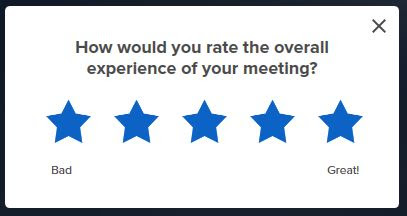
A videoconferencing platform that I use a lot, at the end of every meeting, prompts me to “rate the overall experience of [my] meeting,” from 1 to 5 stars. What if they also had a notes field to type in, since their query is so incredibly general? Here’s what that might look like. (What follows is a blend of fact and fiction.)


The good

BEST. MEETING. EVER. We had one of those guys who turns on his camera even though everyone else’s is turned off, and based on your platform’s default settings, he ended up being on my screen the whole time (and everyone else’s too, I’ll bet). I actually got kind of tired of looking at him, but then he abruptly got up and left the room. So now we were all just looking at his empty chair, and people started talking shit about him! Freakin’ glorious. Nice bit of comic relief during a long, boring day of online meetings.

--~--~--~--~--~--~--

OMG, I will never forget the “overall experience” of this meeting. It was our All-Hands Call with like 60 or 70 people, and we all assumed we’d be muted by default but we weren’t. Most of us figured this out (I mean, it’s been like three years since we all started working from home, right?) but a few didn’t, so there was a bit of background chatter as people were joining. And then we all hear, clear as a bell, “Do you need to go potty outside?” I was already laughing and then, a second later, some other guy comes off mute and says, “Nah, I’m good.” I almost cried.

--~--~--~--~--~--~--

I really love the half-assed way your platform handles audio buffering when somebody’s Internet connection is bad. I mean, yeah, perfect buffering would make it easier to understand people, but who cares? Some motivational speaker once said, “Nobody will remember what you said but everyone will remember how you made them feel.” As cheesy as that is, it’s pretty much true. The highlight of my workday is usually when something goes wrong, so I love love love it when somebody’s speech slows down to this incredibly low-pitched crawl, like when something terrible happens on a stupid TV action show and they show a super-slo-mo of, like, somebody striking out with a knife and another guy throwing himself in the way yelling, “N-O-O-O-O-O-O” in the super-slow, low voice. And even better, when your buffering then catches up it overcorrects and the second half of the person’s sentence is like Alvin and the Chipmunks! I have to scramble for the mute button because I’m totally cracking up. Keep up the “good” work!

--~--~--~--~--~--~--

This meeting made my day. It started off with the usual BS, with people talking over each other and a lot of mansplaining going on, and then this blowhard named Bruce takes over the screen and starts sharing some dumb slide and blathering about it, and then someone else takes the discussion way off track but without taking over the screen share. So Bruce is still screen-sharing when he totally zones out and starts multitasking. He’s typing up some email on a totally unrelated topic and we all stop talking and just watch him for a bit. He’s so checked out he doesn’t notice how quiet it’s gotten until somebody tells him, “Uh, Bruce, you made a typo.” Bust-ed! Everyone starts laughing and I’ll bet he pretty much died of embarrassment. Which is good, because he’s such a tool. He got what he deserved!

--~--~--~--~--~--~--

The bad

Look, I really like your platform, but since you asked, my overall experience was not good. There’s this douchebag Carl who always commandeers our meetings to go off about animal rights. He refers to animal husbandry as “rape,” etc. and once he gets revved up it’s almost impossible to stop him, even when the professor cuts in and says, “We’re trying to learn Photoshop here.” I’m tempted to say, “Carl, whenever you open your mouth about animals, I add ‘veal’ to my shopping list. And I make good.” So anyway, couldn’t you install a feature where participants could vote to expel someone from the meeting? Like, you could have some AI widget monitoring the chat and if enough people type in “Eject Carl” it’ll just do it? I would be the biggest evangelist for your product if you built that feature…

--~--~--~--~--~--~--

I’ve just about had it. I work for a tech company in Silicon Valley and yet in this meeting that just ended, I could only understand about half the people because the other half had crappy Internet connections. I like how your software shows little green or red bars, so we at least know what the problem is, but couldn’t you take that a little further and speed-shame these people? Like, change their title banner to “TOTAL LOSER” if their throughput sucks? It’s 2022, people. Get a real Internet connection. I’d understand if this were some little school district in Cat Butt, Wyoming, but come on. This is Silicon Valley.

--~--~--~--~--~--~--

Overall a good audio/video experience, but I can’t give you more stars because I totally lost my focus during the meeting. Why? Because some guy was presented with this big award, and in his little impromptu acceptance speed he said, “I’m truly humbled to win this award.” In what universe is that true? Winning an award doesn’t humble anybody. It goes right to their heads, and then they probably feel all sanctimonious when they graciously say, “I’m humbled.” What a bunch of shit.

--~--~--~--~--~--~--

The main presenter in this meeting actually had a lot of interesting stuff to say, but I could barely understand him because a) the audio wasn’t that great to begin with, and b) he was wearing a frickin’ COVID mask! I mean, WTF? Does he really think he can spread an actual, non-metaphorical, living virus over the Internet? I never realized how much I rely on lip-reading when the sound is bad. Maybe this guy just wanted to make sure we couldn’t understand him? Whatever, dude.

--~--~--~--~--~--~--

Every meeting I’m on, we get people showing up late or not at all, and then apologizing because their PC rebooted  or their home Internet went down. It’s like the modern day equivalent of “the dog ate my homework.” I guess it’s not enough that you have a great conferencing app that runs on a smartphone so they don’t need their PC or WiFi. Could you offer a deluxe conferencing package with shock ring collars to remind people to use their fricking phones when their PCs are down? I’d totally pay extra for that.

--~--~--~--~--~--~--

How do I lock out late arrivals? I cannot find this in your help menu. Today some guy showed up 26 minutes late for a 25-minute meeting and then proceeded to hold the floor for the next ten minutes and I really had to pee.

--~--~--~--~--~--~--

Could you make the audio mute and video mute buttons farther apart, and/or more distinctive? Today I had both my audio and video muted, and then someone asked me a question, and I scrambled to un-mute and accidently un-muted my video but not my audio. So then I suddenly appeared onscreen, with my disheveled hair and 3-day beard, my mouth going 90 mph but no sound, and five people all saying at once, “You’re muted!” So embarrassing.

--~--~--~--~--~--~--

Can you improve the noise-canceling? So many of my colleagues work from home, the virtual meeting room sounds like a fricking day care. Just a suggestion since apparently some teleworking parents don’t believe in telling their kids to shut the hell up.

--~--~--~--~--~--~--

The ugly

Your video conference experience is mostly great. I like how I can tile all the participants, because with that other mode where it keeps switching to whoever is talking, I start to get dizzy. But could you add a feature where I can selectively mute someone’s video feed from my end? God forgive me, but some of these people are pretty homely.

--~--~--~--~--~--~--

Mostly great platform but man, you guys have got to do something about the fake background. It’s not just that I get sick of looking at a cheesy backdrop like the beach (though I do), but the way your software figures out the outline of the person just isn’t effective enough. Sometimes it looks like a person’s head is cut out of construction paper, or rendered with really bad VR like that “Money for Nothing” video from the ‘80s. There’s this one guy in my meetings who gestures a lot with his hands, and when he gets animated his hands keep vanishing and then reappearing on the screen and it’s totally distracting.

--~--~--~--~--~--~--

I want to start by saying your videoconferencing is amazing! I’m one of those people who can remember the very early days of this technology when the resolution was terrible, all grainy and pixilated with stops and starts and gaps and everything, and now it’s so smooth and hi-res. In fact, it’s actually a bit too hi-res. Which brings me to my request. You know how you can blur the background, so nobody can tell your home office is a mess? Well, could you maybe have a feature to blur the foreground, as in me? My HD camera is mercilessly clear and I’m ashamed of my eyebrow dandruff.

—~—~—~—~—~—~—~—~—
Email me here. For a complete index of albertnet posts, click here.

Sunday, March 24, 2019

Ignorance vs. the Internet


Introduction

It is an article of faith among most modern non-Amish Americans that the Internet, with the limitless access to information it puts at our fingertips, is essentially a good thing. I’m here to suggest it’s not that simple. Choosing ignorance may often be the better strategy.

The Internet lifestyle

If you work in an office, you surely see people slumped over their computers most of the time. Some of them are using these new standing desks, but they’re still hunched. I’m usually hunched too. We are all beyond reproach, however, because we are doing this for a reason: we’re making money.

Kids are another story. Watching teenagers in their natural habitat nowadays is more boring than watching animals at the zoo. These kids just sit there, not slumped over necessarily but zoned out, slack-jawed, staring into their screens as if pithed, totally passive. We parents tell ourselves that it will be okay because they’re all digital natives and will be the next Zuckerberg.

Of course it’s absurd to complain about this because a generation ago teens were all rotting their brains out with TV, which was arguably even worse. At least they’re getting all kinds of information now, right?

Well, that’s actually the problem. They’re being trained to over-consume putatively useful information, which bad habit they’ll carry into adulthood. At least I outgrew “Simon & Simon” and “Remington Steele.” My kids are already watching grown-up talk shows about politics on YouTube, which doesn’t look like a behavior with a finite lifespan. My older daughter keeps quizzing me on this or that dull political topic and I never have anything to say. I used to tell her to ignore all that because she can’t even vote, but she’ll be of age as of the next election. So now I tell her, “Learn enough to figure out how you’ll vote. That’s not a ton of information. The issues, and the differences between the parties, are not subtle. Don’t overdo your research.” But it’s hopeless. Her entire generation seems hell bent on consuming this mountain of information. Because it’s there.

Of course there’s a ton of useless entertainment on the Internet, too, and modern kids are continually cycling among like ten browser tabs, doing the screen equivalent of the Hometown Buffet if it had taste spoons. I’ve throttled down the streaming video on my kids’ WiFi to 250K, so for them it’s like a slow-loading slide show, and super lo-res, almost like a child’s finger painting. It’s such a poignant experience watching this sad process unfold, my kids melting into the furniture as their brains ooze into the ether. But it would be even sadder if they were having the best possible Internet experience, or if they were having this experience while out in the world. (Lacking smartphones, at least my kids are aware of their surroundings when out and about.)

But doesn’t everyone need to relax?

I had a college roommate who played video games (on my TV) 24x7. When the rest of us called him out on it, because we wanted to rot our brains out to, say, “Star Trek – The Next Generation,” he would say, “Okay, just a minute,” and then play for another hour. When we verbally assaulted him and assassinated his character, he’d say, “Hey, man, after a hard day in class I just need to unwind, okay?” This was a joke because he sent most of the time shouting profanities at the screen.

My kids don’t do that, thankfully, but it would certainly be a stretch to say the Internet is, for them, fundamentally a platform for relaxation. The World Wide Web is loaded with rich repositories of stress. For my older daughter lately, its greatest source of strife is the collection of websites dealing with college admissions. Naturally, this application process is a potent source of stress no matter what, but the Internet is like a cat-o’-nine-tails these kids can and do flog themselves with. Let’s compare the college application process from my generation to the current one.

When I applied, I had my target school and my “safety” schools, just like the modern kids. My high school counselor said I’d have a decent shot at getting into UC Berkeley. My grades weren’t perfect, so I knew it wasn’t a sure thing so I applied to a bunch of other UCs as well. I think I spent like half an hour looking them up in “US News & World Report,” which gave me their ratings (number of stars) and a little paragraph on each. I mailed in applications to most of them and then pretty much got on with my life. The die was cast and at some point I’d get either good or bad news.

There was no real info about when I’d hear back, what my odds really were, or anything like that. Anybody I happened to talk to about college assured me I’d never get into Berkeley. I didn’t argue; I mean, what would be the point? They had their hunch, I had mine, and there wasn’t much evidence to support either position.

Some months passed, during which I barely thought about college. Then I started getting responses. Berkeley rejected me, and the rest accepted me. I made a plan to go to some UC, didn’t really matter which, and then transfer to Berkeley as a junior. Everybody assured me I’d never get in that way either because Berkeley didn’t like transfer students, etc. Again, I just shrugged. Who had any real info on this stuff? As it happened, my friends were wrong the second time around: one day I got a packet in the mail saying I’d been accepted. So I went. That was about it.

My daughter started her college application process like a year in advance. She combed the Internet for every scrap of information pertaining to every college she considered applying to. She maintained a master spreadsheet tracking them. She could quote massive amounts of statistics about each one: acceptance rate, average weighted GPA of students accepted, average SAT scores, national ranking, self-reported student satisfaction levels, lifestyle ratings, you name it. Tracking all this info was like a part time job. Meanwhile, there are apparently scores of websites where other students post the bloggy equivalent of “you’ll never get in there,” etc., and tips and tricks for applying that are probably about as reliable as homeopathic medicine. All this adds up to a massive time and energy sink for my daughter, her friends, and probably most college-bound teenagers these days.

But hey, it’s probably a better use of time than playing video games, right? Well, not necessarily, the way the stress can accumulate. The colleges seemed to tease my kid almost continuously, deferring her and putting her on waiting lists and announcing the approximate date when they’d inform her of her fate, etc. My daughter, and apparently most of her friends, were really stressed out during this process, their futures seeming to hang in the balance. When my daughter was deferred and then, months later, finally rejected by Northwestern, she was terribly distraught and immediately began researching the odds of transferring in later. When that answer was less than encouraging she started looking at transfer acceptance statistics for all the schools she’s interested in. She basically leaped from one conveyor belt to another. Sure, gathering information feels like the first step in an action plan, but she won’t be transferring for like two and a half years … what’s the rush?

(Of course I am not just talking about my own kid here. I’m sure her behavior around college apps is not unique or even remarkable for her cohort. And my kids’ overall Internet use is either typical of their generation or lower.)

When I applied to transfer to Berkeley I had no idea what the acceptance statistics were. If I’d wanted to worry over this, and pick at everything like a damn scab, I wouldn’t have had any real means to do so anyway. Where would I have researched this stuff? The public library? Yeah, right. I just shrugged and hoped for the best.

Now the Internet provides more college info than anybody could possibly have the time to ingest, which we naturally assume is valuable. But has anything really changed? Sure, our kids can bury themselves in data, but does that actually increase their chances of getting the college they want? Not that I can see. They’re just flagellating themselves, greatly exacerbating the already wrenching ordeal of college applications, and building up a giant body of facts and statistics to use in bemoaning their wretchedness to parents and friends. A generation ago, all we had to say was, “I was rejected,” which was a mercifully brief report.

Of course this overall phenomenon doesn’t end with higher education. I’ll bet most college seniors do a great deal of fretting over how they’re going to find a job. They probably bury themselves in even more data then. Myself, I did nothing. I just did my schoolwork and put off thinking about what would come next. I graduated, stayed in the Bay Area because there are plenty of jobs here, and applied for the first reasonable job that came along. I was hired inside of a week, and started my adult life.

Years later I had people asking me (and my wife), “Wow, you graduated in 1992? So you started your career during that horrible recession?” I didn’t know what to say, other than the truth: I was totally unaware of the recession. Nobody told me about it, and I didn’t read the news. My wife had exactly the same experience. We both wandered blithely into the job market and found work, just as we’d both nonchalantly transferred to UC Berkeley without knowing or caring how feasible a plan that really was. If our total lack of regard for the situation on the ground had any effect at all, it was probably just being less nervous during our interviews. So to me, this modern era of analyzing everything to death via the limitless Internet just looks like a way to maximize stress.

On the brighter side

But the Internet has a bright side, right? It helps us celebrate life! If we have a great hot fudge sundae or a really tasty beer, we can share that experience with our friends and family!

Well, as much as I do enjoy Beck’sting, of course all this social media has already devolved into soul-crushing one-upmanship, as has been bemoaned and documented so thoroughly I need not grow that mountain of evidence and opinion any more here. But there’s a less commonly cited downside to celebrating our activities, triumphs, and little life pleasures over the Internet, which I’d like to point out.

I’ve been reading this article in “The New Yorker” about Outdoor Voices, a clothing company whose marketing theme is “doing things,” by which they mean any kind of exercise—doesn’t have to be a marathon or a Tough Mudder—and feeling good about it. The feeling good part generally involves showcasing your activity, yourself, and your cute outfit via Instagram, with the hashtag #Doingthings. Now, if the opposite of “doing things” is being totally sedentary and stuck to a screen of some kind, then I’m all for it … but why does the act of not staring at a screen have to rely on the Internet to promote and celebrate itself?

Let me tell you a story. I coach a high school mountain bike team, which means I get plenty of exercise and access to the outdoors. Sometimes, though, depending on what group I ride with, I do a little extra riding after practice, to get in some good hammering (which is what leads to the really sweet endorphins). One evening I got home from the team ride, changed into my road shoes, grabbed my road bike, and headed back out. Going up a nice 12% grade in the Berkeley hills, I came upon one of my student athletes. Just like me, he’d decided to go do a little “stealth training” of his own! Just for the love of the sport! I was really stoked to see this.

“Getting in a few extra miles, eh?” I asked him. He replied, “Yeah, I’m trying to get 10,000 feet of climbing in one day.” Wow, I thought … some kind of personal ambition, I guess, maybe almost like a little vision quest. How totally cool. “Is this just something you cooked up on your own?” I asked. He said, “Well, it’s kind of a Strava thing.”

My heart sank. Of course this was more than just a private little bike ride. Nothing is private anymore. Everything is celebrated. There are t-shirts that say, “If it’s not on Strava, it didn’t happen.” What an annoyingly cynical slogan. It’s pretty much the nail in the coffin of riding for riding’s sake. Now, every time we swing our leg over the bike, we’re guaranteed kudos.

Not that I have anything against Strava per se. I don’t happen to use it, because I’m too old and slow to care anymore how I stack up against others, and moreover I don’t want kudos. More to the point, I don’t want to give kudos because it takes too much time … time I could be riding more, cleaning up my bike, reading a book, or all the other stuff I don’t have time for. Can’t I just make a blanket statement that I love cycling and applaud you for doing it in general? And am I not making enough of a statement by donating my time and energy to coach these kids, in hopes of turning them into lifelong cyclists? Why does pushing ever more data up to the Internet need to be a part of that?

What is to be done?

Look, I’m not trying to suggest that you should curtail your Internet use. I’m just promoting a bit more awareness, so that when you’re sponging up info via this platform—or any platform, frankly—you might pause here and there and ask yourself if the info your getting is really worth the time and trouble. Is it making you money? Is it making you happy? Is it making you better? And if you have kids, you might consider talking about all this with them. (They won’t listen, of course, but as parents we gotta try, right?)

--~--~--~--~--~--~--~---~--
For a complete index of albertnet posts, click here.