
Introduction
Around the time Lindsay, my second daughter, was born, I started keeping a journal about her life. (I did the same for her older sister, and you can see an excerpt here.) My journal project was inspired by those baby books where you put in footprints, birth size and weight, developmental milestones, etc. Those baby books are typically surpassed only by exercise bikes and crock pots in unfulfilled good intentions. Usually the first couple of pages are diligently filled out, and then the new parents get overwhelmed and the rest of the book is blank.
I endeavored to do better. The result? A mammoth 400-page document, spanning my daughter’s entire life thus far, which I presented to her when dropping her off at college. Here’s an excerpt, emphasizing episodes I think are funny (but which shouldn’t embarrass my kid, who after all has suffered enough, what with me as her dad).
A note on the text: it’s written in the second person (i.e., “you”) because the journal’s real audience is my daughter. You albertnet readers just get a taste.
(Art in this post is by Lindsay’s Grandma Coral, except one picture by Lindsay.)
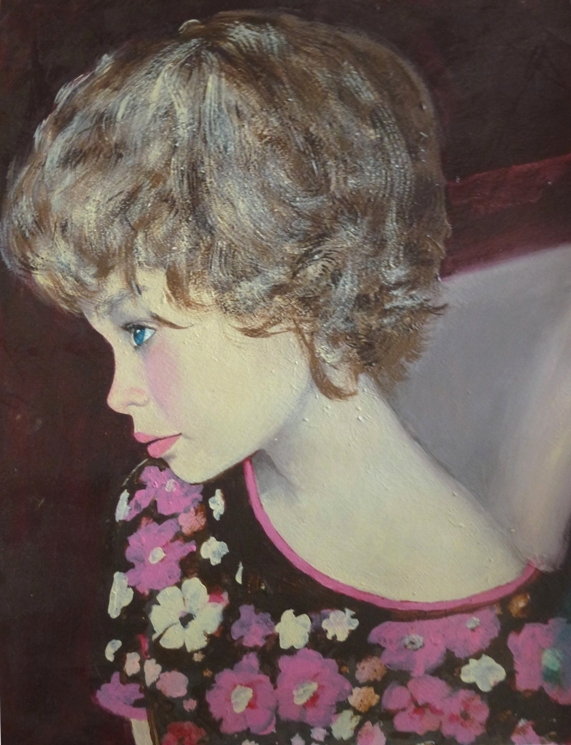
September 15, 2004 (age almost-1)
I’d forgotten how messy it is when a baby tries to feed herself. You’ll sit at the high chair happily for twenty minutes or more, grabbing everything on your tray, shoving much of it in your mouth, spitting much of this back out, and dropping a lot. Watermelon is a favorite, as are Cheerios (or “ring shaped oat cereal,” as the parenting books call them), refried beans (cold), little blocks of cheese, pieces of bread, cut-up fruit . . . just about everything except baby food, which you never really took a shine to. I’ll be all stoked at how much you ate, until clean-up time when I discover what looks like at least 90% of it on the floor, in your chair, and in the pouch of your bib (when we manage to get the bib on you, which is seldom). When you’re done you scream and cry throughout the clean-up, just like your sister used to do. Then you want to be held, which is a problem because I don’t want to have to change my outfit in addition to yours.
April 7, 2005 (age 1-½)
When I say, “Where’s your nose?” you grin, grab my finger, and touch your nose with it. Then you touch my nose with it. Then you start moving my hand around to different parts of my head: “That’s my ear,” I’ll say, “and that’s my mouth … that’s my cheek.” It’s not entirely clear how much you’re directing the hand and how much I am; it’s like a Ouija board.
You love throwing things away. Every time I empty the trash I have to watch out. The cat’s dish gets thrown out a lot. You’re just like your mother.
April 3, 2006 (age 2-½)
[Our cat] Misha kept getting on the table during dinner. I admonished her, “Get out of here Misha! Go catch some bugs!” (My point was that she’s supposed to be a hunter, not a scavenger, and yet I wouldn’t encourage her to catch birds.) Well, you and Alexa really liked this utterance. I’m not sure whether you grasped the point or not; you may just have seen it as a stock put-down or something. Anyway, the other day we were getting in the car and you and Alexa had some dispute, perhaps over who got what car seat. With a somewhat self-satisfied air (I think you’d prevailed in the dispute), you said, “Go away, Alexa! Go catch some bugs!” Man, she was pissed ... especially, I think, because your mom and I were laughing at what you said. I think this was your first joke ever, or at least your first joke that actually made somebody laugh out loud. I know plenty of adults who haven’t yet achieved that milestone.

April 11, 2006 (age 2-½)
I was reading No No, Jo to you. It’s about a kitten who’s always making messes by trying to help, and each page ends, “But does Sam [or whoever] thank that kitten? Sam says...” Then you open out a flap that shows the kid reacting to Jo’s mess, saying, “No no, Jo!” The idea is that the child to whom you’re reading the book can provide the chorus, or punch line, for each page. But you weren’t doing it. You’d done it before, but this time you were in a needy, weepy way because you’d just awoken from your nap to find the babysitter was here. You like the sitter okay, but of course you recognized that her presence meant your mom would be leaving. (I would be leaving too, but that’s no big deal for you.) It was tough even getting you to let me read to you to cheer you up. I thought you might be coaxed into helping me say the “No no, Jo!” part, so I prompted you. “What does Sam say?” I asked. “Please?” you whimpered.
April 18, 2006 (age 2-½)
We had Easter at your Grandma Judy’s house up in Oregon. After the egg hunt we had breakfast and then a walk. Your mom was enjoying the walking so much that she asked me to administer the chocolate bunnies to you and Alexa while she and my mom walked some more. This seemed like a fine work detail at first, until I saw the size of the rabbits. They were huge! Probably four inches tall, and solid chocolate. Of course you and your sister were thrilled and started gnawing on them right away. Soon you had chocolate all over your mouth and hands. As your mom was leaving she’d said, “Dana, it’s up to you to keep them from making a mess!” I gave you and Alexa each a paper napkin. I policed the devouring of the chocolate for a long while, maybe fifteen minutes, but man, what a tedious job. At several points I thought of taking the chocolate away because it was just too much, but of course that would be like taking candy from a baby. A lot like that in fact. So I tried to encourage you to save some for later. I gave you each a bag to put your bunny in. You dutifully wrapped the bunny in the napkin and put it in the bag, and then, once the delight of this operation wore off, you took it back out and started gnawing again. Finally I couldn’t bear the tedium, not to mention the ghastliness of it all, any longer and started to pack for our trip home. Your mom returned to discover that you (and/or Alexa) had smeared melted chocolate all over the cream-colored upholstery of one of Grandma Judy’s dining room chairs. Your mom snapped at me, I snapped back at her, my mom was hurt because she’d actually bought the bunnies and they’d cost a lot, and at last we fully appreciated the glory of Christ’s resurrection and the thrilling mystery of the rabbit that lays eggs.
June 7, 2006 (age 2-¾)
You were going to tag along with your mom to your sister’s ballet class, but I got home from work right before they left. Your mom saw an opportunity and changed her plan, leaving you home with me (vs. chasing you around the community center for 45 minutes). Oh, man, you were not happy about this—in fact, you had a complete meltdown. I was so exhausted from work, I went straight to my last-resort solution to the crisis: I put in a video for you, which is a rare treat. Then I put a beer in the freezer (we didn’t have any cold) and set a timer to remind me it was in there, lest it get forgotten and burst. When that timer went off, some 10-15 minutes into your video, you thought I’d set it for you, to limit your video time (a standard practice, but one which frankly hadn’t occurred to me in this instance). To my pleasant surprise, you ejected the tape and brought it to me, without any fuss. After that we seemed to be reconciled. It just goes to show, beer is probably the solution to most parenting difficulties.
September 26, 2006 (age almost-3)
You often use the word “instead” when you’re not actually comparing two options. “I want milk instead,” you’ll say, apropos of nothing. I guess it makes sense, because whenever you propose the having of something you’re also implicitly rejecting the not-having of that thing; i.e., “I want milk instead of no milk,” or “I want milk instead of nothing.” Very philosophical of you.
January 23, 2007 (age 3)
Your mom used code words the other night so you wouldn’t understand an idea she proposed to me. She referred to me as “the paternal guardian” or some such thing. “Call him ‘Daddy,’” you told her. Ah, the power of context (though in this case, for her to refer to me in the third person, when talking to me, should have helped throw you off the scent).
April 4, 2007 (age 3-½)
You call butter “toast,” as in, “I want more toast for my bread.” You call your lacy shawl “my marriage.” You call guinea pigs “bunny pigs.”
April 7, 2008 (age 4-½)
Last night at dinner, you had a bite of your mom’s dinner roll. “I don’t like this,” you said. “It tastes like Play-Doh.” I asked you how you knew what Play-Doh tasted like. You said, quite reasonably and matter-of-factly, “Because of this [roll].” This is a nice example of the logical fallacy of “Petitio Principii,” and you delivered it expertly, even convincingly.
July 16, 2008 (age 4-¾)
I sent in proofs-of-purchase from a cereal box and ordered you and Alexa these “Mommy and me” matching wristwatches (big and small). To my surprise, both you and Alexa wanted the black Hot Wheels watches instead of the pink Barbie ones. They arrived yesterday. They feel like they’re made of rubber. They’re black, with a tire tread texture. I asked if you liked them (and may have asked how you would rate them vs. the Barbie version, I can’t recall). You said, “These are cool. Cool is better than beautiful, because beautiful is just paint.”
August 25, 2008 (age almost-5)
You and Alexa were awake, first thing in the morning, and stayed in your beds, talking. I sneaked the door open, and silently peered in. Alexa asked you, “Lindsay, who’s your favorite person in the whole world?” You replied, “That Otto kid at Dandelion [preschool].” Alexa didn’t like this answer at all; as became evident, she wanted you to say that she was your favorite. She told you you’d hurt her feelings, and lectured you on how family is supposed to be more important than mere friends, but you wouldn’t back down. This discussion repeated itself a week or two later, and this time, though he was still your favorite, you couldn’t even remember Otto’s name. (I reminded you, but you seemed unsure that you’d had this right to begin with.)
December 18, 2008 (age 5)
We bought a new[er] car. I had cautioned you and Alexa to behave during our visit to the dealer, and you and Alexa really did. I had also said, almost as an aside, that it would be better if you didn’t appear too excited about the car, since it wouldn’t help our negotiating leverage for the dealer to know we were in love with it. I was a bit concerned about how excited you and Alexa would be about the built-in booster seats (which really are cool). Not surprisingly, that was the first thing the dealer brought to your and Alexa’s attention. I’m sure he recognized that if he could get you girls jazzed on that feature, we’d have a hard time walking away if he didn’t meet our price—sort of the “threat of tantrum” technique that grocery stores use, stocking every aisle with crappy toys and hoping parents will just bite the bullet and buy them, to lubricate the grocery shopping process.
Well, we all piled in for a test drive, and within minutes you said loudly, “I don’t like this booster!” I asked why not. You replied, again loudly, “It doesn’t have any armrests!” This was going well. The dealer’s implicit “You wouldn’t deprive these delightful children of their beloved built-in boosters, would you?” was being answered with an implicit, “Try me. Your boosters are overrated.” I decided to take a gamble and pretend to try to resolve your misgivings, figuring that you’ve never yet accepted a token bone thrown your way: “But Lindsay, if I weren’t sitting in the middle seat, we could fold down the middle armrest and you’d have that!” You replied, with an irritated don’t-you-patronize-me tone, “I want two armrests! I have two arms, so I want two armrests! I don’t want this booster!” So the booster seats were effectively neutralized as a bargaining tool. Yesssss!
July 22, 2010 (age 6-¾)
Alexa finished a meal recently and instead of taking her plate to the counter, she took it into the dining room. “Alexa, I know you’re licking your plate. Stop that and bring it in here,” I told her. She commented that if nobody sees her, it shouldn’t matter. “God can see you,” I said, just to see what my daughters’ reactions would be. You replied, “Does he care?” This was a departure: at other times, you’d referred to God as a she. I asked, “So God is a he, huh?” You replied, “Yes, God is a he and Goddess is a she.” I asked you who is in charge. You paused for a moment, reflecting, and then said, “They fight a lot.”
June 6, 2011 (age 7-½)
You read more and more picture books by yourself, but with chapter books you still prefer being read to. Right now I’m reading aloud Clarice Bean, Don’t Look Now. Every so often I pause and ask you questions to see if you’re catching all the details and subtexts. Yesterday I asked, “Do you think Clarice should have told Betty that she had tickets to the ‘Ruby Redfort’ movie premier, to cheer her up?” You replied, “No, that would make it worse because Betty wouldn’t be able to go—her family is moving away, but she hasn’t told Clarice that yet.” I said, “That’s right, we know something that Clarice doesn’t. And what is that an example of?” Without missing a beat, you replied, “Dramatic irony.” That’s my girl!
July 31, 2011 (age 7-¾)
You and Alexa were complaining about not having enough little Lego dudes to play with. Your mom suggested you make your own little Lego guys out of Lego bricks. Alexa complained, “That’ll never work!” Your mom replied, “Then the Lego set has failed the whole family and we’ll never buy them again.” This infuriated Alexa, who cried, “That’s not funny in the least! We don’t have the right kind of bricks for that!” Always acting in solidarity with your sister, you wailed, in an equally affronted tone, “It’s like trying to do a math problem but you don’t even have a brain!”

—~—~—~—~—~—~—~—~—
Email me here. For a complete index of albertnet posts,
click here.


