Showing posts with label data slave. Show all posts

Saturday, September 24, 2022

Biketronics II

Introduction

This post is not about e-bikes (i.e., battery-assisted bicycles). I have a lot to say on that topic, actually, but that’s for another day. This also isn’t about electronic shifting; I cover that here and here. This post is about bike computers.

More than twelve years ago in these pages, I posted Biketronics, a survey of these handlebar-mounted computers (and related technologies like heart rate monitors, power meters, etc.). That was a surprisingly popular post. So, having recently purchased the fanciest (and perhaps wackiest) of these devices I’ve ever had, a Sigma Sport Rox 4.0 with GPS capabilities, I figured we could go another round. My every instinct tells me this is a terrible topic and that nobody could possibly be interested, but then I’ve been wrong before. (For example, my post on the spelling of “kindergartner” is now one of my most popular of all time.) So here we go. I’ll throw some totally unrelated gags in here and there just in case your interest flags.

By the way, a lot has changed since my original Biketronics post. Back then, of the fifty-two cycling pals I surveyed, only five were using GPS-equipped devices. Now virtually all my friends have GPS. So I’ll devote some focus to that.

Who even uses Sigma Sport?

Nobody uses Sigma Sport bike computers, at least in this country. I literally don’t know a soul who has one, except one guy in Germany. I had to order mine from some outfit in Spain. So why did I choose Sigma Sport? Well, Garmins are too popular, same with Wagoo or Wayco or Woohoo or whatever that other popular brand is. I don’t want to be like everyone else. Besides, I’m a cheap bastard, and all the modern GPS-enabled models are at least a couple hundred bucks. No thanks.

Besides, look at the loads of features you get with the Rox 4.0:


Sure, lots of modern bike computers have power meters built in, but how many have pierced earrings? You might say “plenty,” but you’re not paying attention: pierced ears are popular, but pierced earrings? Those are hard to come by. And I love the existential air of “protective seals removed and cannot be.” These seals, these seals … they cannot be!

I also wanted a Sigma Sport because my old one served me well. It looked outdated the day I bought it, and certainly had its quirks, but it featured a groovy lap timer that would enable me to easily see the time, distance, and heart rate of my favorite climbs after the fact. Alas, the plastic bits enabling that computer to snap into the handlebar mount started to wear out to the point that I had to rubber-band it in place.


That wasn’t foolproof either so eventually I epoxied it to the mount, meaning once the battery dies I’m probably screwed—plus I can’t move it from bike to bike. So I wasn’t in a hurry to replace the computer, but it needed to be done.

I sense your interest waning—I know mine is—so here are a few good names for a rock band:

Duck Husband

Repetitive Stress Disorder

Nipple Confusion

Loofa Harvest

Good thing I wasn’t in a rush, because the new computer took forever to arrive. Tracking the shipment online was like trying to measure continental drift. It made its way across Europe in not much more than a week, but then was stuck in the Netherlands for twelve days. I emailed support and the retailer wrote, in an incredibly long, mostly boilerplate email, “Your parcel is currently on its way and it is due to be delivered to you very soon… Based on our experience, Customs can take between 15-60 days to unblock your parcel and proceed with delivery.”

Rox 4.0 documentation

I never did manage to find a complete list of specifications for this computer, even on the Sigma Sport website, so I guess I can’t complain that it didn’t come with a complete owner’s manual either. There was a nice thick booklet, but it’s only thick because it’s in ten languages, including Czechoslovakian and Polish. (I guess I should be grateful English is even among them.) The manual is actually just a “quick guide,” with a QR code for the “detailed instructions” web page which is mostly just little videos that cover only what is in the quick guide. There are no instructions anywhere, for example, on how to sync the computer to the heart rate monitor strap.

Here’s an example of the quick guide quirkiness:


“Active” and “Auto-Pause” aren’t actually defined. You start a workout by pressing the big button, and stop it the same way, and there’s actually a way to tell the state (running vs. stopped) on the screen—but the instructions don’t tell you what it is! And why are these “most important settings” anything you’d want to mess with during training? Think about it: you’re in the middle of a workout, hopefully not in the middle of a fast descent, and suddenly you think, “I need to calibrate the altimeter!” Why would you think this? And, if you wanted to manually set the altitude, how would you even know what altitude you’re at, other than to check the altimeter that’s right in front of you? Okay, maybe you’ve reached an elevation sign, but a) are those really common enough to make this among the most important settings, and b) why would you trust the sign, which is after all placed wherever it’s convenient to dig a hole, over a device that auto-calibrates itself via GPS, with an easy way to true itself up? It makes no sense.

First ride

I set out on the first ride with the new computer without having messed with the display settings. The display is highly configurable, which is pretty cool, but of the thirty touted functions, not all can be included in your configuration. That is, you have to choose your favorites. I figured while I was getting my feet wet, I’d just go with the factory configuration. I didn’t have any heart rate data because I searched too long in vain to learn how to set that up and was running out of daylight.

The first thing I noticed was a compass, which is nifty but totally needless because I seldom journey anywhere. There was also this weird directional arrow that seemed to point around randomly. Descending Wildcat Canyon Road, I noticed my speed fluctuating quite a bit, which you’d expect with GPS due to the satellite signal being blocked by tree cover, etc., but I had paid extra for the wheel sensor, so this shouldn’t have happened. Kind of annoying, but whatever … I was enjoying the big bold letters on the display, anyway.

But then, about ten miles into my ride, I noticed the mileage only read five miles. WTF?! Was this thing a total piece of crap, unable to actually measure distance? But the duration looked correct, and the speed (other than the occasional fluctuations) also looked about right, so it wasn’t totally whacked. But then things got even weirder. My confusion became outright bewilderment when the mileage number actually started dropping.

You’re probably just dying to learn the solution to this paradox, but I’m going to interrupt this post with a proposed title for a country & western song:

No one wears a mullet anymore

Two-thirds of my way through the ride, the mileage number was lower than ever, and it just dropped the whole rest of the way. By now you’ve surely figured this out, as I finally did too. The hypothesis I formed a few miles from home proved correct as I rolled down my street and the numbers went from fractions of a mile to matter of feet, and reached almost zero when I hit the driveway. That’s right, the device was showing my distance from home (presumably as the crow flies). So the accuracy was not an issue … but what a weird thing to want to display on your computer. I’m still scratching my head on that one.

The phone app & sharing

My old Sigma Sport uploaded its ride files to my phone over NFC (near-field communication) which was kind of a manual process and took a little while. The new one uses BLE (Bluetooth low-energy) and is swift and automatic. Look at the pretty display of my ride today:


I can share the ride, in Strava-like detail, via a URL to a (presumably) private website, with a much larger map, and I can drag my mouse along the graphs and such. (The units shown here are, alas, metric but I’ve already figured out how to fix that.)
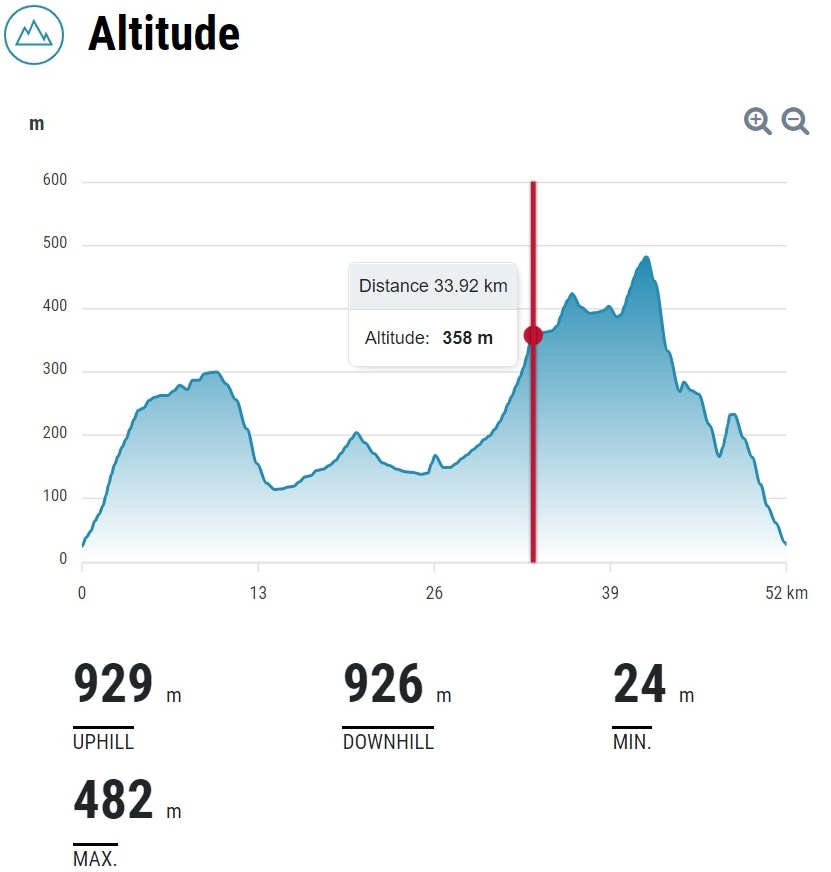

I even figured out how to export these rides into a format that my old Sigma Data Center software can import, so I can still have an unbroken record of my rides going back years. And I think I’ve mastered the various features of this thing (other than integration with komoot, which I may never need).

And now it’s time for a few more rock band names:

Pack Shrapnel

Clear Rectal Discharge

The Harried Parents

Dark Yarn

Now that the Android app and PC software are dialed in, and I know how to operate the computer, the only remaining problem is…

The speed & mileage mystery

I’ve got this fancy sensor mounted on my hub to provide “even greater accuracy,” so why do all the totals for my standard loop come out low? And why does my reported speed suddenly drop from 28 to 14 mph and then pop up to 32? I decided to query my bike team, to see if they have this issue, and if it’s even worth having that sensor on there (since it’s kind of ugly).

Right away, I received replies from six teammates. Two of them actually answered the question (short answer: no difference between GPS and sensor measurement), and the others provided a variety of interesting tidbits:

  • The mph display often lags (jumps) while under tree cover, as does the elevation gain/loss. Piece of shit
  • The device connects with a satellite. The choice of satellite affects the data. The device usually has a Satellite setting. Galileo is US satellites. GLANOSS is Russian satellites. If you set your device to choose both then supposedly you’ll get more accurate data. (There may be a third set of satellites available now, too.) If you ride a lot in one location, then travel  (like if you ride from Oakland every day then one day start in Sacramento or France) this can confuse the device. The solution is to find the necessary obscure setting and leave it outside for a specified length of time. (Read the instructions. You’re on your own.) The device works better facing certain directions, like north, I think. Something to do with astronomy.
  • Dana if you get on Strava all your problems will disappear Do it! Do it! Do it!
  • GPS based measurements aren’t perfect. Absolute GPS accuracy is typically in the 5-10 meter range for consumer devices, so the GPS measurement is typically combined with an inertial measurement unit (IMU), which gives accelerations and rate of rotations that are then integrated to get linear and angular velocities using a Kalman filter. This also means that if the GPS signal is degraded due to building or tree, your velocity doesn’t suddenly read zero. Since the IMU in consumer devices generally sucks, it’s not going to be perfect.

Wow, that’s a lot to digest. I for one am not interested in having the Russian government tracking my movements, and I’m not sure which device (the bike computer or my phone) is doing the actual GPS work and would have the necessary obscure calibration setting to true it up. I’m sure I don’t want to start doing northbound-only rides and coming back on a bus or something. Above all else, I think it’s time for some more cool rock band names:

The Incestuous Mollies

The Quasi-Vegans

Leap Smear

Hard Floor Tool

Getting back to my teammates’ feedback, I reckon that the hub-mounted sensor I’m using is indeed the highly sophisticated IMU described, and it’s just not engineered well enough to be that accurate … which is a bit of a shame, since the old-school ones, which had a magnet attached to a spoke that passed by a sensor that counted the wheel rotations, was utterly simple and infallible. Perhaps part of my problem is that I’ve mounted this IMU on the rear hub (so I don’t have to look at it). I have just discovered (via a video buried within its website) that Sigma Sport recommends front hub mounting for “optimum reception.” Is it worth moving it, or do I ditch it entirely? That brings me to my next question.

Does any of this matter?

My friend Craig, who wrote about the IMU, went on to say:

Of course, you never precisely defined what you’re trying to measure. Do you want to know how far the tire patch of your front tire travelled? Or, do you care more about your rear tire patch? Even a rider trying to go in a straight line makes micro adjustments while pedaling, so the front tire travels ~0.25% farther! The more you turn, the greater the difference between the front and rear tire path will be. Or, perhaps you care more about your center of gravity? In that case, every time you rail a corner, your center of gravity takes a route that might be ~1% less (depending on the radius of the turn and your lean) than your rear tire patch. Of course, does it matter? Did you do less work because your new device showed that your ride was 2% shorter?

I think he’s being diplomatic here; the more direct version of his question might be, “Who cares what your mileage and speed are when the bigger question is, when are you going to start training harder so you don’t fall off my wheel when I’m trying to be nice and drag you through a headwind?” And he would have a point.

The answer is, at least in the short term, I want credit for every last foot of my rides because I’m doing a friendly competition called Cycle Around the Globe to raise awareness around the problem of suicide, and to engage in the collaborative effort to help prevent it. (My personal fundraising page is here.) Currently I’m sitting in 15th place with 540 kilometers ridden, though the leader has 14,000 kilometers, which he achieved in a single ride … so I’m guessing he’s not using a consumer-grade IMU. In fact, I think he’s even worse than those mopeds and e-bikes on Strava … he’s just making shit up. But for a good cause!

Lap timer

Alas, there is no lap timer on the Rox 4.0 (even though this very basic feature is available on a $14 Casio watch). I think I know why: the vast majority of cyclists are on Strava, which tells them their time on any segment they could want, automatically. But no, I won’t join Strava. That kind of thing’s not my bag.

—~—~—~—~—~—~—~—~—
Email me here. For a complete index of albertnet posts, click here.

Monday, December 31, 2018

From the Archives - Brutal Bicycle Training Contest - Part II


Introduction

If you read my last post, you were left hanging, your interest (ideally) kindled about who ended up winning the 2005 Albert training competition. (If you didn’t read my last post go do that first.) This post provides the electrifying conclusion of the protracted, wrenching, ego-drenched battle between brothers. By way of review, the brothers in question are Bryan (at left in the photo below) and Geoff (at right).


Where we left off, I led the competition—after 362 days—by a mere 3.5 points over Geoff. To emphasize how close this was, that’s just 0.12% of my total score to that point. Geoff and I were absolutely neck-and-neck, and both already fried from three brutal weeks on the bike.

Thursday, Dec 29

GEOFF (before riding, and remember, he’s 9 hours ahead of Dana and Bryan): As I look over the [training competition] spreadsheet for inspiration, less than half an hour before I suit up for my final effort of the year, I feel a sense of doom, not unlike that feeling I had when Dad was going to spank the whole lot of us, and I was sent around to friends’ houses to round everyone up. I know I’m going to have to do great things here in the next few hours, and this causes my bowels to constrict with fear. I wonder what will happen... By the time you read this I’ll probably have posted my score. I hope it’s a big one.

GEOFF (42.0 points, indoor – 2 hrs 25 min): In an attempt to demoralize and crush the opposition, I have produced this score. I felt pretty good and decided to shoot for two hours above the [heart rate target] zone. After 1:45 above the zone, I just fell apart. I got off, caffeinated, drank apple juice, emptied my bladder and soaked my head, which got me through another turbulent five minutes, but then it just ended. My legs would go around in circles no longer. I threw in the towel and started cleaning up and warming down.

But then I decided to try again, as this is the end of the year, and climbed back onto the torture rack, made my best effort to turn the pedals around some more, but no, it just would not happen. I was knackered. Had the stuffing completely knocked out of me.

So there it is, 42 points. Dana, if you can top this effort, why, you deserve the win. Who knows though, maybe I’ll feel inspired on Saturday, and will get back on the bike. I doubt it though....

DANA: You bastard! I have no time to ride today and no energy anyway. But I’ve been checking the FTP site all day, waiting to see what you did, and fantasizing about a sub-30 score, the natural result of the fatigue that I hoped would finally catch up to you. But no, instead you get medieval on my heinie, you just shock-and-awe me, with this grotesquely monstrous score. You are a bad, bad man. D’oh. I’m already terribly dreading tomorrow’s hammerfest. It’ll be doubly painful given the obvious futility of my attempt...

[SITUATION: GEOFF AHEAD BY 38 POINTS]

[Here’s a photo from 2006, of the three of us studying our ride data together. We were data slaves long before Strava even existed.]


Friday, Dec 30

BRYAN [catching up from Thursday]: Man, Geoff! What in tarnation are you? The Terminator? Look at these scores! Look at the slope of that graph! Every stinkin’ ride is over 30 points! And getting back on after throwing in the towel, that’s heroic! But I happen to know that Dana’s out there right now, putting the hammer down, even as I sit here waiting for the next round of nausea and the next mad dash to the toolit to puke my guts out. I’m thinking Saturday’s calling your name...

DANA (40.4 points, indoor – 2 hrs 5 min): NO GIFTS.


BRYAN: Good grief, the mother of all mother scores! Look at that score-per-hour number! Only two hours, and an hour and a half of it above the zone! Well, this is certainly going to be a battle. NICE RIDE, DUDE!

DANA: Thanks! I only wish it didn’t totally wreck me. At the dinner table afterward, I was almost too tired to chew. In fact, I became too tired to eat before I was really full. I just couldn’t stay vertical another minute, and collapsed to the floor on my back. Even typing this note is a serious chore.

GEOFF: Well shoot, you certainly are an ornery little cuss, aren’t you? Man, 40 points. Now of course I have no choice, I have to ride again. I only hope I can do something great. Man, nice effort! An ‘A’ for effort! Of course you’re going to dig deep tomorrow and I just know that you’re going to pull ahead again, and that on New Year’s Eve I’m going to have to make myself suffer again, and that it will be in vain. Oh well, I’ve never been so close to the victory before. I guess that’s worth something.

DANA: If you had any first-hand knowledge of how badly I suffered for these points, you wouldn’t be worried at all...

[SITUATION: DANA AHEAD BY 2 POINTS]

Saturday, Dec 31

GEOFF (39.7 points, indoor – 2 hrs 12 min): Well there it is, my final effort. I somehow outdid myself. At the time, it felt as if I had given it all I had. Yet I didn’t fall off the bike. Nor did I have to crawl around afterwards, I was still able to walk. Shoot, my lips didn’t even turn blue. Now I’m feeling like such a wimp. Why oh why didn’t I stay on just another ten minutes? I could have shattered through the magical 40 Point Barrier.

Oh well, I guess I should be proud of myself. It was a near death experience, after all. At one point my eyes filled up with tears and overflowed for almost no reason. At another point my pulse sailed up above 160, where it stayed for what felt like an hour, though in reality it was only a few minutes. I was sure that I’d died and been relieved of my suffering, and decided that I’d stay on the bike for the rest of the year [i.e., until midnight]. Then of course my pulse plummeted again, and it was back to reality.

So there it is, almost 40 points. Will it be enough? Will age and treachery overcome youth and skill? Or will Dana pull it off yet again? We’ll soon know. The ball’s back in your court. Punish me, young man!

DANA (pre-ride): MAN! I’m so impressed, I can’t even bring myself to call you a bastard. That’s amazing! Look at that score-per-hour, right on the heels of your 42-point MegaTour! I’d also like to point out that you took the world record for score-per-month of all time, besting my 400.2 mark from 2003! You also got the second-biggest week of all time (second to your own record, of course). Now, I’m going to swing my leg over the bike today, but I can’t imagine I’ll have the strength to even begin to convince myself that victory is possible. You’ll know soon . . . perhaps very soon, if things go badly enough for me! Nice ride, dude!

BRYAN: What an incredible finish! I’d say that you really wanted this one. An incredible week, an incredible month, shoot, an incredible year! Nice work. We’re all very proud of you over here!

DANA (10.6 points, indoor – 1 hr): Today’s ride was horrible, but at least it was brief. That is, it took me just an hour (actually 59:45, which was as close to an hour as I could get) to ascertain, beyond a shadow of a doubt, that there was no way I could score enough points to win. I’ve attached the final graph, because it tells a poignant tale. About 35 minutes into the workout, my spirits faltered and my pulse dropped to about 145. This angered me, and I hammered as hard as I could and finally crossed the [target] zone threshold. At this point I had all the grace of a fish flopping on the floor of a boat, being murdered with an ice pick. After about 90 seconds of this I was actually crying. I blew up, and my heart fell to just over 130.

I was getting ready to climb off the bike when I had my Tom Simpson moment. Remember, just before he died on Mount Ventoux, when his famous last words were “Put me back on my bike!”? That’s what I’m talking about. Reflecting on the absurdly short duration of my ride, and motivated by an equally absurd refusal to accept defeat, I decided to try to recover and go a bit longer.

And so, 48 minutes in I decided to try one more time to burst over the zone threshold, and (I foolishly hoped) somehow pin myself there [i.e., above my heart rate target zone—that is, redlined]. And as the graph shows, I actually did get it up there for awhile. When I finally detonated for good, which of course was inevitable, I decided to just keep hammering as much as I could despite the extreme, piercing, shattering pain. At this point I was uttering strange animal noises, somewhere between groans and screams but really more like yelps (given my lack of breath). And then something really strange happened: after maybe 30 seconds of this my heart rate began to soar. It got into the upper 160s and stayed there awhile, for about 45 seconds, and then suddenly I not only couldn’t pedal anymore, but couldn’t hold myself up on the bike. I crumpled into the handlebars and it was all over. Good thing I was on the [indoor] trainer or I’d have stacked!

So, not a great score, but it did get me above the 100-points-in-a-week barrier, for a personal best. It also got me above the prestigious 300-points-in-a-month barrier. It also brought my margin of loss down to less than a percent, which I have to be happy about. Best of all, it’s finally over.

BRYAN: Well shoot, Dana, my condolences. It was a valiant effort, I must say, as your last ride’s data attest. I believe you’re the better man for it, however, and I fear what you will do in the coming year. Did you realize that you shattered your previous total scores, as well as your best week? Very impressive...

GEOFF: Well Dana, your description of your final ride has filled my head with all sorts of thoughts. First of all, there’s respect and admiration for your grit and determination and your ability to torture yourself. My hat’s off to you! Then of course there’s the enormous sense of relief that you didn’t actually die trying. Erin would have killed me! There’s also the recognition of having been right there with you, having experienced exactly the same emotions. There’s a common bond here which I’m sure many people will never know. Oddly enough, I seem to be missing the thrill of victory. Maybe it just needs to sink in.

[FINAL SCORE: Geoff 2,941; Dana 2,914; Bryan 1,567.]


Final commentary

BRYAN: Gentlemen, nicely done. I am impressed and awed at your biking prowess. It’s a privilege to be crushed into oblivion by you.

DANA: I tried. That’s all I can say. Of course that’s not true—I can always say more. For example, nice job Geoff! I’m actually not that bummed about losing this year, because I lost to such a gritty opponent.

GEOFF: Well, I can scarcely believe that I actually won. I honestly thought it was impossible to beat Dana on the bike. I’d like to take this opportunity to thank everyone who made this victory possible, including the artists whose music made it possible to dig a bit deeper, my parents for providing me a genetic gift for determination, my equipment suppliers whose gear stood up to the task, the promoters and producers of this great sporting event, and of course my unwavering fellow competitors, whose dedication and guts are an inspiration to us all. So, what am I doing after the celebration? I’m goin’ to Di’neylan’!


--~--~--~--~--~--~--~---~--
For a complete index of albertnet posts, click here.

Wednesday, December 26, 2018

From the Archives - Brutal Bicycle Training Contest!


Introduction

For over a decade, every year I held a year-long bike training contest with my brothers Bryan and Geoff, and sometimes a few friends. It started January 1 and ended December 31 and was a points competition. We didn’t race head-to-head, nor did we compare times (like Strava does). Instead, we used the data from our heart rate monitors to score each ride in terms of duration and intensity.

(Here’s what these heart rate monitors looked like … fairly primitive by today’s standards, though they did offer data upload to a PC so we could crunch the numbers. Yes, that 39 on the screen is my heart rate … I was much fitter back then, and this was at rest.)


Intensity was determined by each rider’s average heart rate, and what percentage of his maximum heart rate this average represented. The closer to redline a guy rode, the higher his score was, based on an accelerator applied to his base score; i.e., total score =  [duration]*[avg HR]*[accelerator].

There was also a bonus based on the amount of time spent with the heart rate over the target zone (i.e., more than 85% of the max heart rate). This meant that whatever part of your ride was at absolute redline earned you big bonus points. In a nutshell, you scored high by hammering your ass off for as long and as hard as possible. (Downhills and other periods of low-intensity riding were chucked out by a special software algorithm Bryan coded.) So the real total score = [duration]*[avg HR]*[accelerator] + [bonus].

We tracked one another’s scores closely via a shared spreadsheet we would trade around via FTP. The score per month and running total were displayed graphically. We commented on each other’s rides, cheering and jeering, and often going off into the weeds with stories of family life. Often we’d review and update the spreadsheet several times a day.

(Here’s a photo of Bryan, Geoff, and me taken in 2006, during a training ride for the 2006 La Marmotte cyclosportif.)


The contest of 2005 was particularly close, with the winner not determined until the final day, December 31. This meant we spent our Christmas and New Year’s Eve holidays pedaling like madmen. It’s a wonder our wives put up with it.

This post gathers up our scores and comments, with a pretty graph at the end, so you can read the amazing story of our end-of-year death march. (If you’re not that into bicycling, fear not: there are some great side stories about our kids barfing, which ought to pique anybody’s interest.)

A final note: Geoff lives in The Netherlands, so he’s nine hours ahead. This meant I sometimes knew his most recent score before I rode, but not always. Sometimes we didn’t update our scores right away (either due to time constraints or a backhanded keep-‘em-guessing strategy).

Training contest showdown – December 2005

Saturday, Dec 24

GEOFF (35.8 points – indoor, 1 hr 52 min): Dana, I’ve taken your [virtual] yellow [leader’s] jersey! How ya like me now?!

DANA:  (14.1 points – 1 hr 21 min, 21 miles, 2,913 vertical feet of climbing): Doggone it! I didn’t see a score for you as of this afternoon, and thought maybe you’d taken the day off. So I went out and hammered (as well as I could, anyway), thinking I’d be padding my lead. Instead, I lost it! I just didn’t have it today … too many hard rides already this month!

I’m going to have a hard time putting up the big scores this week because I can no longer ride indoors. We’re having the kitchen painted, and though the painters put up a plastic sheet, it’s been punched full of holes, and the fumes have filled the office [where I ride the trainer]. I considered riding with a gas mask down there but that would get mighty gross. So I rode in the rain today. What a mess. My chamois was like a thick soggy pancake by the end, and my socks weighed a pound apiece. To dry out my shoes, I stuffed inside-out diapers in them (for lack of newspaper). It’s supposed to keep raining, so this next week will be a real test of my gumption! And I’ll be in Sacramento for Christmas so I won’t get any riding done…

BRYAN:  Man, Geoff, nice ride!

[SITUATION: GEOFF AHEAD BY 19 POINTS]

Monday, Dec 26

DANA (17.2 points – 1 hr 23 min, 21 mi, 2,976 vertical feet):  D’oh! We didn’t get back from Sac until this afternoon. I’d hoped for a longer ride but simply ran out of daylight. Man, I can see the contest slipping through my fingers! I live in fear of the next Geoff Albert MegaScore. And I didn’t even get the lead back today!

[SITUATION: GEOFF AHEAD BY 2 POINTS]

Tuesday, Dec 27

GEOFF (32.6 points – indoor, 2 hr 1 min):  Well that was painful, but I’m pleased. Man. I was practically hyperventilating for the full two hours. It was one of those struggles to keep the pulse up. Thinking about the rest of the week is terrifying. Such pain, such misery. It will not be fun. If I weren’t such a coward I’d just throw in the towel and announce that I won’t be riding any more this year. But I can’t, of course.

BRYAN:  Well, Geoff, shoot, it looks like you’re poised to take away my score-per-month record and there’s nothing I can do about it. On the other hand, you’ve earned it!

DANA:  (7.2 points – 1 hr 34 min, 20.6 mi, 2,920 vertical feet): Nooooooooooo! This was just what I was afraid of. I suffer long and hard to eke out another tiny advantage, and then Geoff comes along and obliterates it. [Here, I did my ride before seeing Geoff’s score, so when I went to post mine, I saw right away that he had hugely outscored me.]

That does it. I’m going to play this like a numbers game. No more strategizing about how much rest to take to feel best on training day. I’m going to have to ride every day, on the off chance that I’ll feel good. If I feel lousy, I fall off the bike and drown my sorrows in my own sweat. If I feel good, I go as long and hard as I can. Trouble is, tomorrow is my last day of vacation and I doubt I’ll feel very good, if today is any indication. Man, I’ve been on the sofa most of the day, between loads of laundry. My legs feel like they’ve been actually injured, like somebody shut them in a car door. Man o man. I felt SO lousy on this ride. I had big ambitions, too. I ate breakfast, mixed up two big bottles of Gatorade, two Clif bars, clothes for any weather . . . I was going to ride for hours and get a shock-and-awe score. I figured I’d finished yesterday’s ride with something still in the tank and would feel good. The horror! I just didn’t have it. I felt slightly less than mediocre going up Spruce, fairly lousy on South Park, and absolutely abysmal on Lomas Cantadas. There were times on that climb when my bike would come almost to a complete stop at the top of the pedal stroke. I went from intending to conquer the world to simply hoping I could limp home. Even my arms were tired.

In other news, just before bed last night Lindsay had sudden, violent bout of projectile vomiting. Her aim was uncanny:  she sprayed down a large pile of silk sweaters, fanned her blast over to our goose down pillows, nailed the down comforter and duvet, coated a bunch of clothing, and created a huge slip hazard on the hardwood floor. Never has such a small person created such a huge amount of laundry in so little time. Plus we had the bedroom windows open due to the paint fumes, so without that comforter I froze the rest of the night. I dreamed that I was riding with soaking wet chamois and tights. D’oh.

BRYAN:  You’ve got to love those little vomiters! Last night at the dinner table (our family has been afflicted to varying degree with illness) Jamey announced that she felt like she was going to barf. So we told her to go to the bathroom. Then we heard her heaves—they sounded like those of a full-grown man! That little angel hit the toilet with every blast, and there were four of them! So we tucked her in with her bucket. Poor little fellow, with her sheet-white face...

Last night Lydia was complaining of some serious stomach problems and today she’s hurling hard. She even threw up out the window of her uncle’s car, spattering all down the side of the car! This was in heavy traffic, no less.

GEOFF:  Good grief! I’m counting myself very lucky that I haven’t had to clean up vomit in a while! The last time was when Max didn’t make it to the tiled bathroom in time, stopping mid-stride to empty his system on the brand new carpeting upstairs. I couldn’t help but grin as I was scraping it out with a spatula, just like Mom used to do. I don’t know how I got the vomit patrol task, but I did.

DANA:  Speaking of Max, I chatted with him the other day, international long-distance, and bragged that I ate roll-mops [raw herring wrapped around a dill pickle spear] as my recovery food after a cold, wet ride. I was bragging, of course, but he unknowingly deflated my wimpy American swagger instantly by asking, “Was it yummy?”  It hadn’t occurred to me that a food that gives one (wussy American) man culinary bragging rights can be another (cool European) man’s (well, boy’s) delicacy...

BRYAN (20.6 points – indoor, 1 hr 3 min):  I’ll take it. It won’t help much, but it was a good ride, all things considered. It sure hurt to ride the trainer. I had forgotten how much suffering and drudgery it is. In fact, I wondered for a few minutes why I’m even doing this…

DANA:  Not bad! Your score-per-hour is stellar, as always. Did John work out with you?

BRYAN:  Nope, just solo. I think he was feeling a bit ill and went to bed early. It was a late-night ride. Now I’m feeling sick too! My belly’s all queasy and I feel like I should be puking, but I’m not—yet. Fine by me, but I sure didn’t feel like mounting up last night. I was hoping to ride every day through 12/31, but it’s not going to happen.

GEOFF:  You know, I’m feeling a bit ill myself. My head’s heavy and hurts, like one of those colds coming on. Of course it sure doesn't help that I only got five hours of sleep last night…

[SITUATION: GEOFF AHEAD BY 27.5 POINTS]

Wednesday, Dec 28

DANA (30.4 points – 3 hours, 47 miles, 5,975 vertical feet):  Boy, this one hurt. I psyched myself up as much as possible first, reading a Tour de France book beforehand while waiting for my NoDoz to kick in. I achieved some good time-above-zone early on, by suffering hugely, and then about halfway through I started to fall apart. Man. I felt every pedal stroke today. Each one was so hard, I was able to count them. There were 14,387. Oh, such horrible suffering. Every climb the Berkeley hills can throw at a guy—South Park, Fish Ranch, Claremont, South Pinehurst, Pinehurst, El Toyonal, and Lomas Cantadas. I’m glad I took the lead, but of course it’s another of those ahead-by-a-hair deals that will certainly be crushed out like a cigarette tomorrow.

I was absolutely destroyed at the end of this ride. Erin saw me come in the door and gasped at my blue lips. (It wasn’t that cold out; I think it was the problem I had after the 2003 La Marmotte, when my body was having trouble reoxygenating.)  Boys, you know you’re hurting when you have to sit down in the shower.

BRYAN:  Remember how I was feeling sick, like I should be booting, but I wasn’t? Well, I guess it just took a little while to come on, but boy did it! It’s like a hydrant! Wet cleanup in aisle 3!

DANA:  Dude ... what a grind!

[SITUATION: DANA AHEAD BY 3.5 POINTS]


To be continued…

For the thrilling conclusion to this barbaric, ego-fueled struggle, tune in to Part II, coming to albertnet on December 31!

--~--~--~--~--~--~--~---~--
For a complete index of albertnet posts, click here.

Friday, September 19, 2014

Ready for Everest Challenge 2014?


Introduction

The one big race I do every year, the Everest Challenge Stage Race—two days of racing with 29,000 feet of vertical gain—is  coming right up.  In case that “29,000 feet” description doesn’t tell you much, consider that each stage of this race is like climbing a 5-mile staircase with 24,000 steps that would take you to the top of a 1,160-story building.  The first day is bad enough, but the second day is murder.  The third (and last) climb on the second day is, by itself, the equivalent of a two-mile staircase with 10,000 steps reaching the top of a 490-story building.


A friend asked recently, “Are you ready?”  It was not my wife who asked.  She knows better, having had quite enough of my blather.  It was my friend John who asked; he flew out from New York to race the EC two years ago.

I could have simply answered John directly, since he was reckless enough to ask and might actually be interested in the answer.  But why answer only him, when I could blog about it on albertnet, where other people, like my mom and a Russian hacker, might also see it?  Plus, maybe you’re considering racing the EC, or have already signed up, and are wondering more generally, what does it take to be ready for it? 

(Perhaps most importantly of all, this post will come in handy later, when the EC is over, as a retrospective building block for self-flagellation.)

My gut

My gut tells me that I’m ready.  But then, what does “ready” mean?  I’m very confident I can finish, since I have five times before.  Beyond this minimal sense, “ready” begs the question “Ready to do what?”  To a snowboarder, “ready” means “Ready to shred this gnar’!”  Which I’m totally ready to do, unless you’re talking about descending, where my modern chickenshit approach and undersized “big” chainring keep me decidedly within non-shredding, non-gnar territory.

So, what am I trying to do this year?  Well, after all the solid training I did last year, I ended up setting the wrong goal.  (I should have followed my own advice and not set a goal at all.)  I’d been so miserable on the final second-day climb in 2012, I vowed to take it easier in 2013 and pace myself better, especially on the first day.  (Day-to-day recovery is my Achilles heel.)  Did this strategy work?  Well, I certainly felt better on the second day’s last climb last year, but I was only 3 minutes 40 seconds faster ... and I was 20 minutes slower the first day.  So whatever suffering I saved myself then has been dwarfed by the year of self-loathing I’ve subsequently suffered.  (I’m reminded of a Steve Coogan line:  “Remember:  death is but a moment; cowardice is a lifetime of affliction.”)

So, this year, I’m going to try to man up and go as fast as I can, both days.  I know that sounds simplistic, but go try racing for more than twelve hours over two days and then decide if you still think this all-out business makes any sense at all.  So:  am I “ready” to go utterly destroy myself?  Well, can you ever be “ready” for that?  And conversely, aren’t we all born ready?

Of course, “my gut” doesn’t refer only to a subjective sense of readiness.  It also refers to whether or not I’m fat.  “Fat” in cycling parlance means having an abnormally low amount of body fat that is nonetheless still higher than what you wish you had.  I’m pleased to report that my fancy electrode-equipped scale tells me, as of a couple days ago, that I have 5.9% body fat. 

There’s some fine print, though:  you have to configure the scale with your height, age, and whether you’re an athlete or not.  This last setting probably tells the algorithm to simply lower the number so that the self-styled athlete doesn’t get pissed off and demand a refund on his crappy scale. 

The numbers

I keep a really detailed training diary.  I know, I know, I should use Strava for this, everybody keeps telling me that, but I don’t feel like sharing all my details with the world, especially if I’m updating the comments right after a workout and might write something untoward.  (The pro team Omega Pharma-Quick Step has a rule against riders tweeting within an hour of competition “when when emotions can be running high, and logic and reason can go out of the window.”)

Old-school Excel training diary in hand, I compared this year’s EC training to that of 2012.  (Of course how I prepared in 2013 is irrelevant, that race being an ugly smear on my memory.)  The below chart shows a comparison of the EC training period (beginning after vacation and ending in mid-September) for both years.  What I’ve discovered is that my preparation has been almost eerily similar:


Look at that.  Only ten seconds difference on Mount Diablo.  The biggest contrast is the number of Diablo ascents, but this year I did two fairly comparable rides in Colorado  (click here and here for details).  The difference in vertical gain might look like a lot, but actually, I gain that much vertical in just a couple of weekday (i.e., evening) rides.

Now, if I were a proper bike dork, I’d have a power meter and could look at all kinds of extraordinary numbers.  And in fact, it would help me during my rides as well.  I saw this in action last weekend when, on the second trip up Mount Diablo of the day, my pal Craig dropped my other pal, Ian, and me.  Craig just walked away from us (figuratively speaking).  At the summit, when Ian commented on this, Craig said humbly, “I was just watching my power meter and trying to keep it between 300 and 350 watts.”  To which Ian replied, “Yeah, I was just trying to keep mine between zero and 200.”

The requisite lugubrious day

I think it’s pretty unlikely that anybody training for a race like EC, and then racing it, will escape having a truly lugubrious day.  If he does, he’s either loafing too much (like I did last year) or is egregiously lubed like the pros.  (Yes of course I noticed that “egregiously lubed” is an anagram of “lugubrious leg guy,” except when it isn’t really, which is always.)

The trick, I think, is to get that lugubrious day out of the way during training so that you won’t have it during the race.  It’s like an insurance policy against having a particularly bad day when it really counts.  This almost worked in 2012 when I did a double-Diablo training ride fueled entirely by greasy dim sum, as chronicled here.  But I wasn’t quite miserable enough that day to call it lugubrious, which perhaps is why that last EC climb became my crowning lugubrious moment of the year.

What exactly do I mean by lugubrious?  Well, you know, just mournfully, pathetically, almost comically sad (though too sad for it to be funny).  This photo, I think, captures it pretty well.  Yes, I’m actually sobbing into my orange slices (after totally cratering in the 2003 La Marmotte).


So, you may be wondering, have I had my 2014 lugubrious moment?  Well, I almost got it out of the way really early, on January 1, when I raced the Mount San Bruno hill climb.  I went into the race angry, and was hoping to channel that anger into a great performance.  But as I wrote in my subsequent race report, “As I got dropped, I discovered that it’s possible to be bitter without being angry.  In fact, I just felt sad.”

Fortunately, that wasn’t my most miserable biking moment of 2014.  Nor was a frigid ride in the rain in February, though that experience was also awful enough to write about.  No, my worst ride of the year so far—which certainly deserves the lugubrious label—was my first double-Diablo after getting back from vacation (i.e., from missing almost three weeks of riding). 

Man, that ride was just awful.  I clocked abysmal times on the climbs, and couldn’t even keep up with my pals on the flat section back from the mountain.  (Because I’d taken so long on the climbs, Craig had to really motor to get home on time, and couldn’t wait up for me anymore.)  I finished up with over an hour of solo riding when I was barely able to turn the pedals.  By the end I was just totally shattered.  Everything hurt ... my legs, of course, and my butt, and also my forearms, my biceps, even my hands.  Even coasting hurt.  I came away from that ride feeling that the “good base mileage” rule is bogus—that I’d have been no worse off had I done no riding at all during the spring.  After that ride I was totally useless for five days straight.

(They say misery loves company, and I was duly cheered to learn that another pal on that ride fared even worse than I had.  Despite skipping the second trip up the mountain, he had to stop to lie down three times on the way home.)

Omen

All those stats I provided earlier may end up meaning nothing, as stats often do, so I should probably hedge my bet a bit with an omen.  I certainly have one to share, though whether it’s a good omen or not remains to be seen.

Last week I was hammering home through Tilden Park, at the tail end of an evening training ride, in the last moments of weak daylight before dusk set in, when I saw something swoop down from out of a tree.  Its trajectory was totally unlike that of a bird.  It came right at me and then swerved at the last second, but in the wrong direction so instead of going over my head, it went down and actually hit my thigh on its way past.  “What are you, blind?!” I thought, before realizing that yes, in fact, it was.  It had to have been a bat.  Moments after seeing it, I saw another creature of the same size and odd flight style, but this one was silhouetted against the horizon and was definitely a bat.  I got home and googled “bats Tilden park Berkeley,” and sure enough, bats can be found here.  Or they can find you.  (The other odd creature I’ve been seeing lately, but on Mount Diablo, is the tarantula.  I’ve seen three of them in the last month.)

So, what does it mean to be hit by a bat while riding?  Stay tuned to albertnet, because in early October I’ll give you the a full report on the 2014 Everest Challenge:  what I ate, and how badly I destroyed myself, and thus whether being hit by a bat is a good or bad omen.

Sunday, January 24, 2010

Biketronics

oooo
Introduction

This isn’t a post about the new electronic bicycle shifting system from Shimano. Electronic shifting is not the future of the sport, nor is it anything new. Mavic took a fruitless stab at it in the ‘90s, and in 2003 Campagnolo did too. Electronic shifting was a dumb idea then and it’s a dumb idea now. Why spend many hundreds of dollars to shave grams off your bike, only to spend thousands more adding needless complexity and a battery pack?! Electronic shifting is a solution looking for a problem. Enough said.

Nor is this an essay about two-way radios in professional cycling, and the debate over whether to ban them. That’s an interesting topic, but I doubt I could shed new light on it; without access to the riders in the pro peloton, I can only speculate on their perspective. (Doubtless some appreciate the radios because they remove the stress of having to figure out race tactics, while others chafe at the idea that they’ve been hired from the neck down.)

This is, rather, a post about the electronics more commonly used by mainstream cyclists: bike computers, heart rate monitors, power meters, altimeters, and GPS devices. In addition to some personal anecdotes, I will share the results (comprising 52 responses in all) of a survey I sent to my cycling pals on this topic.

Early devices

The first cycling data-gathering device I remember was the Huret Multito odometer my friend Aaron had back in 1982. It was actually pre-electronic: a clunky little black box mounted at the front axle, with a little rubber ring that looped around a tiny wheel, like a pulley, that rotated with the hub. Its readout was like a miniature version of a car's odometer.

The main purpose of the odometer was bragging rights: Aaron and I were only thirteen and doing our first century rides; seeing that thing tick over from 99.9 to 100 was pretty exciting. The rest of the time the Multito was a bit of a nuisance because the little rubber band was always falling off.

The first proper bike computer I remember was the Avocet 20, which came out in 1985. It was black, pretty small, and had a recessed display that tended to pool up with sweat. The squishy, rubbery round buttons had a pronounced click to them. The Avocet was fun to use, but this fun came at a price: when I’d ride with my friend Peter, he’d use the speed data to help drive up our pace. I’d be sucking his wheel for dear life, longing for that moment when he’d pull off so I could finally slack off and rest at the front, but as soon as he got on my wheel he’d yell, “Don’t let our speed drop below thirty!” (Maybe it wasn’t actually thirty. It felt like thirty.)

Lots of bike computers came out after that, and new ones hit the market all the time. They were and are handy devices, but their usefulness only goes so far. Perhaps this was why the coach of the Boulder-area 7-Eleven junior team, Dale Stetina, was no fan of them. (Dale was not a technophobe; in fact, he had eight-speed gearing in ’83 before anybody else did, having ground down the body of his freehub to make room for an extra cog.) At the start line of the 1986 Iron Horse Bicycle Classic Durango-to-Silverton road race, Dale chatted casually with one if his riders while reaching down and suddenly ripping the wires out of the poor guy’s computer mount. I thought this would hamper the guy’s ability to pace himself, but during that race I learned for myself how useless the mileage data really was. The race was only forty-seven miles, but featured almost 5,600 feet of climbing.

Fancier stuff

An altimeter suddenly seemed like the more useful device to have, and a few years later my boss at the bike shop loaned me his for the summer. It was, to my knowledge, the first bike altimeter on the market, made in Germany by Ciclosport. I’m guessing that cheap, small barometers weren’t around yet because this used a very strange alternative mechanism: within the computer’s casing, a dangling wire measured the angle of bike vs. the ground, and since the computer knew the speed of the bike, it could calculate the vertical gain. Setup was really tricky: you had to use a level to make sure the bike was absolutely horizontal in order to calibrate the device. And in practice the altimeter was almost useless, because rocking the bike in a sprint made the wire fly all over the place, so the device would go nuts and tally up several hundred feet of utterly fictitious vertical gain.

The next big thing for me was the heart rate monitor, which helped me with my weakest cycling event, the individual time trial. These races were boring, and I was lazy, and I’d actually forget to hammer. I’d be plowing along, and then my mind would wander, and I’d be in la-la land for awhile, not hammering nearly hard enough, until I came to my senses—but by then it was much too late. With a heart rate monitor, this focus became a snap. Knowing my anaerobic threshold (i.e., the peak heart rate I could sustain before going anaerobic), I’d just peg my heart rate there for the duration of the event. This really improved my results.

Heart rate monitors also help keep you from going too hard in a long event. Going by feel doesn’t always work, as I learned when I totally overcooked my first effort at La Marmotte, a cyclosportif race in France. My brain had been so completely marinated in adrenaline, I decided to ignore the sky-high numbers on my heart rate monitor. I guess I thought I was like Luke Skywalker and could trust my instincts over the instruments. That didn’t work so well: I had a total core meltdown halfway through the race. Three years later, I heeded the heart rate monitor, and though it seemed I was loafing for the first two passes, the numbers didn’t lie and I paced myself much more wisely. Nowadays, people use power meters in much the same fashion, with similar benefit.

Clearly, electronics are useful for bike racers. That said, I only race here and there (e.g., this race and this one) and yet I use these devices more often, and more assiduously, then ever. You may think I’m just a nerd; if so, I’m in good company, as I learned by surveying my friends’ devotion to these cool toys.

The survey

Most of the guys I sent my survey to are either current or former racers; all are riders who could hang with my bike club’s weekend rides; ten are either current or former Cat 1s or pros. (It’s the same group I surveyed for my leg shaving essay.) I set out to discover how many use these devices, how they use them, and to what extent this data affects them psychologically when they’re riding.

Here’s a breakdown of the 52 respondents to my online questionnaire, in terms of racing experience. (Click to enlarge graph.)

Keeping in mind that only 17% of my respondents still race regularly, check out how many use electronic devices:

Racing isn’t everything, of course, and it’s perfectly reasonable that a non-racer who wishes to increase his or her fitness would use performance data from these instruments as part of a sophisticated, methodical workout program. But I had a hunch most of the guys I ride with—strong though they are—don’t adhere to a formal training regimen. I asked them what best describes their approach to riding, and here’s how they responded:

A question presents itself: if we don’t follow a strict training program, why bother with heart-rate and/or power data? Why pay attention to average speed or rate of vertical gain? Could it be that the minimal weight of these devices makes them analogous to the windshield ice scraper we Californians keep in our cars—seldom used but occasionally handy? Or perhaps it’s just smooth-talking bike shop salesmen getting us to buy accessories we don’t really need?

Not the case: the survey respondents seem to get a lot of use out of these devices. I asked the question “How much attention do you pay to your electronic device during your ride?” and offered up, as one of my multiple-choice responses, “I don’t look at it at all and arguably shouldn’t even own this device.” You won’t see that response in the graph below, because nobody selected it.

Okay, suppose we continue to play the devil’s advocate (or “devil’s avocado,” as I like to call it) and question what features actually get used. What if all theses guys are only checking the clock function (as one rider commented)? Perhaps the acid test of how truly hungry we are for data is whether we upload device data to our PCs to analyze post-ride. Here’s how that inquiry shook out:

oooo
A bunch of nerds?

That’s pretty remarkable: fully 60% of the device-using riders (21 in all) either upload this data or wish they could, and 69% have purchased instruments sophisticated enough to do this. As a group, we’re clearly highly tuned into ride and performance data, even though the majority of us don’t follow a formal training program. What is going on here? Shouldn’t we all just put the bike computer & heart rate monitor aside, lift our heads up, and enjoy our surroundings and the speed—the things that got us into cycling in the first place?

Well, that’s a nice idea, but let's look hard at what actually did get us into cycling. I’m sure we’d like to think of ourselves as purists, but really, an awful lot of cyclists, including myself, are tantalized by the cool gear. We shouldn’t be too ashamed of this, and I harbor no ill will toward those who continually upgrade their equipment even if they don’t use it that much. (After all, wealthy enthusiasts—the ones who actually pay full retail—are the financial backbone of the sport, keeping worthy bike-related companies afloat.)

Bicycles are beautiful machines, after all. I started racing largely because I wanted a cool racing bike, and I wanted to be worthy of it. In this sense, it was about the bike. Eventually, after several years, this finally shifted, and the bike became what it should be: a tool to serve the sport, not the other way around. But even now, even for a guy like me who’s still on 9-speed, the “cool stuff” legacy continues, in a dampened mode. I'll never outgrow it.

Why so popular?

But this still doesn’t explain the popularity of these electronics. They’re just gadgets, after all, and will never be as important to us as our bikes. So why are they so prevalent? I think part of it is that these devices are just one more way to get us to go hard. Especially as we age, they can be part of the feedback loop that keeps us focused during a workout. To see if others felt the same way I do about this, I asked a final survey question: “Do your device’s real-time performance data (e.g., power, speed, heart rate, stopwatch time up a climb) influence you psychologically during your rides?” Here are the responses:

There you have it: of those who use these devices, 54% (21 riders) are stoked by good numbers. I suppose this phenomenon is no different than a diet that has you count your calories: measuring performance holds us accountable to ourselves. Especially when I’m riding alone, little contests against myself or the mountain (how fast can I go up it? how hard can I run my heart? how many watts can I sustain?) keep things lively.

The downside of data

The flip side is what I’ll call the “data slave” effect: watching these instruments can become a pointless addiction, like crosswords or cheap, plot-driven novels. I should know: for me, watching my heart rate is like constantly checking my watch when I’m in an airport—a reflex whose repetition is excessive. I acknowledge the absurdity of this behavior, but hey, why not indulge in data obsession, if it’s not hurting anybody?

Well, the numbers themselves are harmless, but it’s possible to read too much into them. Performance data seem to answer the fundamental question “Am I any good?” (or, for us ageing cyclists, “Am I still any good?”). We run into trouble when their answer is “Hell no!” As 13 respondents (a third of electronics users) indicate, lousy numbers can frustrate or annoy us.

Rationally, I understand that on a bad day I’m not going to post impressive heart rate or power numbers, but at such times I can’t help feeling like my instrument is taunting me. This can have the demoralizing effect of turning a trivial circumstance—tired legs—into something that taints or even ruins my ride. (Sneer at me if you want: a dozen of my pals have the same experience.) One respondent commented, “If my numbers look slow I go even slower and enjoy myself,” which is wise; of course, bike racers, myself included, often aren’t.

The weather channel

To help myself cast off the “data slave” shackles, I’ve come up with a technique I call the “weather channel.” If your device tells the temperature (I think most do), put the display in temperature mode. (If your device has dual displays, put the second display in clock mode.) Temperature is the perfect statistic for lousy days: after all, you have no control over the weather, and it doesn’t say anything about you. As corporate blatherers are so fond of saying, “It is what it is.”

The best thing about this arrangement is that every time you reflexively glance at your bike computer, you get a reminder of how trivial ride data ultimately is. The non-verbal equivalent of “How am I doing?” is answered by the non-verbal equivalent of “Who cares?” And maybe, bit by bit, this practice can help wean the data-obsessed among us from our fixation on these (albeit useful) electronic devices.