Showing posts with label Strava. Show all posts

Friday, May 8, 2026

More Advice From a MAMIL

Dear MAMIL,

In my regular “non-cycling” life I like to think I’m a natty dresser. I don’t skimp on my cycling kit, either. And yet I get the sense that when I roll up to the coffee shop for a group ride, the other guys are kind of snickering at me. What am I doing wrong?

John D, Oakland, CA

Dear John,

Right off the bat, I’d guess this is all in your head. Your cycling pals could be snickering about anything, or nothing, or the snickering could be a figment of your imagination. That said, cyclists can be a judgmental lot so let’s proceed with the assumption that they’re actually judging your costume. Starting with your assertion that you don’t skimp on your clothing, I’ll advise that one can spend a lot of money and still look foolish. For example, you could be wearing a WorldTour pro team kit when you’re clearly not on the team, which 41% of a panel of veteran cyclists deemed “laughably Fredtastic” (i.e., demonstrating the tone-deafness of a newb). Or, you could be wearing Rapha in a cycling community like mine where we all shun that brand as overpriced hipster apparel too closely associated with Team Ineos and Chris Froome. Or, you could be underdressed or overdressed, or rocking arm warmers with a sleeveless jersey, or doing something similarly silly. But don’t sweat it. You’ll develop a sense of style on the road just like you have in your non-cycling life. If you’re impatient, go ahead and query your friends (however politely or bluntly you wish, from “Is there something untoward about my choice of apparel?” to “Fuck you starin’ at?!”). Or, consult this article, bearing in mind that “fitting in” is not a fundamental, necessary, or even commendable aspect of the sport.


Dear MAMIL,

I am somewhat new to cycling (in my late thirties) and have lately been doing group rides. A couple times I’ve heard this or that MAMIL talking about “digging deep.” I kind of have a sense for what this must mean, but can you explain it to me?

Virgil S, Louisville, CO

Dear Virgil,

As a former bike racer, I use this term to describe the kind of over-the-top suffering that we racer-types assume can only be achieved by the likes of us; that is, cyclists who have frequently found themselves in do-or-die race situations requiring the kind of massive effort that would frighten a recreational cyclist. Through trial and error we realize that we’re actually capable of more pain than we’d ever thought possible, because it means the difference between glorious victory and heartbreaking defeat. Do this enough times and you begin to think you’re special, and that casual cyclists couldn’t even begin to relate to what you can put yourself through. This is the essence of “digging deep.”

The problem with this expression is that if you use it outside your tight cabal of racer-types, and your audience doesn’t automatically feel included (due, perhaps, to not having raced), he or she or they may catch a whiff of arrogance in this usage. And then—depending on the pool of rapport available and/or the number of beers you’ve all consumed—he or she or they might give you a hard time about this usage, not just in the moment but repeatedly over time, almost as if to taunt you for your superciliousness. As you may have already guessed, this has happened to me with a pal who—though he hasn’t ever raced—recently completed a 400-kilometer ride. I don’t think anyone achieves that without digging deep. So use this term carefully.

Dear MAMIL,

You’ve gotta help me. I’m a teenage girl and the Lycra bike shorts my dad wears are disgusting. They’re so worn out they’re starting to become transparent in places! Some even have holes in the sides! It wouldn’t be such a big deal except he rides an indoor trainer and likes to parade around the house before and after his workout. My brother and I even chipped in and bought him a brand new pair of shorts but he doesn’t wear them, claiming he’s “saving” them for special rides. Would it be ethically wrong for me to “disappear” some of his worst clothing?

Lydia L, Portland, OR

Dear Lydia,

That really is a tough bind! Cycling clothing is notoriously expensive, and the Lycra often wears out before the chamois—so it can be difficult for a cheap bastard to part with them. Fortunately, there’s a modern solution: buy your dad a pair of baggy mountain-bike style shorts. I used to think these were pointless since they don’t have a chamois, but actually, that works in your favor: he can wear his thrashed old disgusting shorts under the baggy ones. A fellow mountain biking coach pointed this out to me … he is stoked to be getting a second life out of all his old road shorts. Give that a try!

Dear MAMIL,

I confess that I am officially a MAMIL, but I’m apparently still something of a “newb” since I’ve “only” been cycling for about five years. As difficult as this sport is, I thought I’d get some respect from the non-cyclists in my life. But instead they seem to cast aspersions. My sister-in-law said I’m at real risk for giving myself a heart attack, and a couple of people have said cycling actually reduces bone density. What’s the deal? Did I choose the wrong sport?

Jeff B, Columbus, OH

Dear Jeff,

I’ve been hearing rumors for well over a decade that too much exercise can damage your heart. Cycling sometimes gets singled out, because you can do it day after day. (Nobody runs back-to-back marathons, but lots of cyclists put in hundreds of miles a week.) I’ve written about this supposed cardiac risk here. The question for your sister-in-law is: if Tour de France type riders—despite making a living at this and being tough as nails—don’t tend to ride themselves to death, how could you? I mean, no offence, but if a recreational cyclist were actually putting himself or herself at risk for cardiac arrest, the pros would be dropping like flies. And would humans actually evolve to have the capability of working themselves to death? Statistically, the greater risk is when a middle-aged person who doesn’t exercise at all suddenly does something really rigorous. When I lived in Colorado we’d hear every year about some guy having a fatal heart attack while shoveling the snow from his driveway.

As for osteoporosis, it is true that very fit people, because they carry less weight on their skeletons, are somewhat more prone to it. Cyclists in particular can be at greater risk because it’s a low-impact sport, lacking the thumping-along of running that can help maintain bone density. Another issue is that you can sweat a ton during a really long ride, which deprives your body of calcium. So yeah, there’s something to this. But obesity is a far more common ailment among the middle-aged, so it’s not like cycling is unhealthy. Just add in some weight training to your regimen, and make sure your diet has plenty of calcium. Also, I once did a quick Google search on “is beer good for bone density” and apparently beer has boron in it, which is good for your bones. I’m not going to research this any deeper because I have the answer I want, and now you do, too.


Dear MAMIL,

What is it with the modern cycling sunglasses? They are so goofy looking! Have all you MAMILs (and MAVISes) lost your minds? Why not a tasteful pair of Ray-Bans or Maui Jims?

Julie D, Miami, FL

Dear Julie,

I agree. It’s hard not to find fault when you compare modern cycling sunglasses to classic styles like the Ray-Bans.


The problem is, as much as we’d like to blame the designers for deliberately making their product “edgy” (i.e., dorky), to some degree this actually form following function. I’m not in love with the looks of my own cycling shades, but they really do well at not letting light leak in from the sides, not fogging up, and being easy to stash in my helmet vents so I don’t drip sweat all over them during a long climb. A couple of times I’ve forgotten to put in my contact lenses before heading out for a ride, and instead of clomping through the house in my cleats I’ve just put on my prescription Ray-Bans, and I’ll tell you, they don’t work nearly as well. So maybe this is a matter of MAMILs choosing to feel marvelous vs. look marvelous.

Dear M. Hamill,

Can you put to rest the rumor that your car accident was a suicide attempt based on your humiliation over having starred in the “Star Wars Holiday Special” on CBS, a program so awful one critic suggested it could have been “written and directed by a sentient bag of cocaine”? I’m sure it was just an accident. And I know that TV special wasn’t your fault either.

Irving M, Irvine, CA

Dear Irving,

I think you’ve got the wrong columnist—I’m a MAMIL, not Mark Hamill. That being said, a quick Wikipedia investigation shows that the car accident happened before the TV special, and this article points out that during filming of the special he was still recovering from the facial injuries sustained in the crash, “under a thick coat of make-up and on heavy painkillers.” (Part of me hates to veer so far off my column's topic, but I don’t like the idea of you carrying around such a blatantly false misconception.)

Dear MAMIL,

Someone wrote in before about whether the real point of Lycra, for men, is showing off their junk. Your answer was totally unsatisfactory—you were clearly prevaricating. What’s the real story? Why can’t you admit feeling sexy is part of biking’s allure?

Kim G, New York City

Dear Kim,

I assure you, MAMILs and even their younger counterparts have no exhibitionist tendencies. In fact, I have seen widespread evidence of teenagers being as modest as possible. When I was growing up in the cycling mecca of Boulder, Colorado, a fad started among those teenagers lucky enough to stand on the podium after a race: they would put on regular shorts (Ocean Pacific brand, usually) over their cycling shorts, for modesty’s sake. After all, to be on the podium is to be right in the public eye. I myself partook of this tradition, but with my own spin: I would roll up the cycling shorts under the regular shorts, to be less nerdy, to buck (part of) the trend, and because I was actually trying to prevent that ridiculous tan line cyclists get. Here I am on the second place tier rocking that look.


I had some influence at that point, but not enough to start a new tradition, as you can see above with the race winner, Pete, sticking with the previous tradition. But later that summer, in the Red Zinger Mini Classic, he’d adopted my rolled-up look and—given his dominance of that 9-day event—had driven 100% adoption in the new style across the podium by the end. You’ll have to take my word for it that he and the second place rider, David, were still wearing their cycling shorts in the photo below. (I didn’t have a second pair of shorts handy this time as I’d ridden to the race, which goes to prove how unnecessary this tradition even was.)


The double-short tradition persisted until the bike clothing industry wised up and started extending the padding in cycling shorts in the name of modesty. Fortunately, this evolution was complete before I hit puberty. ;^)

Dear MAMIL,

What’s the deal with power meters and Strava? Why do we even use these? Sometimes I wonder if I’m just trying to make myself feel bad by scientifically tracking and documenting the decline in my strength. I know you can’t answer for me in particular, and I wish I could, but I can’t other than to say I’m a blind follower of trends. So: why this trend?

Larry M, Atlanta, GA

Dear Larry,

I think I can take a stab at this. Starting with Strava, surely it succeeds for the central reason social media in general does: repeated doses of dopamine through the social traffic of the platform—kudos, comments, etc. There’s also the gamification of it: the KOMs, the PRs, etc. I’m not on Strava myself, but a friend tells me it has age-group-specific leaderboards to encourage ageing athletes.

As far as power meters, to some degree it’s just a cool new toy which fits in naturally with all the tech that cyclists enjoy. Beyond that, I find that—since I’m pretty new to having a power meter—I appreciate how it actually helps me feel better about certain stretches I ride. There’s a particular part of Wildcat Canyon Road that always made me feel weak and worthless because it looks like a fairly steep downhill but actually isn’t; I always felt like I should have been able to go faster through it. Now I see that, though my speed is barely over 20 mph, I’m putting out close to 400 watts, which ain’t too shabby.

The other thing to bear in mind is that those of us who are middle-aged now didn’t have power meters in our prime because they hadn’t been invented yet. So instead of comparing my time up South Park Drive to what I’d done in my 20s or 30s, I’m comparing my power output on it to what I did just last winter. Not such a comedown!


Dear MAMIL,

At the coffee shop this past weekend I overhead a couple of MAMILs talking about “luft.” Apparently it’s to do with cycling caps. I’ve been at this sport for a couple decades but never heard this term before. Care to enlighten me?

Sarah B, Boulder, CO

Dear Sarah,

Luft” refers to how a cyclist wears his or her cycling cap. It should be worn high on the head, not pulled down tight; the higher up and puffier it is, the more luft it has. Below you can see Miguel Indurain getting it right, and your humble columnist getting it wrong (due to youth and ignorance, I must point out).


Not long after the above photo of me was taken, my brother Geoff schooled me about the proper way to wear a cycling cap. He did not use the term “luft” but he got the point across, and I learned my lesson. To this day I always employ plenty of luft.


Dear MAMIL,

How do you veteran cyclists tolerate having practically no body fat, particularly on your butts? How do you survive and sit comfortably? I’m a regular guy and my butt hurts after pretty much every ride.

H.Z., Princeton, NJ

Dear H,

First off, not all MAMILs have low body fat … only the former racers who somehow tamed their appetites in retirement. It’s the huskier MAMILs that earn us the reputation for being the wrong people to wear Lycra. But even those of us on the skinny side are just fine, because the padding is in the saddle itself, and the shell of the saddle, made either of plastic or carbon fiber, is designed to flex in just the right way. The saddles may look barbaric and torturous because they’re so narrow, but really it’s just your “sit bones” that need to be supported. If there’s pain involved it’s either due to chafing, or the saddle being set too high, or perhaps the rider putting too much weight on his butt and not enough on the pedals. Invest in a nicer saddle and you’ll probably be a lot happier.

I say all this because even at the peak of my fitness I really suffered when I tried too hard a saddle. The modern ones seem to be a step forward. Some even have a big valley down the middle, which is supposed to spare your nether region, though I can’t tell any difference. Such saddles do provide a nice way to stash your sunglasses, though.


Dear MAMIL,

I’m not a biker and have resigned myself to witnessing it (and being baffled) as a bystander. And I’ve always wondered this: why don’t biking gloves have fingers?

Julie D, Santa Fe, NM

Dear Julie,

There are lots of official reasons. Many a cyclist would tell you the gloves are mainly for crash protection, to keep your palms from getting scraped up, without any need to protect the fingers since they tend to curl inward. Or you might hear that the gloves are to pad your hands but the fingers don’t bear any weight, and/or the gloves are fingerless so they’ll be cooler. But I’m going to give you the truth. The number one reason for cycling gloves is that soft fabric, almost like terrycloth, on the back of the glove, between the base of the thumb and the wrist, which is used for wiping the snot from your nose. Other than that, most cyclists wouldn’t wear gloves at all. And cycling gloves are fingerless to facilitate nose picking. I know this is gross but that’s just the way this sport is.


A MAMIL is a syndicated journalist whose advice column, “Ask a MAMIL,” appears in over 0 blogs worldwide.

—~—~—~—~—~—~—~—~—
Email me here. For a complete index of albertnet posts, click here.

Friday, May 9, 2025

Cycling Smackdown - Man vs. E-Bike

Introduction

If you’re a cyclist, you are probably now accustomed to being passed up by non-cyclists on e-bikes. When this happens, you may be puzzled, for a fraction of a second, by how some non-racer-type in a big puffy jacket sitting bolt upright on a humble commuting bike is so much faster than you, and then you realize. My eyes still dart to the down-tube of the person’s bike, to confirm the presence of a giant battery pack, as if to reassure myself that the universe still basically makes sense (if it does).

Mind you, I am 100% in favor of e-bikes … for adults. Especially for commuting. But I am also 100% not in favor of kids on e-bikes. If you agree, and particularly if you don’t, read on.


Cycling Smackdown – Man vs. E-Bike

I was on a solo road ride. I was not happy. I felt old and slow and fat. This isn’t very charitable and you likely wouldn’t call me fat, especially if I remembered to suck in my gut if I thought you were looking at me (but then, why would you be?). But being fat and feeling fat are entirely different things. I think anyone can feel fat. As a cyclist whose midsection used to be concave, I am admittedly unfair with myself.

I almost cut the ride short. I’ll confess I was indulging in a disgraceful amount of self-loathing and self-pity. Some days you have it, some you don’t, and I was really lagging, dragging a baggy, deflated ego behind me. I guess that’s the problem with ever having been really fast on a bike … you can’t help but compare. But enough of this.

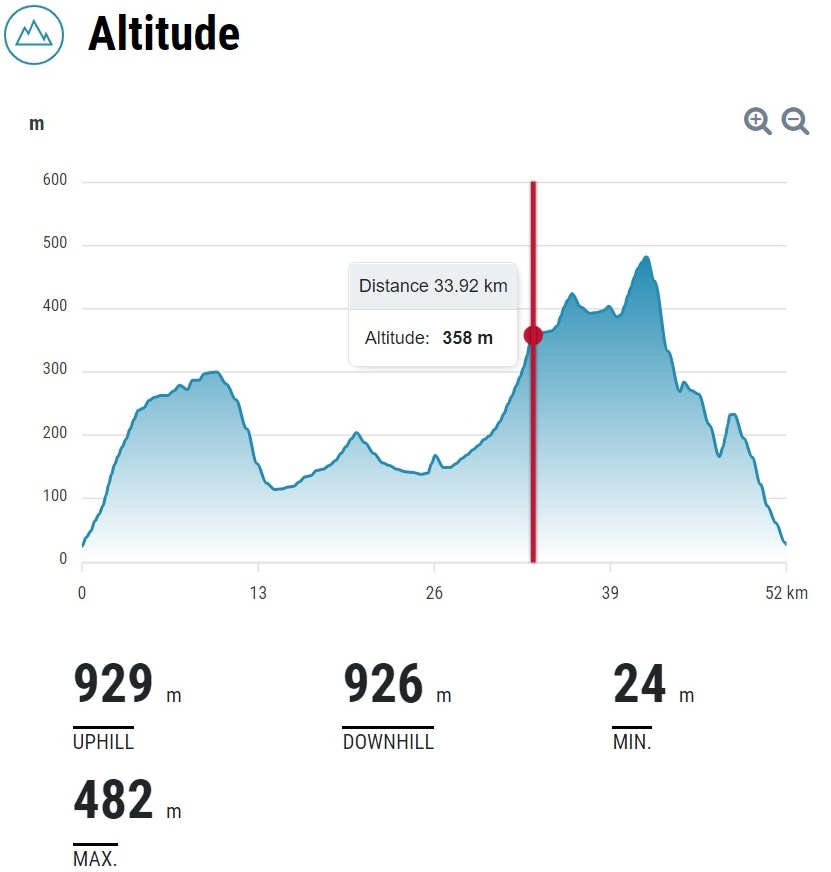
At about the halfway point of my 30-mile loop, I turned onto Happy Valley Road to do “Half Happy,” which is halfway up what would be a pretty tough climb if you didn’t take the merciful turnoff down Sundown Terrace. The grade starts out at 1% for a tenth of a mile, then dabbles between 2% and 5% until a final really steep bit and then the turnoff. Half Happy is 2.5 miles at an average grade of 3.5%. (You can view the Strava segment here.)


As it happened, two teenagers on e-bikes turned onto Happy Valley Road just after I did (coming from either Happy Valley Lane or Hester Lane, just after Highway 24). One of the kids was on the kind of total cop-out e-bike that doesn’t even pretend to be a proper bicycle and that nobody actually pedals (see photo above). It’s more like a mini-bike, with the fat tires and the manual throttle. The kid yelled at me, something I didn’t quite hear (not expecting to be accosted). I said, “Huh?” and he yelled again, “You wanna race?!”

In the same millisecond that I parsed the question, I answered it. This was long before I devoted any thought to actually considering his proposal. It turns out my lizard brain is able to direct my vocal chords, tongue, and lips without needing to engage my neocortex, because I was surprised to suddenly hear myself yelling, “Yeah, I’ll race you! Let’s GO!” My naysaying inner voice—that is, the wimp in my brain that had been complaining the whole ride—said, “Oh boy. This is not going to end well.”

But my arguably better brain, the impulsive one that at least isn’t so pathetic, shouted down the inner voice, yelling (silently, internally), “GO! GO! GO! GO! GO!” And for better or for worse, this wilder, bolder part of my brain was, at this time, in charge of my body. I launched the hardest attack I’m capable of.

Here is where we started our race:


This is of course the part of the story where, according to classic narrative tradition, I am supposed to say, “I threw her in the big ring.” If this were fiction, that’s how I’d structure it. But full disclosure: I was already in the big chainring (i.e., higher gear range) because the climb is only 1% at this point. Nevertheless, as I accelerated, out of the saddle, I shifted up a few gears on the back so I could really dig in. It was crazy: out of absolutely nowhere, I just had this enormous rush of energy, like I was a surfer who’d just caught a 40-foot wave. I was flying! I glanced at my bike computer: I was doing over 25 mph!

The two kids, who’d been flanking me on either side, were quickly falling behind, and one of them—to my delight—yelled, “Oh, SHIT!” Needless to say, now I was fully committed and as the climb got steeper I had to go harder and harder. My suffering increased exponentially as the grade went from 1% to about 4%. I was still hauling ass in the big ring, and couldn’t believe how much energy I actually had. I felt strong like bull! But how long could this last? Of course I didn’t want to just start well and fizzle, because as we all know, he who laughs last laughs best.

Why did I even care about this pointless duel? It’s because, like I mentioned earlier, I hate to see kids on e-bikes. Why do their parents think kids need this product? Kids throughout time (well, at least for the last hundred years or so) have gotten around just fine on regular bicycles. It’s a great form of exercise and, given that riding a bike replaces walking or running—undeniably slow, hard, and inefficient ways to travel—kids have historically loved the increased speed and range that a good old fashioned bicycle can provide. Perhaps modern helicopter parents (or recovering helicopter parents), having habitually driven their kids everywhere, have finally had enough, and now refuse to drive them—but feel guilty about adding difficulty to their kids’ lives, and thus get them e-bikes to cushion the blow. Or maybe these parents think the kids will have more energy for studying and extracurricular activities if they don’t have to pedal their way around. Maybe these kids are so oversubscribed that they don’t have time to ride regular bikes from one activity to another. Or it could be these parents are not only sedentary and out of shape themselves, but lack the imagination to think of their kids as able-bodied people perfectly capable of pedaling their own asses around. Whatever the case, these parents are clearly defective. The kids, for their part, are lazy and shameless. If, when I was a kid, my parents had offered me an e-bike (had such a thing existed, and had they been defective parents), I’d have been offended. Thus, when I see a kid on an e-bike, it’s as galling as seeing a cat on a leash, or a dog in a stroller, or a toddler with an iPad.

How could I keep this pace up? Could I keep this up? A boss once advised me, when I had an important decision to make, “Go with your gut”—but then, after a moment’s reflection (and likely remembering the business zeitgeist of the moment), he added, “but make sure your decision is data-driven.” Well, which is it? I guess you can do both: decide what to do based on intuition, but then keep yourself honest via whatever objective metrics are at hand. My decision to pick up the gauntlet having been purely impulsive, it was now time to look at the data side of things. I figured the e-bikes, if they hadn’t been tampered with, were configured not to go over 15 mph, therefore as long as I could average higher than that, I could hold the kids off. The climb was close to 5% in places so my speed dipped below 15 here and there, but overall this pace seemed doable. I now know this analysis was flawed: having reviewed my own research on this, and corroborating this with friends, I’ve confirmed that Class 2 e-bikes such as these kids were riding will actually go up to 20 mph. Fortunately, my oxygen-starved brain couldn’t really do math (e.g., calculating how long I could go below 15 mph and still maintain that average), so I had to err on the side of going as hard as I could anyway, numbers be damned.

I allowed myself a glance back to see how my opponents were doing. The kids were still at it, but my gap was pretty good. The really peculiar thing was how blasé their effort looked … until I considered what “going hard” on an e-bike means. On a traditional bike, of course, the rider is out of the saddle, his body thrashing as he rocks the bike, generally with an agonized expression. Often his mouth will gape open; sometimes I wonder, during an all-out effort, if I’ve managed to unhook my jaw the way some snakes can. But on a Class 2 e-bike the pedals are practically just for show, and once you’ve twisted the throttle to full-on, there’s not much more you can do … the bike is doing all it can, and its capability is governed not by pluck, grit, determination, or anything glorious like that, but just by the limit of its design (i.e., its governor). There is no “digging deep” on an e-bike … the outcome in a man-vs.-e-bike contest is in the hands of the real cyclist. I focused on the road ahead and kept the pressure on. My legs and throat were burning, but by God, I kept the speed up. Stroke after stroke, my legs kept turning over the big gear. It was like those trick birthday candles that relight themselves every time they’re blown out.

Protracted suffering ensued which there is no point describing other than to say it seemed to go on and on. Finally I got to the really steep part, just over two miles since the start, and still no annoying teens had buzzed by me. I looked back again … and they were gone. (There can be no fixed finish line in such an impromptu race; suffice to say, I gave the kids all the runway they wanted to try to beat me.) Looking down at my bike computer, I noticed I’d actually increased my average speed for the whole ride! On a climb! Frickin’ glorious. The hapless teens, through their hubris, had done me a solid!

In a perfect world, those teenagers would declare my victory “iconic,” and—inspired by what’s evidently possible even for an ancient guy like me—they’d go get real bikes and become athletes. But surely the more likely scenario is they’ll tell their parents their e-bikes suck, and demand better ones. Or, they’ll go on YouTube and learn how to disable their bikes’ governors. But whatever their story is, I’m sure I have the better one to tell!

Epilogue

At what point did the kids give up? Who knows … but if they’d stayed at it all the way to my turnoff, they’d necessarily have beaten me. Going back to the data, I see that the KOM for this Strava segment, set by a far faster rider than I, was at an average speed of 19.4 mph ... that is, below what the kids’ e-bikes were able to sustain. I find it remarkable that the kids quit the effort even though it didn’t cause them any pain or suffering. I guess they weren’t being “data driven.” Maybe without the opportunity to consult ChatGPT, they just didn’t know what to do...

—~—~—~—~—~—~—~—~—
Email me here. For a complete index of albertnet posts, click here.

Sunday, January 22, 2023

Ask a Fitness Dweeb

Dear Fitness Dweeb,

I read somewhere that I should always do my weight training before my cardio. Do you agree?

Justin D, Asheville, NC

Dear Justin,

I doubt it matters very much. According to the CDC, more than 60 percent of U.S. adults don’t get the recommended amount of physical activity, which is 150 minutes per week. Fixating on the order of your activities seems like gilding the lily to me. I will say that doing cardio first might help you warm up, which can prevent injury when lifting weights.

Dear Fitness Dweeb,

OK, I get that you work out a lot. So I’m wondering: do you still have some clothes that fit too tight, and/or some that are baggy?

Whitney P, Santa Monica, CA

Dear Whitney,

Sure I do! Don’t stress if you have this issue. It’s not you, it’s the clothes. Some stretch, some shrink, and even if we’re fit our bodies still do change over time. For example, my suit pants are super tight … I must have been biking up a lot of hills when I had them tailored. But I’ve also got these jeans that I’m practically swimming in, so having those fit better will be a nice silver lining when I gain some weight at some point.

Dear Fitness Dweeb,

During these short, dark, cold winter days my husband works out indoors on his bike trainer, and it’s almost scary to watch. He’s thrashing around with such intensity, and breathing so hard, it’s like an act of violence. Should I be worried? Could he have a heart attack or something?

Kim A, Berkeley, CA

Dear Kim,

As long as your husband is in good shape and warms up properly, it’s probably harmless. It could be that to reach his desired intensity he just needs a super high cadence, or resistance, or both. Maybe he’s working through some stress. See how he is afterward … if he seems mellower, that hammer-fest could be exactly what he needs (click here for details). As far as heart attacks, these do afflict sedentary people who suddenly exert themselves too intensely (for example, every winter you hear about people suffering heart attacks while shoveling snow). There is also some anecdotal evidence of ultra-fit athletes having heart problems, but I don’t think that’s widespread … click here for details. (I’m no real authority, of course … everyone is advised to consult a medical doctor before embarking on a fitness regimen.)


Dear Fitness Dweeb,

Walking is so low-intensity … does it even count as exercise?

Charles D, New York, NY

Dear Charles,

Any activity is better than nothing. Sure, you’ll be better off if at least some of your exercise is vigorous, and if you’re trying to lose weight intensity will definitely help. But it’s so simple to go for a walk, even if you have only 5 or 10 minutes, and it’s such a nice way to shift gears, get some air, etc., it would be absurd to denounce it. I use walks as a way to keep a perfect track record of getting activity every day. Even if you don’t get a chance for a proper workout, it’s never too dark, rainy, or cold to get out for a quick stroll.

Dear Fitness Dweeb,

I’m trying to increase my exercise consistency. Some of my fittest pals tell me the trick is gamification—that is, using a scoring system and/or friendly competition as a way to motivate them. They mention Strava, Zwift, etc. Do you employ gamification and if so is there a specific platform you recommend?

Brad H, Austin, TX

Dear Brad,

In general, I have found gamification to be very powerful. I haven’t tried Zwift (until recently, I thought it was a floor mop of some kind), nor am I on Strava. From what I’ve seen of Strava, it looks great for budding athletes because improvement over time can be very motivational. But as much as I exercise, age is slowing me down year by year, and in the Bay Area where I live there are so many dedicated bike racers, getting a KOM or even a top 50 would be pretty difficult. But regardless of age, level, talent, etc. you can totally employ DIY gamification. This could be as simple as sticking a gold star on your calendar for each day you exercise.

I have a really cool DIY gamification scheme. I host a quarterly online contest with over a dozen participants, all friends or family members, using a shared online spreadsheet. Here’s how it works: we simply enter the duration of our activity each day, and select the activity type from a pull-down menu. The spreadsheet calculates a score based on the difficulty. Here’s a snapshot (click to enlarge):


Formulas, graphs, etc. do the rest. The contest works really well for a lot of us, being very fun and motivational. The youngest participant is 17, and the oldest is almost 85. All but two of us are at or above the CDC exercise guideline, and three of us have more than tripled it. I’m happy to share the spreadsheet template—just email me here. (For what it’s worth, I used to do a far more complex contest that rewarded high intensity, based on heart rate, which led to absurd levels of fitness and suffering as detailed here.)

Dear Fitness Dweeb,

Given how much time you apparently spend exercising, do you ever contemplate what your regimen is displacing? In other words, what are you giving up to worship at the altar of fitness?

Laura M, Minneapolis, MN

Dear Laura,

I have contemplated this, but not at length, because for me it is an article of faith that exercise is worth making time for. I suppose there are insanely busy people, like the scientists who developed the COVID vaccine, or single mothers working two jobs to feed their families, who really cannot afford the luxury of daily workouts. But for the rest of us, trying to reduce exercise hours would make sense only after first cutting back on all the time wasted indulging in clickbait, binge-watching video entertainment, and being glued to the 24-hour news cycle.

Dear Fitness Dweeb,

Why do you settle for such an unflattering moniker? Don’t you feel demeaned? Why not “Exercise Advisor” or something? Just curious…

Rob R, Topeka, KS

Dear Rob,

When I first pitched this column to my editor, I proposed something like “guy who actually exercises.” He laughed in my face and said, “Sounds pretentious, which is especially annoying coming from a dweeb like you.” He reluctantly agreed to let me do the column, but only if I called myself The Fitness Dweeb.

Dear Fitness Dweeb,

My girlfriend wants to get an e-bike, not just for commuting but for actual exercise. If the point is fitness, isn’t an e-bike kind of like putting an escalator or moving walkway in a health club? Can you set her straight?

Monica L, Phoenix, AZ

Dear Monica,

Actually, I disagree with you. If an e-bike makes your girlfriend more likely to exercise, it’s a good thing. We all have to fight our natural aversion to unpleasant duress, and if that one big hill on her route is just too much to face before or after a long workday, why not get a little help surmounting it? I tried out a friend’s high-end electric-assist road bike once, and it was a total blast. I was still pedaling, still working, but I just flew along; more than anything, it made me feel young again. My impulse wasn’t to loaf; it was to go even faster. Look, when you compare cycling to a truly difficult sport like running or swimming, it could seem like the bicycle itself is cheating. Where pedal-assist bikes are concerned, I say go for it. (But that other kind of e-bike with no pedals, that’s like a scooter … forget it, that’s just a vehicle.)

Dear Fitness Dweeb,

Do you get a lot of hate mail?

John P, Detroit, MI

Dear John,

Of course I get some negative feedback, but most of it is positive. Here are a couple of recent comments:

I admire this article for the well-researched content and excellent wording.I got so involved in this material that I couldn’t stop reading.I am impressed with your work and skill.Thank you so much. 情趣用品 

With up to as} $3000 up for grabs as a new new} participant, DoucheyBetOnline has one of the best on line casino bonuses round. Remember that 25x playthrough requirements apply and every one|that every one} video games besides craps and stay dealer video games can be played.

Dear Fitness Dweeb,

I am an avid runner but don’t have the ambition to do any races. Can you suggest some S.M.A.R.T. goals to help me improve over time?

Jill M, Lafayette, CO

Dear Jill,

To be honest, even when I was a pretty serious bike racer, I didn’t put much stock in long-term goals. As detailed here, that approach covers the rest of my life as well. I think that devoting myself to the process, without worrying about where that might take me, has always been enough. For example, instead of worrying about next year or five years out, why not just make each run as fun and challenging as you can? More recently, I’ve concluded that SMART (i.e., specific, measurable, achievable, relevant, and time-bound) goals might be the worst kind. As I describe here, when setting long-term goals such as New Year’s Resolutions, I favor DUMB ones: duplicate, unimpressive, mealy-mouthed, and best-effort. For example, my goal for this quarter is to try again to beat my brother Geoff in the humble online contest I described earlier … and if I fail, who cares, because it means he got a lot of exercise too! All this being said, if you want extra motivation for your running, maybe sign up for a Fun Run that’s longer or hillier than what you normally do.

Dear Fitness Dweeb,

After a workout I feel so good, I’m already looking forward to the next time … but then when the next time comes around, I find I’m dreading it. What gives?

Thomas B, Seattle, WA

Dear Thomas,

I struggle with that myself, and have for decades. It’s just the way we humans are wired, I’m afraid. But as I describe here, it may be possible to mitigate this dread a bit by making sure your workouts aren’t too long or too intense. In the moment, when we’re caught up in all the adrenaline and endorphins of a great workout, we’re often tempted to dig deeper and/or go longer, which is all well and good until we viscerally recall that experience later, when the adrenaline and endorphins have worn off. Then we seem to mainly remember the brutality of it. So I make a point to keep my regular workouts more reasonable, to exercise self-compassion, and to save the big efforts for when I ride with friends (i.e., when I struggle to keep up).

Dear Fitness Dweeb,

I had a gym membership for years because I thought shelling out the money for it would make me actually go … but it didn’t. So now I’ve quit, and I’m thinking hey, maybe I can put the money I’m saving toward something else, like nice gear, that can help motivate me to work out. But part of me thinks that might just be throwing good money after bad. What’s your take? Am I just being crazy?

Sarah D, Portland, OR

Dear Sarah,

No, you’re not crazy. Obviously spending money on fitness doesn’t guarantee results, but if any of your gear isn’t up to snuff, and thus makes your workout less fun, by all means replace it. Are your shoes completely comfortable? And given how much rain Portland gets, do you have the all-weather gear (i.e., groovy technical fabrics) you need? I have zero regrets about the super-cool bike wheels I bought a few years back, and I’m already dreaming of a new yoga mat that’s long enough that I don’t clonk my head on the hardwood floor during the full-body stretch…

The Fitness Dweeb is a syndicated journalist whose advice column, “Ask the Fitness Dweeb,” appears in over 0 blogs worldwide.

—~—~—~—~—~—~—~—~—
Email me here. For a complete index of albertnet posts, click here.

Saturday, September 24, 2022

Biketronics II

Introduction

This post is not about e-bikes (i.e., battery-assisted bicycles). I have a lot to say on that topic, actually, but that’s for another day. This also isn’t about electronic shifting; I cover that here and here. This post is about bike computers.

More than twelve years ago in these pages, I posted Biketronics, a survey of these handlebar-mounted computers (and related technologies like heart rate monitors, power meters, etc.). That was a surprisingly popular post. So, having recently purchased the fanciest (and perhaps wackiest) of these devices I’ve ever had, a Sigma Sport Rox 4.0 with GPS capabilities, I figured we could go another round. My every instinct tells me this is a terrible topic and that nobody could possibly be interested, but then I’ve been wrong before. (For example, my post on the spelling of “kindergartner” is now one of my most popular of all time.) So here we go. I’ll throw some totally unrelated gags in here and there just in case your interest flags.

By the way, a lot has changed since my original Biketronics post. Back then, of the fifty-two cycling pals I surveyed, only five were using GPS-equipped devices. Now virtually all my friends have GPS. So I’ll devote some focus to that.

Who even uses Sigma Sport?

Nobody uses Sigma Sport bike computers, at least in this country. I literally don’t know a soul who has one, except one guy in Germany. I had to order mine from some outfit in Spain. So why did I choose Sigma Sport? Well, Garmins are too popular, same with Wagoo or Wayco or Woohoo or whatever that other popular brand is. I don’t want to be like everyone else. Besides, I’m a cheap bastard, and all the modern GPS-enabled models are at least a couple hundred bucks. No thanks.

Besides, look at the loads of features you get with the Rox 4.0:


Sure, lots of modern bike computers have power meters built in, but how many have pierced earrings? You might say “plenty,” but you’re not paying attention: pierced ears are popular, but pierced earrings? Those are hard to come by. And I love the existential air of “protective seals removed and cannot be.” These seals, these seals … they cannot be!

I also wanted a Sigma Sport because my old one served me well. It looked outdated the day I bought it, and certainly had its quirks, but it featured a groovy lap timer that would enable me to easily see the time, distance, and heart rate of my favorite climbs after the fact. Alas, the plastic bits enabling that computer to snap into the handlebar mount started to wear out to the point that I had to rubber-band it in place.


That wasn’t foolproof either so eventually I epoxied it to the mount, meaning once the battery dies I’m probably screwed—plus I can’t move it from bike to bike. So I wasn’t in a hurry to replace the computer, but it needed to be done.

I sense your interest waning—I know mine is—so here are a few good names for a rock band:

Duck Husband

Repetitive Stress Disorder

Nipple Confusion

Loofa Harvest

Good thing I wasn’t in a rush, because the new computer took forever to arrive. Tracking the shipment online was like trying to measure continental drift. It made its way across Europe in not much more than a week, but then was stuck in the Netherlands for twelve days. I emailed support and the retailer wrote, in an incredibly long, mostly boilerplate email, “Your parcel is currently on its way and it is due to be delivered to you very soon… Based on our experience, Customs can take between 15-60 days to unblock your parcel and proceed with delivery.”

Rox 4.0 documentation

I never did manage to find a complete list of specifications for this computer, even on the Sigma Sport website, so I guess I can’t complain that it didn’t come with a complete owner’s manual either. There was a nice thick booklet, but it’s only thick because it’s in ten languages, including Czechoslovakian and Polish. (I guess I should be grateful English is even among them.) The manual is actually just a “quick guide,” with a QR code for the “detailed instructions” web page which is mostly just little videos that cover only what is in the quick guide. There are no instructions anywhere, for example, on how to sync the computer to the heart rate monitor strap.

Here’s an example of the quick guide quirkiness:


“Active” and “Auto-Pause” aren’t actually defined. You start a workout by pressing the big button, and stop it the same way, and there’s actually a way to tell the state (running vs. stopped) on the screen—but the instructions don’t tell you what it is! And why are these “most important settings” anything you’d want to mess with during training? Think about it: you’re in the middle of a workout, hopefully not in the middle of a fast descent, and suddenly you think, “I need to calibrate the altimeter!” Why would you think this? And, if you wanted to manually set the altitude, how would you even know what altitude you’re at, other than to check the altimeter that’s right in front of you? Okay, maybe you’ve reached an elevation sign, but a) are those really common enough to make this among the most important settings, and b) why would you trust the sign, which is after all placed wherever it’s convenient to dig a hole, over a device that auto-calibrates itself via GPS, with an easy way to true itself up? It makes no sense.

First ride

I set out on the first ride with the new computer without having messed with the display settings. The display is highly configurable, which is pretty cool, but of the thirty touted functions, not all can be included in your configuration. That is, you have to choose your favorites. I figured while I was getting my feet wet, I’d just go with the factory configuration. I didn’t have any heart rate data because I searched too long in vain to learn how to set that up and was running out of daylight.

The first thing I noticed was a compass, which is nifty but totally needless because I seldom journey anywhere. There was also this weird directional arrow that seemed to point around randomly. Descending Wildcat Canyon Road, I noticed my speed fluctuating quite a bit, which you’d expect with GPS due to the satellite signal being blocked by tree cover, etc., but I had paid extra for the wheel sensor, so this shouldn’t have happened. Kind of annoying, but whatever … I was enjoying the big bold letters on the display, anyway.

But then, about ten miles into my ride, I noticed the mileage only read five miles. WTF?! Was this thing a total piece of crap, unable to actually measure distance? But the duration looked correct, and the speed (other than the occasional fluctuations) also looked about right, so it wasn’t totally whacked. But then things got even weirder. My confusion became outright bewilderment when the mileage number actually started dropping.

You’re probably just dying to learn the solution to this paradox, but I’m going to interrupt this post with a proposed title for a country & western song:

No one wears a mullet anymore

Two-thirds of my way through the ride, the mileage number was lower than ever, and it just dropped the whole rest of the way. By now you’ve surely figured this out, as I finally did too. The hypothesis I formed a few miles from home proved correct as I rolled down my street and the numbers went from fractions of a mile to matter of feet, and reached almost zero when I hit the driveway. That’s right, the device was showing my distance from home (presumably as the crow flies). So the accuracy was not an issue … but what a weird thing to want to display on your computer. I’m still scratching my head on that one.

The phone app & sharing

My old Sigma Sport uploaded its ride files to my phone over NFC (near-field communication) which was kind of a manual process and took a little while. The new one uses BLE (Bluetooth low-energy) and is swift and automatic. Look at the pretty display of my ride today:


I can share the ride, in Strava-like detail, via a URL to a (presumably) private website, with a much larger map, and I can drag my mouse along the graphs and such. (The units shown here are, alas, metric but I’ve already figured out how to fix that.)


I even figured out how to export these rides into a format that my old Sigma Data Center software can import, so I can still have an unbroken record of my rides going back years. And I think I’ve mastered the various features of this thing (other than integration with komoot, which I may never need).

And now it’s time for a few more rock band names:

Pack Shrapnel

Clear Rectal Discharge

The Harried Parents

Dark Yarn

Now that the Android app and PC software are dialed in, and I know how to operate the computer, the only remaining problem is…

The speed & mileage mystery

I’ve got this fancy sensor mounted on my hub to provide “even greater accuracy,” so why do all the totals for my standard loop come out low? And why does my reported speed suddenly drop from 28 to 14 mph and then pop up to 32? I decided to query my bike team, to see if they have this issue, and if it’s even worth having that sensor on there (since it’s kind of ugly).

Right away, I received replies from six teammates. Two of them actually answered the question (short answer: no difference between GPS and sensor measurement), and the others provided a variety of interesting tidbits:

  • The mph display often lags (jumps) while under tree cover, as does the elevation gain/loss. Piece of shit
  • The device connects with a satellite. The choice of satellite affects the data. The device usually has a Satellite setting. Galileo is US satellites. GLANOSS is Russian satellites. If you set your device to choose both then supposedly you’ll get more accurate data. (There may be a third set of satellites available now, too.) If you ride a lot in one location, then travel  (like if you ride from Oakland every day then one day start in Sacramento or France) this can confuse the device. The solution is to find the necessary obscure setting and leave it outside for a specified length of time. (Read the instructions. You’re on your own.) The device works better facing certain directions, like north, I think. Something to do with astronomy.
  • Dana if you get on Strava all your problems will disappear Do it! Do it! Do it!
  • GPS based measurements aren’t perfect. Absolute GPS accuracy is typically in the 5-10 meter range for consumer devices, so the GPS measurement is typically combined with an inertial measurement unit (IMU), which gives accelerations and rate of rotations that are then integrated to get linear and angular velocities using a Kalman filter. This also means that if the GPS signal is degraded due to building or tree, your velocity doesn’t suddenly read zero. Since the IMU in consumer devices generally sucks, it’s not going to be perfect.

Wow, that’s a lot to digest. I for one am not interested in having the Russian government tracking my movements, and I’m not sure which device (the bike computer or my phone) is doing the actual GPS work and would have the necessary obscure calibration setting to true it up. I’m sure I don’t want to start doing northbound-only rides and coming back on a bus or something. Above all else, I think it’s time for some more cool rock band names:

The Incestuous Mollies

The Quasi-Vegans

Leap Smear

Hard Floor Tool

Getting back to my teammates’ feedback, I reckon that the hub-mounted sensor I’m using is indeed the highly sophisticated IMU described, and it’s just not engineered well enough to be that accurate … which is a bit of a shame, since the old-school ones, which had a magnet attached to a spoke that passed by a sensor that counted the wheel rotations, was utterly simple and infallible. Perhaps part of my problem is that I’ve mounted this IMU on the rear hub (so I don’t have to look at it). I have just discovered (via a video buried within its website) that Sigma Sport recommends front hub mounting for “optimum reception.” Is it worth moving it, or do I ditch it entirely? That brings me to my next question.

Does any of this matter?

My friend Craig, who wrote about the IMU, went on to say:

Of course, you never precisely defined what you’re trying to measure. Do you want to know how far the tire patch of your front tire travelled? Or, do you care more about your rear tire patch? Even a rider trying to go in a straight line makes micro adjustments while pedaling, so the front tire travels ~0.25% farther! The more you turn, the greater the difference between the front and rear tire path will be. Or, perhaps you care more about your center of gravity? In that case, every time you rail a corner, your center of gravity takes a route that might be ~1% less (depending on the radius of the turn and your lean) than your rear tire patch. Of course, does it matter? Did you do less work because your new device showed that your ride was 2% shorter?

I think he’s being diplomatic here; the more direct version of his question might be, “Who cares what your mileage and speed are when the bigger question is, when are you going to start training harder so you don’t fall off my wheel when I’m trying to be nice and drag you through a headwind?” And he would have a point.

The answer is, at least in the short term, I want credit for every last foot of my rides because I’m doing a friendly competition called Cycle Around the Globe to raise awareness around the problem of suicide, and to engage in the collaborative effort to help prevent it. (My personal fundraising page is here.) Currently I’m sitting in 15th place with 540 kilometers ridden, though the leader has 14,000 kilometers, which he achieved in a single ride … so I’m guessing he’s not using a consumer-grade IMU. In fact, I think he’s even worse than those mopeds and e-bikes on Strava … he’s just making shit up. But for a good cause!

Lap timer

Alas, there is no lap timer on the Rox 4.0 (even though this very basic feature is available on a $14 Casio watch). I think I know why: the vast majority of cyclists are on Strava, which tells them their time on any segment they could want, automatically. But no, I won’t join Strava. That kind of thing’s not my bag.

—~—~—~—~—~—~—~—~—
Email me here. For a complete index of albertnet posts, click here.

Tuesday, April 23, 2019

Cycling Spotlight - Stealth Training


Introduction

The term “stealth training” has been thrown around by bike racers for decades but perhaps hasn’t ever been formally defined. At the risk of diluting the intrigue by getting overly analytical, well … here I go.

The essence of stealth training

Stealth training, most would agree, is extra riding to get a leg up. Often, it’s done by a member of a team who thinks an extra workout here and there, done solo, might help him or her improve more quickly than his or her teammates. (A fellow blogger offers this description, which suggests that riding in the dark and/or cold is an essential part of stealth training. I don’t agree that it is.)


Of course everybody trains solo at least some of the time; where stealth training comes in is when you could be riding with your pals but aren’t. I was accused of this when I rode for UC Berkeley in 1991; every week I’d see a group of teammates cruising down Pinehurst while I was on the way up. When questioned, I explained I had to ride earlier due to my class schedule. This met with a skeptical “mm-hmm,” as though skipping class was no big deal; i.e., the real explanation must have been the idea of getting higher quality training on my own. (I didn’t, and had no illusions to that effect.)

Sometimes stealth training is simply a matter of tact. When I was at UC Santa Barbara I’d skip riding with teammates once a week when I had to do intervals, as I couldn’t bear to be around anybody when I did them. At first I tried to be up front about it, but others insisted we could all do intervals together and still get the job done. That lasted exactly one ride and then I went back to stealth training (i.e., “Sorry, I can’t ride Tuesday afternoons anymore … I have to work.”)

Sometimes stealth training targets friends instead of teammates. In high school, I started riding every day with my new friend Pete (whom I’d met at a bike race). We were fairly well matched (though he was faster). The problem was, Pete had formerly ridden every day with another friend, and when he three of us rode together, this friend just couldn’t keep up. Pete could have made some excuse for breaking off their arrangement, like something to do with his schedule, and then Pete and I could have started our own ride that met somewhere else, but Pete didn’t want to lie—at least, he didn’t want to tell that particular lie. Instead, he told his friend, “You can’t ride with us anymore because Dana doesn’t like you.” This wasn’t entirely false, but it wasn’t the whole truth, and sure wasn’t very nice. (In case you feel bad for the third guy, don’t worry: a few years later he came past me in the collegiate national championship road race, whacked me upside the helmet, told me to get a haircut, attacked, and soloed to victory. I kid you not.)

The funniest accusation of stealth training I’ve had was from the leader of the UC Berkeley team. This came the day after a road race in which I’d beaten him. I hadn’t intended to beat him. We had a guy up the road in a two-man breakaway, so we weren’t chasing. Toward the end of the race I figured our star could win the field sprint for third, and I offered him a lead-out. He was still sulking about having missed the break; he was one of these guys who thinks that getting third when your teammate wins is still losing. He turned down my offer, so I got a sweet lead-out from another teammate and won the field sprint myself.

When I encountered this team leader at the next day’s criterium he said, “So, did you go out for a little stealth training ride yesterday evening?” I was taken aback. What kind of idiot did he take me for—I mean, who thinks it’s a good idea to get in extra training between two days of racing? Moreover, he seemed irked by the idea, as if after beating him in one race I decided to totally overturn our team hierarchy via secret solo rides. It was bizarre.

“No, I didn’t do any ‘stealth training’ yesterday,” I assured him. He glowered at me. “Dana, I saw you,” he said acidly. Turns out he’d seen me riding home from my girlfriend’s apartment (still in my team kit, as I’d gone there straight from the race). It was just a misunderstanding, easily cleared up when my girlfriend vouched for me.  (Yes, this guy actually fact-checked me. That’s how convinced he was of my treachery.)

Fortunately, accusations of stealth training are usually given (and taken) more lightly. Here’s an exchange from an old bike team email thread: 
Ceely:  Anybody got tomorrow (Memorial Day) off? Wanna ride?
Lucas [early the next morning]: No riding for me today, enjoy.
Kromer: Look for Lucas doing stealth training today. Probably a double Morgan [Territory].
Lucas: Today that’s Dana and Craig, I heard they were meeting at Wildcat and San Pablo Dam Road at 5:30 this morning.
Can stealth training involve more than one rider? Sure, if a few are going rogue together. Did this 5:30 ride count as stealth training? Yeah, I suppose it did. Craig and I were training for the Everest Challenge, which means riding Mount Diablo twice, so in the interests of not taking the whole day (which would piss off our wives), we needed to make our ride “surgical”—i.e., minimal time spent waiting around for stragglers, latecomers, or people who think it’s perfectly reasonable to stop in Danville for coffee. By scheduling the ride at 5:30 and notifying teammates only by word of mouth, we kept the group small (i.e., limited to a select crew of complete nutters).

My favorite stealth training technique, back when I rode more with the team, was to do tons of hard winter riding on the indoor trainer so that, during the early season, I could miss several team rides in a row, then show up saying how out of shape I was, and hope to surprise everyone in the famous Walking Man sprint. (This almost never worked, by the way.)

Modern stealth training

The email exchange quoted above was from before everybody was on Strava. I’m not actually a Strava user myself, so I’m no authority on how it fits in with stealth training, but this article suggests that some riders will withhold posting some of their workouts as a stealth training technique. I polled my road team on this topic, and right away a teammate replied, “It for sure goes on!” He even named a local team that’s apparently fairly notorious for this. Another teammate replied, “I don’t post any ride where I maintain more than 500 watts for over 60 minutes. So I throw away a lot of rides.” I think he’s kidding. (Or is he?)

Of course, a lot of the value of Strava is that you can see how fast a rider has been going, and thus how hard he’s been training, even when you’re not able to witness it firsthand. This could help you spy on your rivals, but also makes you vulnerable to being spied on yourself. I coach a high school mountain bike team, and during a recent ride, I brought up the topic of Strava and stealth training to a fellow coach. As we watched Lincoln, our fastest rider, leave us in the dust, the fellow coach said, “To really throw people off, Lincoln and I should just trade Garmins at the beginning of the ride!”

Coaching and stealth training

As a coach, I encourage extra training because I hold practice only three times a week, and the more advanced riders ought to be doing more. Not all riders are comfortable hitting the trails solo, so a couple of times I’ve loaned a trainer to a rider who is coming back from illness or injury, to help him or her return to fitness faster.


Several times I’ve had an ambitious rider email me asking if he or she can meet up with the team but then break off and do a totally different ride (perhaps even a road ride) with another teammate. I ignore these emails, and explain later, “Look, if you two want to cut practice, and go do some ride I don’t know about, that’s fine. But the moment you show up for the team ride, I’m responsible for you, so no, you can’t go off in other direction where I can’t provide supervision or assistance.” It’s surprising how hard it’s been for me to get this idea across. What part of “stealth” do these riders not understand?

At least half of my team’s riders do extra workouts on a regular basis, which begs the question, why not just add another practice? The convenient answer is that it would be hard to line up enough coaches. Beyond that, it might make it harder to recruit new riders, who might not want that much training, thank you very much.

But there’s a bigger reason not to add another practice: I love the initiative that stealth training requires. Recently, on a non-team-practice day, I headed out for a solo ride of my own. Fifteen minutes in, I encountered one of my riders at the Summit Reservoir in Berkeley, a common cyclist gathering point, waiting to meet some others. I’m not sure how she arranged this, because she wasn’t sure who these other riders even were. “Are you the riders I’m supposed to be meeting up with?” she was asking. Another five minutes into my ride, descending Central Park Drive, I encountered another of my riders, hammering up the climb towards me in a small group from a rival team. Ten minutes later I came upon a fellow coach, riding solo. He is a relative newcomer to cycling, having picked it up when his daughter joined the team, and was no doubt shoring up his fitness to better keep up with the youngsters. How cool is that … four stealth training missions, all in one evening!

My enthusiasm here doesn’t just come from the obvious fitness benefit. My main goal as a coach isn’t to get top race results from any individual rider, or even from the team as a whole. My main goal is to turn these kids into lifelong cyclists. I love seeing my riders out there stealth training, partaking of the sport without being led along by coaches and teammates.

I’m especially stoked when I encounter a former member of the high school team, who has now graduated and gone off to college, putting in some miles while home for winter or spring break, just for the pleasure of it. When I see that, I know the program has done its job. It is my earnest hope that most of our current riders will bring their bikes with them to college and keep at it, even if they don’t have a team to ride with. Today’s stealth ride becomes tomorrow’s … ride.

--~--~--~--~--~--~--~---~--
For a complete index of albertnet posts, click here.