Showing posts with label restaurants. Show all posts

Friday, September 30, 2022

From the Archives - Book Review: Bill Bryson’s “Lost Continent”

Introduction

Did I really write a book review, for practically no audience, all the way back in 1994? Yes, I just now stumbled across it. This review was within a letter to my brother, who’d recommended Bill Bryson’s The Lost Continent: Travels in Small Town America. You might as well read my review; it’s really more about dining out in small towns than it is about helping you decide whether to read Lost Continent.


Book Review: The Lost Continent – January 10, 1994

I must say, that Bryson fellow has a sharp sense of humor and a keen eye for detail. I especially like his made-up town names: Draino, Indiana; Tapwater, Missouri. And his mockery of American products: Hunk o’ Meat Beef Stew ‘n’ Gravy; Sniffa-Snax; Country Sunshine Honey-Toasted Wheat Nut ‘n’ Sugar Bits Breakfast Cereal. It’s an easy book to get in and out of, since it rambles along playfully without any complicated structure. I read it eagerly during my recent trip to Oregon, and then at the Amtrak station while waiting for my train, and then while the train was delayed.

Well, I’m almost done with the book now, and upon careful consideration I must conclude that as far as I can tell, Bryson has not given America a fair shake. After a while his clever critiques became tiresome, cranky complaints that I didn’t need to hear. My moment of epiphany came when I read his description of Wells, Nevada: 

              I spent the night in Wells, Nevada, the sorriest, seediest, most raggedy-assed town I’ve ever seen. Most of the streets were unpaved and lined with battered-looking trailer homes … Such economic life as Wells could muster came from the passing traffic of I-80 … I turned up my collar and trudged the half-mile from the town proper to the interstate junction with US 93, where the most prosperous-looking truck stops were gathered, forming an oasis of brightness in the pinkish dusk.

              I went into what I looked to be the best of them, the 4-Way Café, which I gather took its name from the fact that it consisted of a gift shop, restaurant, casino and bar … It was absolutely, in my opinion, the worst food I have ever had in America, at any time, under any circumstances, and that includes hospital food, gas station food and airport coffee shop food … I pushed the plate away and wished that I still smoked. The waitress, seeing how much I had left, asked me if I wanted a doggy bag.

              “No thank you,” I said through a thin smile, “I don’t believe I could find a dog that would eat it.”

I did get a chuckle out of that, but then realized, wait, I’ve been to Wells, Nevada, recently, and had a totally different experience.

It was the summer of 1991, when I was driving out to Boulder with a friend of a friend. We stopped for the night, got rooms at the Motel 6, and relaxed for a while before setting out to find a worthy restaurant. The motel was about like all Motel 6’s everywhere: clean, perhaps a bit too air conditioned for its own good, but generally a fair bit nicer than many of the apartments I’ve lived in. Scoping out the town didn’t take too long. We even went to the 4-Way Café, which as Bryson reported was a conglomerate of gift shop, restaurant, casino, and bar. But we never even considered eating there; it was clearly not even an option. Nothing obvious about it tipped us off as a lousy place; it just seemed lacking in whatever local flavor a café in Wells, Nevada could have. Wouldn’t anyone rather go to a place that’s only a restaurant? Have you ever encountered a gift shop or casino that appealed in any way?

We found a more promising little café not far away, right next to the visitor’s center. Now here’s something interesting: this so-called “raggedy-ass town” actually had a visitor’s center. It wasn’t a commercial operation, but more like a tiny museum of whatever heritage Wells happened to have. Free coffee, a cheerful docent, etc. Would the sorriest, raggedy-assed town in America have a visitor’s center?

The café we went to also seemed to try harder than it really needed to. It wasn’t overbearing or self-important, mind you; not like Zachary’s Pizza, which has all its awards framed and on display. But the mop-topped glasses-faced kid behind the counter was friendly, and looked at us intently, maybe trying to figure out where we came from and what brought us to Wells.

My philosophy about eating in strange towns, or even at strange restaurants in general, has just two basic tenets:

  • Stick with simple stuff. It’s hard to ruin a big steak or hamburger. Grilled ahi tuna 800 miles from the nearest ocean, cooked by someone who’s never had a chance to try the genuine article, is not a good bet.
  • Ask the restaurant staff what they recommend. If there’s a loss-leader on the menu, they’ll usually steer you away from it. And if you can spot actual enthusiasm about a dish, you know you can’t go wrong.
  • [For my more modern guide to spotting bad restaurants, click here.]

My rules for dining out are not nearly as humorous as Bill Bryson’s [which include prohibitions against photographs of the food, flocked wallpaper, live entertainers, bloodstains on the walls, or staff you can overhear talking in the kitchen]. My rules, though, may be a bit more practical. I asked the teenager behind the counter what he thought was the best thing on the menu. He broke into this wide Ritchie Cunningham grin, and with a little gleam in his eye, declared without a hint of hesitation, “The Super-Deluxe burger. With fries. Oh yeah.” It was just like when a customer at the bike shop asks me to tell him about my bike.

The kid did not steer me wrong. I love a good burger anyway, but the whole time I was eating it I was envisioning this guy back in the kitchen, inspired by my order to make a Super Deluxe for himself. He’s smashing down the patty with his little steel spatula, almost in tears, murmuring to it, “Oh, yeah, that’s it, boy, that’s my half-pound of grade-A American beef, oh, and let’s grill those onions!” He does a little spin, maybe, then flips that patty over with the skilled flick of the wrist that has become his trademark, and he can just envision the delectable grease slowly soaking into the sesame-seed bun.

This is my memory of Wells, Nevada. I remember it was late in the afternoon, but still sunny, and nothing struck me as unpleasant in the slightest. Granted, I wasn’t expecting the earth to move for me; I was just glad to get out of the car and have some food and get some rest. When I read Bryson’s account of Wells, an unsettling question crept up on me: what would that teenager at the café think, reading about the “sorriest, seediest, most raggedy-assed town” our critic had ever seen? Would this guy go on thinking it’s even worth bothering trying to do right by snooty tourists? Does Bryson assume the citizens of Wells are all illiterate?

Reading this book, I am frequently reminded of Peter Jenkins’ travel book, A Walk Across America. Jenkins isn’t as funny as Bryson, to be sure. In fact, he admits in the first chapter that prior to writing the book, he had no idea how to construct a sentence. But it was enjoyable reading, anyway, and the author wasn’t so cynical. And yet, didn’t these guys tour the same country? How much of what they reported was based on what they’d hoped to find? Jenkins said his whole purpose in walking was to find out, as he hoped, that he was wrong to be ashamed of America. Bryson, on the other hand, seemed intent on proving beyond reasonable doubt that this country is going to hell in a handbasket (whatever that means).

The two writers’ methods are quite different. I saw Jenkins give a lecture once, and found him really charismatic. As you can read about in his books, he talks to people wherever he goes; lived with various folks here and there along the way; and even did his best to fit in at the cult-like commune called “The Farm.” He’s a real people-person.

Bryson seems like the opposite. He’s seems like kind of a loner, who doesn’t recall much dialogue other than brief exchanges with service-sector people whom he seems to always conclude are incompetent. His modus operandi is to drive from one tourist trap to another, silently build his case against the stupid tourists there, get back in his car, and drive on. The only distinguishing feature that separates him from his fellow tourists is that he takes mental notes and contrives clever ways to deride them later, while the tourists just putter around, buy souvenirs, and quite possibly enjoy themselves.

I also have to wonder if Bryson doesn’t actually look for trouble, in the service of his art. Maybe he chose the 4-Way Café because he predicted it’d be lame, which would give him a cleverer story than my admittedly sentimental, cloying one. I also suspect Bryson exaggerates a bit, and possibly even fabricates details. Consider this passage, about another place he ate at:

I was the only customer in the restaurant. I was quite clearly the only thing standing between the waitresses and their going home … The waitresses stood against the wall and watched me chew my food. After a while they started whispering and tittering, still watching me as they did so, which frankly I found a trifle unsettling. I may only have imagined it, but I also had the distinct impression that someone was little by little turning a dimmer switch so that the light in the room was gradually disappearing. By the end of my meal I was finding my food more or less by touch and occasionally by lowering my head to the plate and sniffing. Before I was quite finished, when I just paused for a moment to grope for my glass of iced water somewhere in the gloom beyond the flickering candle, my waitress whipped the plate away and put down my bill.

That’s definitely some funny shit, but I’m not sure I believe it. Consider Bryson’s qualifier, “I may have only imagined it,” about the dimmer switch. If what follows had actually happened, he would have no doubt that a dimmer switch was involved. If not, what could possibly account for the room getting so dark? I think he introduced this idea of a gradually darkening room on a lark, and developed it for maximum comedic effect without worrying too much about veracity. I could be wrong about this, of course, but at least my theory would help explain why nothing like this ever happened to Peter Jenkins, or to me.

When you really stop and think, in fact, the whole premise of this man’s book is absurd. What we have here is an expatriate, coming back for a visit in order to write a book about the place he has forsaken. When he describes towns like Wells, it’s like he’s run his experience through a filter of disgust and complaint. I almost wonder if he’s being careful not to enjoy himself too much here, so he won’t have any regret when he returns to England. If that’s true, perhaps we might conclude he’s more of an anti-travel writer than anything.

—~—~—~—~—~—~—~—~—
Email me here. For a complete index of albertnet posts, click here.

Tuesday, March 8, 2022

Adventures in Dining - Sichuan Peppercorns

Introduction

If you’ve never heard of Sichuan peppercorns but are a curious person, read on. If you know a little bit about this obscure ingredient but would like to learn more (such as about them having been banned for import), read on. If you know all about them and would enjoy discovering the flaws in my brief exploration into the topic, read on. If none of this seems interesting, click here.


First encounter

Years ago, my family was in Fremont and we found a Chinese restaurant that looked promising despite being in a strip mall. (It’s Fremont … everything is in a strip mall.) We were starving (in the privileged American sense). The first dish arrived … some noodle thing. For about five seconds we were all like, “Pretty yum!” But then frowns rippled through our ranks. “There’s something wrong with this,” my wife said. One of my daughters pushed her plate away. I had to admit, something seemed off.

The noodles tasted fine. Great, in fact … different from anything I’d had before. But something complicated was going on, something that transcended flavor. It wasn’t as dramatic as when my wife got a mouthful of cockroach at a crappy dim sum place in San Francisco; it just seemed like something was happening in my mouth that shouldn’t. It brought to mind Pop Rocks action candy, but it wasn’t quite that … this was more of a buzz than a fizz. Have you ever had a bit of subtle mouth numbness from eggplant or walnuts? It was kind of like that, I guess, but not as astringent, if that makes any sense. More than anything I was reminded of a meal I had as a kid, at the salad bar at the Red Barn, where something in the fruit salad bubbled and buzzed on my tongue, in a bad way, and my dad (who’d sampled the same thing) announced it had fermented and was not safe to eat.

My wife and both daughters wouldn’t eat any more of the noodles, but nothing else had arrived yet and I was torn. I was really enjoying the noodles despite having decided some ingredient in them had turned, and I was weighing my hunger against the possibility of being poisoned. My mom is a microbiologist and raised my brothers and me to push the envelope on questionable food. Sour milk, for example, turns out to be perfectly drinkable and won’t make you sick—you just have to plug your nose as you drink it. So I finally decided, “Screw it—I’m eating this.” (Nobody tried to stop me. I’m kind of famous in my household for rescuing perfectly edible stuff from our compost bin.)

I got through most of the plate of noodles before the waiter arrived with our next dish, and my wife questioned him. I can’t remember exactly what she said but the gist was, “Is this dish rancid or something?” The waiter wasn’t very fluent in English but said something about peppercorns, and something about ash, and assured us the dish was perfectly fine. I asked if my mouth was supposed to tingle; he smiled and said yes. My family was still dubious—I mean, what waiter would admit to spoiled food?—but I was sold, and thus got all the noodles to myself. Score!

What are Sichuan peppercorns?

I didn’t get the full story on this strange ingredient until at least a year later when I was having coffee with some bike pals after a ride. (At least) two of these guys were total foodies. One of them, T—, whose wife emigrated here from China, spoke (and later emailed) at length about the Sichuan peppercorns, what they do, what they’re called in Chinese (“ma,” spelled 麻), and what local restaurant he recommends that features them. (As described here, the Sichuan peppercorn is also known as Chinese prickly ash, Chinese pepper, rattan pepper, and mala pepper.)

So why had I never heard of these before? Well, the other friend, D—, had the answer: they were illegal for import to the US for decades. The fear was they could bring a certain citrus canker into the US and endanger our crops. D— actually know a guy who kept a personal stash, purchased from lawless importers. (Now that’s a foodie … imagine, buying your ingredients on the black market, from smugglers!) Then the ban was softened: the peppercorns could be imported after being heated in a certain way; eventually, the ban was lifted entirely. (Alas, as I learned from this video report, nobody informed the Chinese exporters that the ban had ended, so these peppercorns are still somewhat rare in the U.S.)

How would you find these peppers?

If you live in a place with a Chinatown, like NYC or San Francisco, you could surely find an open-air market where these peppercorns are sold. The video I linked to above has some pointers. But really, who among you does enough Chinese cooking to even bother? For most of us, Chinese food means either dine-in or takeout. So I did a little online searching of local places and settled on a pretty good strategy for determining if a restaurant cooks with Sichuan peppercorns: just search the online reviews for “peppercorns,” “ma,” “mala,” or (best of all) 麻. This not only ferrets out this ingredient, but helps establish the cred of the restaurant: if the reviewers know all about these peppercorns and their various names, they’re not just uncultured rubes who would praise a restaurant for its Coca-Cola.

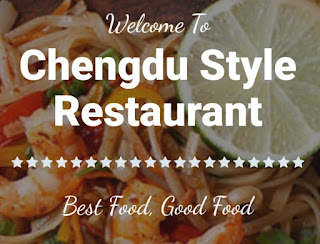
As with taquerias (click here for details), I take it as a good sign when a restaurant serves things most native-born Americans would never eat. For me, another sign of authenticity in an ethnic restaurant is poor spelling and/or translation on their menu. Here are some website features that inspired me to try out Chendgu Style restaurant in Berkeley.


Check it out! They have both best food and good food! I get the sense that there’s some list in play here of English words that have positive associations, and thus are sprinkled around like garnish. Now check this out:


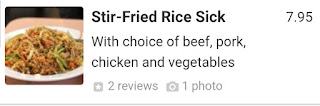
Yum, I love rice sick! Here again, there appears to be nobody on staff who is sufficiently fluent in English that this error wouldn’t stand out like a sore thumb … so this is as far from Panda Express as you can get. Onward:


Can I have mine well done?


Just like Mom used to make!

Okay, I guess I should get us back on track. Here’s the first sign of the Sichuan peppercorns:


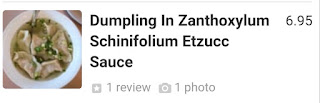
The description of that sauce strikes me as a heroic effort to communicate what this sauce is all about. It would appear that whoever came up with this didn’t grasp the subtleties of connotation here—that is, that this description is highly scientific as opposed to mouth-watering. Wikipedia more simply describes Zanthoxylum Schinifolium as mastic-leaf prickly ash, aka Sichuan pepper.

Now, you’d think somebody dining on “Dumpling In Zanthoxylum Schinifolium Etzucc Sauce” would appreciate the precise, if perhaps overly technical, description. Not necessarily. Consider this review: “Boy oh boy did we make a bad call here. We saw dumplings and wontons in some kind of sauce with 3 long and intense scientific words we couldn’t understand… We had no idea it was the mouth numbing stuff…  Neither of us were fans of the smell, flavor, or the feeling.”

That reviewer would do well to heed the advice of another patron: “For westerners: ask someone in back to suggest your order...if you’re going to a Chengdu specialty place, DAMMIT, ORDER CHENGDU FOOD… And for god’s sake, please don’t get the General Tso’s chicken: that’s not a real thing...it’s only on the menu to keep the gwai-low happy.”

Another Chendgu Style reviewer wrote, “Folks, the ‘numbing’ (麻) effect is the hallmark of authentic Sichuan cuisine. I’ve visited the actual city of Chengdu in China a few times, and this Berkeley restaurant recreates the flavor very well. Your mouth is supposed to get numb. If anything, I wished the dishes had more numbing spice… Really enjoyed their Fu Qi Fei Pian. Also enjoyed their Tan-Tan Noodles made with a bonafide numbing/spicy sauce --- truth is, any other ‘Tan-Tan Noodles’ made with peanut-based sauce is like making pasta with marinara and calling it ‘pesto.’”

But does 麻 enhance the food?

Do Sichuan peppercorns actually improve Chinese food? This seems like a tricky question. After all, if a restaurant’s cooks don’t know what they’re doing, they can cause all kinds of problems by over-seasoning. Consider The Stinking Rose in San Francisco (slogan: “We season our garlic with food®” and yes, that’s actually a registered trademark there) which has really lousy food because—guess what?—putting way too much garlic in something is a great stunt for pulling in bonehead tourists but has nothing to do with good cooking. So we had to find a Chinese restaurant (and preferably more than one) that is really good and uses these peppercorns properly.

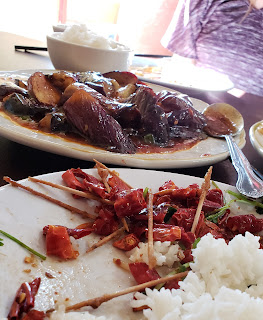
We headed over to Chengdu Style and though the ambience was strictly barebones, we did enjoy our meal. I was too busy eating to bother snapping a really good photo (as I hadn’t even contemplated blogging about this), but here’s a snapshot:


That dish in the foreground is their famous Toothpick Lamb, chock full of Sichuan peppercorns, which we all really liked. (One reviewer wrote, “I would suggest to the owners to drop the toothpicks from the ‘toothpick lamb,’ which is EXCELLENT. It’s literally a choking lawsuit waiting to happen.” I have to agree.) The Garlic Eggplant in the background didn’t have the peppercorns and was also great.

Again I (rhetorically) ask: do the peppercorns improve the food? I was surprised when I asked my family this question today. My younger daughter claims they “dominate the flavor.” My wife says “they distract.” My older daughter said (via text, since she’s off at college), “It’s a cute gimmick for a sec but it distracts from the taste. They taste like I’m being electrocuted LOL.”

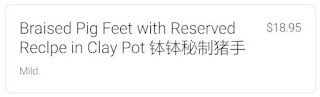
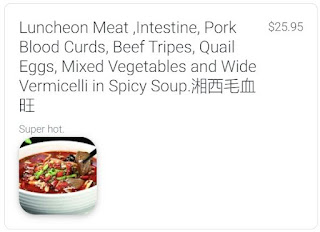
Not long ago, my wife and I went to another recommended place, Wojia Hunan in Albany. To establish its cred, and because it’s fun, here are a couple of their menu items:


So … they throw the recipe right into the pot with the feet?


Luncheon meat? Like that weird rubbery Oscar Mayer stuff in the plastic package? Man, that is adventurous!

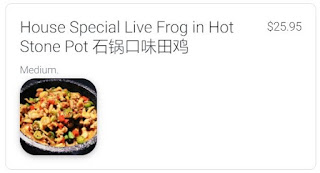
But this dish must be their real pièce de résistance:


I guess if you nibble the frog gently enough, he doesn’t realize he’s being eaten until it’s too late?

We didn’t try any of those things. But we had the Fried Glutinous Rice Balls (really tasty), the Sautéed Eggplant with String Beans (great), the Homestyle Noodles (solid), and a fish dish, I think the Boiled Fish with Rattan Pepper (delicious and numbing, but with a lot of little bones). The photo below  is from that meal; as you can see, this place is more upscale than Chengdu Style. Again, I dug the numbing business but my wife and younger daughter didn’t (though it didn’t ruin the meal for them either).

Now, it could be that we newbies are just not used to the numbing effect, right? Well, my older daughter asked one of her Chinese friends for his opinion of the peppercorns, and he replied, “My mom used to put them in soups and chickens and such when I was a kid, and I hated it. Always ruined my day when I accidentally chewed them. You can generally find them lined up on the side of a finished plate.” So it appears they’re just not for everyone.

Next up…

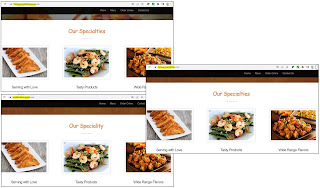
There’s one more Chinese restaurant I really want to try for its peppercorns: Sichuan Fusion in nearby Richmond. This is the place my friend T— originally recommended. I have just discovered that its website looks eerily similar to Wojia’s —and Chengdu Style’s too, for that matter:


Does this mean they’re all the same—basically a small chain? Naw. I’ll bet they just hired the same low-end company to build their barebones, humdrum websites. I think this is a plus: these restaurants are putting their effort into the food, not their brand and “online presence.”

If I discover anything really remarkable at Sichuan Fusion, I’ll be back to post an addendum. Watch these pages!

Addendum

My wife found Sichuan peppercorns at a local supermarket:


I made Mapo Tofu at home a couple of times and it came out pretty well. The first time I toasted the peppercorns dry in a hot pan and they bounced around like popcorn, and then I removed half of them, ground them up with a mortar and pestle, and sprinkled those on the top. The other half I cooked in oil with the rest of the stuff. It came out pretty nice and tingly.


I made it again the other night and didn't put any peppercorns in the dish itself, because my daughter does not fancy them. But I ground some for the top and that gave a decent level of tingle. I will keep tweaking this and if I ever make a real breakthrough I will append again.

—~—~—~—~—~—~—~—~—
Email me here. For a complete index of albertnet posts, click here.

Friday, July 28, 2017

From the Archives - Lobsters in Maine


Introduction

As described in these pages, my wife and I did a cross-country bike tour in 1994, starting in the Bay Area, heading down the west coast to San Diego, and then making our way north and east all the way to Maine before dropping down the east coast to South Carolina. Since it’s a slow news day here at albertnet, I’m sharing this archival bike tour essay, which mostly concerns Maine lobsters. (Note: this post is not about the 2015 movie The Lobster. However, if you haven’t seen that movie yet, you should definitely check it out … just as soon as you finish reading this.)

One more thing: I originally wrote this account while still on the bike tour, without the benefit of Internet access or any other means of fact-checking all the stuff I wrote about lobsters, which was stuff a guy told me, and which I recounted from memory. I see no need to fact-check any of it now; I mean, it’s not like you’re going to get in some kind of trouble because you had, say, the wrong figure for legal size of a captured lobster.

Lobsters in Maine – September, 1994

Our first morning on Mount Desert Island, we awoke at 3:45 after scarcely four hours of sleep to ride up Cadillac Mountain, which at a paltry 1,000 or so feet is nonetheless the highest point on the east coast. It is also reputed to be the first place in the United States that the sun hits in the morning. We took in a nice 5:57 a.m. sunrise (whether or not it was really the first), and then had a nice descent to breakfast. In the process we came across the Great Acadia Downhill Bicycle Adventure: a company drives you up the mountain, gives you a motorcycle helmet and a beach cruiser, and guides you down the mountain, all for just $29. We used the $58 we’d saved to buy ourselves a lobster dinner that night in Bar Harbor.

I’d never eaten an entire lobster before—just a tail, on a couple of occasions. Lobsters are as cheap as $3.50 a pound, live, in Maine. This is the season for them, and every restaurant in town offers them, at anywhere from $6.95 to $11.95 for a whole 1-¼ pound lobster. At an ice cream shop, I even tried lobster ice cream, which must have been more gimmick than anything because it was just plain vanilla, with chunks of lobster meat. After going to a bookstore to review souvenir placemats describing the 10-step lobster eating process, we went to a restaurant that one of the Bar Harbor locals had recommended. (Q: How do you find one of the rare locals in a tourist-mobbed place like Bar Harbor? A: They’re the ones without the fanny-packs and commemorative t-shirts.)

The early bird special was $9.95 for a whole lobster with rice pilaf and vegetable. It was delicious, I must say, although quite challenging to dismember. The lobster was almost too perfect to eat: it was served, mere minutes after the end of its life, completely intact: eyes, antennae, claws, legs, tail everything. The best meat came from the tail and claw sections, although each of its slender legs yielded meat as well, which you got at by sucking really hard on the narrow tubular shell. (It was kind of like trying to suck a Wendy’s milkshake through a straw, except yummier.)

The liver of the lobster—a great green ball that lobster aficionados call the tomalley—is considered a delicacy, but it was too much for me. It tasted like the way the sea smells, except worse. I guess I’m glad to have tried it, just for the experience, just like I’m glad I once tried chicken feet at dim sum, but I shall never eat a tomalley (nor a chicken foot) again.

We’d intended to stay longer on the island than we did, but the awful roads and suffocating congestion, combined with the exorbitant expense of the campgrounds, were just too frustrating. A park ranger explained that the post-season lull, which we’d been counting on, is a thing of the past. So many travel books, he said, encouraged people to visit after the tourist season (Memorial Day to Labor Day) that it’s just as crowded in September as it is in June. In fact, we discovered that more people were there on weekdays than on weekends. Maybe the time to come would be over the July 4 weekend, when all the wily tourists are staying at home. Or better yet, come in January, when even the central heating of an RV isn’t enough to rectify the discomfort of winter.

After leaving Mount Desert Island, we went looking for a small, relatively obscure restaurant called Bob’s Chowder House, which had been recommended by locals. After looking in vain for a while, we stopped at a random roadside restaurant called the Gateway Lobster Pound. It featured awful food, slow service, and a noisy staff that argued well within earshot about whether my wife was justified in sending back a slice of pie, which tasted like the inside of a refrigerator and was completely stale.

We left, disgusted and unfulfilled, and then, a quarter of a mile up the road, found Bob’s Chowder House. Such despair! We were so disappointed by the first place, and in such low spirits, that we stopped at Bob’s Chowder House anyway. (This is where having an auxiliary stomach really comes in handy.)

This time we were not disappointed. The waiter was friendly, the food was fantastic, and afterwards, on our way back to the highway, we stopped outside where the lobster cook presided over giant drums of boiling salt water recessed in a brick fireplace. He was a young, bearded fellow, idly smoking a cigarette while there were no lobsters to be boiled. He was happy to talk with us about lobsters, and even went to the tank to get us a live one to examine.


When you take a lobster out of a tank of chilled water, it’s alert and strong and you have to keep its claws rubber-banded shut or it could maim you. But once it’s been in the warm air for a while, it gets weak and woozy and the rubber bands can come off.

A lobster, before cooked, is generally a brownish color, although some of them are blue. When cooked, all of them, even the blue ones, turn red. Lobsters look a lot like the crawdads we all dissected in biology, but in fact they’re quite different. Most species of lobsters are of the genus Homarus, while crayfish are of the genera Cambarus and Astacus. Lobsters are considerably larger and dwell in salt water, while crayfish are fresh water creatures, except for the spiny lobster (aka rock lobster) which is a salt water crayfish.

[Note: in the years following this bike tour, I did some business travel and found a restaurant in Columbus, Ohio that served a seafood pasta with a big ol’ crawdad sitting on top. The first time I ordered it, the waitress warned me about the crawdad. I asked what could possibly be the problem and she let on that some customers were a bit freaked out to have this insect-like thing staring at them. It didn’t bother me a bit, and I can now report that crawdad tastes exactly like lobster.]

Lobsters are captured in a “lobster pot,” which is a slatted cage with an opening covered by a funnel shaped net. It is lowered all the way to the ocean floor, and will gradually fill with as many lobsters as can climb in, until it is pulled up. The trapping of lobsters is restricted in order to protect the species: lobsters of less than 5 inches or so in length, measured from the mouth to the tail, are illegal to sell; likewise, lobsters of greater than 10 inches or so (I can’t remember the exact numbers) are also illegal to sell. These must be put back in the ocean. Sometimes a lobsterman will catch a female that has laid eggs. These eggs are stored on the underside of her belly, and she curls the tail around them like a shield. The lobsterman must cut a notch in the tail of this lobster before putting her back, so that if she is caught again and without eggs, she will still be recognized as a breeder and returned to the sea in reward for her fertility.

Lobsters lead a very busy life. The only way they can grow is to shed their shell and grow a new one. Further, they can only shed their old shell in shallow waters, where they must wait, hidden under a rock or shelf in the sea floor, for the new shell to grow. A lobster spends his entire life walking across the ocean floor towards the shallow water, shedding his shell, growing a new one, and then slowly retreating to the deeper ocean again. By the time he gets back to deep water, it is time for him to grow again, so he turns right back around and heads towards the shallow water again. This is a slow process; by the time a lobster is big enough to sell, he is usually 4 or 5 years old. If he is lucky enough to outgrow his legal size without being trapped and consumed, he will have a long life ahead of him, with few or no natural predators. Lobsters can live 80 years, and the largest one ever captured is in a museum in Boston and weighs something like 45 pounds.

Like an Albert, a lobster will eat whatever he can get. Usually this means ocean debris that has sunk to the bottom of the ocean, but we’re told a lobster will eat another lobster if he gets the opportunity. Lobsters have one dominant claw, which is bigger than the other, and they use this claw to break up and pull in food. The other, smaller claw is used to put the food into the lobster’s mouth. (Some lobsters are “right handed” and some are “left handed.”) These claws are extremely powerful—they could snap a broomstick in half—so lobsters are seldom bothered by other sea creatures. And, if a lobster loses an appendage, he can grow a new one.

Having learned all this about lobsters, I began to rethink my enthusiasm for eating them. It seems like kind of a waste for a lobster to spend 4 or 5 years scuttling along the floor, making its long journeys, putting out such an effort to grow new shells and increase its size, only to be eaten over a period of 15 or 20 minutes. Of course you could argue the same point about cattle, but I think there is an important difference. The modern cow is entirely reliant on humans for its food—indeed, for its very existence. In a sense it’s almost more like a crop than a creature. But the lobster has a very busy, purposeful life, and would do quite nicely without being captured and eaten, thank you very much.

On second thought, lobster makes more sense than beef as a food because it doesn’t require any feeding. I heard somewhere that half of the water used in the U.S. goes towards growing corn to feed cattle; why shouldn’t we instead eat an animal that that finds its own food? All the McDonald’s restaurants in New England serve lobster; if lobster were to replace beef, think of all the land we could use for growing other stuff! Someone told me once we could feed the whole third world that way! Besides, lobster is so much less fattening than beef (and contains, incidentally, more iodine than any other food). We already have lobster hatcheries; what about doing it big?

Alas, there’s the whole food chain issue, so dramatically increasing lobster populations wouldn’t really work out. But what about this: since they can regenerate claws, how about harvesting those? Why waste all that potential claw generation time while the lobster is out scuttling around? Keep him happy, give him all the fish food or leftovers he wants, and take claws as necessary.

Okay, that’s enough. I was just kidding. Consider that last paragraph the deranged musings of a somewhat disturbed former lobster eater—reformed by default, since there is no more lobster to be had.

--~--~--~--~--~--~--~---~--
For a complete index of albertnet posts, click here.

Monday, August 22, 2011

The Food of Scotland - Part II

Introduction

If you’ve been paying attention, you saw my last blog post, The Food of Scotland Part I. Perhaps you view this post, Part II, as being derivative, and you’ve come to resent such serialized features. Well, that’s your fault for participating in a society that has learned to nurse every bit of value it can out of every concept. It’s why we have movies like “Harry Potter – The Leaking Gallows Part II Part VI.” (I could easily look up the actual title, but that approximation got a big rise out of my daughter Alexa, so I’m inclined to reuse it. See how this cheap retread thing works?)

So here are the categories of Scottish food I didn’t get to in my last post. Because I started with the most intriguing stuff, this post is really the dregs, the offal, the deli hash—dare I say the haggis—of the topic. You might as well read it, though. Heck, you’ve made it this far.

World Cuisine

When I’m in America, I don’t subsist on American food, any more than I focus on California Cuisine when I’m in California. Likewise, we were eager to try out Scotland’s versions of other countries’ foods. On our first night in Glasgow, we decided to try Japanese and went to a place called Wudon. Their version of the California roll has little pieces of Saltines and crumbled In-N-Out Burger in it. No it doesn’t. Look:

It was great, like all great sushi. I know that’s tautological but I’m going to stick by it. I especially liked the artfully carved wasabi. It was almost too pretty to eat.

(Incidentally, the only bad sushi I’ve ever had at a restaurant was at this all-you-can-eat place where it was made well beforehand and tasted like a refrigerator. My brother and I learned that all you had to do was power through all they had, and then they were forced to start making it fresh, and then it got good.)

There’s a UK-wide chain called Pizza Express. It came recommended and we tried it. I had pizza there.

As you can see, it’s kind of weird ‘za. Not much cheese, but it had some bacon. It sported the highbrow feature of fresh arugula (or “rocket” as the British call it, as if they ever put a man on the moon), tempered by a comfortably sweet and lowbrow ranch dressing. I liked it, though it must be said I like all pizza, even bad pizza. Even frozen pizza. Some time we’re going to have Trashy Food night at home, with Totino’s frozen pizza (the greasy stuff with the fake cheese), some Shasta soda, and maybe even some Fritos.

I’m not sure if pizza counts as Italian, but here’s some French onion soup we had at an Italian place:

It was really very good, and their special touch was not encasing it in melted Swiss cheese. What, French onion soup without Swiss cheese? I guess that’s the Italian way. Following that we had this lasagne:

You might think that’s obviously Italian, but really it was more like American: Franco-American to be precise. Yes, I’m saying the sauce tasted like Chef Boyardee. (Has it ever puzzled you that an American company putting out putatively Italian prepared foods would call itself Franco-American?) Anyway, the sauce wasn’t the only American part: the portion size—enough for a starving cyclist—made me feel like I was back in the U.S. The pasta was really mushy. But the whole thing was smothered in cheese so I can’t really fault it.

Speaking of American:

Full disclosure: we didn’t have this cake in Scotland, but in London where we stayed with friends over July 4th. The man of the house was English-born but had worked in the U.S. for many years. He married an American and took her back to London with him. So, an expatriate and a re-patriate, you could say. They made sure our Independence Day was a satisfying one. I gave the husband a stern lecture about taxation without representation, to which he replied, “Tell me about it. I paid your government plenty in taxes without getting to vote.” Now, you might think I’d be stumped by this retort, but I quickly and boldly fired back, “These colors don’t run!” Amazingly, he hadn’t heard this before and simply looked confused. His wife then sang, “Proud to be an Amer-i-CUUUUN!” Score one for the bluecoats! And how was the cake? Delicious, of course.

We had some really good Indian food in Glasgow, but I somehow neglected to get any photos. Without a thousand words to spare I’ll just have to let the matter drop.

Things we didn’t eat

As with our last trip to the UK, we didn’t eat any Mexican food. There was one place in Glasgow that was faintly praised in our guidebook (something like “If you have to have Mexican in Glasgow, this is your best bet”). It looked pricey, and if there’s one thing I’ve learned about Mexican food, it’s that cheaper usually means better, and fancy is often lame. So we skipped it, having topped up our blood Mexican levels at the surprisingly decent (and unsurprisingly expensive) taqueria in the San Francisco airport.

We didn’t eat any bubble and squeak (cabbage and potatoes fried together, named after the sound made as it’s cooked) because it wasn’t featured on any menus, I’ve never had it recommended to me, and we weren’t about to try cooking it ourselves. We also didn’t eat hasty pudding unless the porridge we made from a mix qualifies. (It was quick….)

We also didn’t eat any Subway sandwiches, though we saw plenty of Subways in Scotland. I read recently that Subway is now the largest fast food chain in the world. I remember the first one I ever saw, on Broadway near Arapahoe in Boulder. At first, being a dumb kid, I thought it was an actual subway station and couldn’t figure out why there weren’t any others. When I learned it was a restaurant, I mistook it for a creditable one-off like the nearby Mustard’s Last Stand. By the time I learned Subway was a giant chain, I’d also learned that even Mustard’s was a small chain. My idealistic naiveté has continued to be pummeled ever since, with the latest and harshest insult being the closing of my favorite Berkeley joint.

The next thing we didn’t try was the amazing variety of crisps available.

In case that went too fast for you, there were pickled onion, cheese & onion, smoky bacon, prawn cocktail, tomato ketchup, roast chicken, and Space Raiders pickled onion. Doing a little research, I found that this Walkers outfit also offers crisps flavored like BBQ rib, Worcester sauce, and Chicken & Stuffin (whatever that is), and that in the past they’ve had Baked Bean, Marmite, Spicy Mango, Australian BBQ Kangaroo, Welsh Rarebit, and even Scottish Haggis. As a matter of fact, Walkers even test-marketed a Cajun-squirrel-flavored crisp.

As a patriot, I find all this a little hard to take. Surely Americans lead the world in consumption of crisps (that is, potato chips); how could we not also be the most innovative in developing new flavors? I took some solace in learning that Walkers is now owned by Frito-Lay. But still.

Speaking of strange flavors we didn’t try, when we went out for Indian we didn’t try the haggis pakora appetizer. I actually wanted to, but my wife Erin pointed out that we hadn’t yet tried regular haggis at that point (though we did get to it later), and also hadn’t yet tried the standard pakora. (There were other components to her argument as well; I believe the phrase “sick and wrong” came into play.)

One other thing we didn’t eat was blood pudding. To be precise: Erin and the kids didn’t eat blood pudding, and I didn’t have seconds of it (i.e., Erin’s uneaten portion). It came with our Full Scottish Breakfast and you can see it in my previous post. As I said there, the blood pudding was a chewy, mulchy little disk of congealed, salty pig’s blood, perhaps not as little as I’d have liked it to be, and my own portion was a bit of a struggle to get down. I hate to waste food, but then that’s arguably not food. (It’s possible that good blood pudding would be a totally different deal, but I’ll believe that when I see it.)

Kids’ Menus

We were pleased, as we’d been during our London trip a couple of years ago, to see kids’ menus done with some flair. Often, when in restaurants at home, we end up ordering our kids’ food from the regular menu because our kids don’t want chicken nuggets and I’m not about to buy them something I can make well at home, like hot dogs or grilled cheese. A good rule of thumb for kids’ offerings: when the food arrives, I should feel tempted to use my superior size and strength to seize my kid’s meal and eat it myself. Thus it was with this spaghetti Bolognese:

The kids’ choices at American restaurants often come with fries, a basic ice cream dessert, and juice or soda (which I think should be a controlled substance). In the UK there are things like side vegetables and actual appetizers (served as a separate course). Check this out:

Red bell peppers? I could see those inciting a tantrum in many an American kid. The little baked doodads had some name but I can’t remember it. Pizza holes? That’s not it. Anyway, they’re just balls of baked dough but they were a hit, and they gave the kids something to do, in the absence of crayons, while the rest of the food was being made.

Now check out this dessert:

That sundae was about the sweetest thing I’ve ever tasted. (I taste all my kids’ desserts in accordance with the family Parental Tariff policy.) The chunks of caramel were Wonka-esque miracles of sugar reduction. About the only way to make this dessert more potent would be to supply a flame and an extra spoon. Meanwhile, check out the little frothy teacup. That was merely steamed milk with some cocoa powder—fun to sip, but not very substantial. I suspect it’s designed as a gateway beverage to expensive cappuccinos for when these kids graduate to the standard menu.

Weirdness

Dining out in Scotland was occasionally weird, due either to the food or the service. Sometimes it was good-weird, as with the brilliant haggis (and haggis stromboli) I described in my last post. So it was too with this offering (from the kids’ menu) which was called a battered sausage:

In advising Alexa, the waitress had described the battered sausage as “quite lovely,” and after tasting it I have to say, it really was delicious. It’s just one of the oddest foods I’ve ever seen.

Another oddity was the tea Erin had at the Japanese place. The tea itself was pretty standard green tea; what made it weird was the giant tea bag, easily the largest I’ve ever seen. In this photo it’s hard to appreciate the sheer size of the thing unless you know that the glass behind it is a full-size mug. This tea bag was the size of a chile relleno. Amazing.

In the overall experience category, the greatest weirdness was this Thai place we went to for lunch. It was really upscale, but the lunch special was reasonable—at least, no more unreasonable than any of the other places we went. (Frankly, the pound was murdering our weak dollar.) Though we went right at lunchtime, we were the only people in the place. It was opulently decorated, with large elephant statues made of marble; cloth tablecloths; cloth napkins; a coat check; and like five people waiting on us. It was absolutely dead quiet in there. Shifting your napkin on your lap was an audible event (bringing to mind those martial arts movies where every time a fighter swings his arm there’s this tremendous ripping noise). The staff never seemed to leave the dining room: when not serving, they would stand sentinel. We were afraid to talk.

Before the food came out, they brought these elaborate heated platforms to put the serving plates on:

When the entrees arrived, the servers set them down extremely quietly, as if there was a baby sleeping nearby. We were all pretty nervous by this point. They plated the rice from a serving bowl but then whisked it away instead of leaving it on the table, as though the sight of leftover rice was somehow disgraceful. I think the serving spoons were sterling silver. Here is the food. The main point of this photo is how worried Lindsay looks in the background (even though she’s gazing upon a plate of Pad Thai, everybody’s favorite).

The food itself was quite good. Erin didn’t trust the chicken (in the foreground of the photo) because it seemed too tender. I think she was just spooked in general. (I do wonder, though, if she wasn’t still reacting to a tequila ad from the ‘90s that showed a table of picked-over dishes at a Chinese restaurant with the broken pieces of a fortune cookie and a fortune slip reading, “That wasn’t chicken.” A five-foot-tall print of this ad was affixed to the bus shelter right outside an already doomed Chinese restaurant in our old San Francisco neighborhood.)

As the staff worked hard to make our Thai lunch enjoyable, the pressure really started to get to us. Perhaps this is how people feel who are unknowingly taking part in psychological experiments. Could there be one-way glass somewhere? Hidden cameras? It dawned on me that the place didn’t have any windows.

One thing we missed about American restaurants is how the check is always brought early, usually with the comment, “I’ll take that whenever you’re ready.” I’ve heard that visiting Europeans think this is terribly rude, as though they’re being rushed out of the restaurant. I think they’re mistaken, and that American waiters are entirely sincere—they’re simply giving us the freedom to be on our way as soon as we’re damn good and ready. Which we really were at this Thai place. Erin isn’t shy about asking for the check, but to our surprise the waitress—who had scarcely said a word up to this point—politely refused: “I can’t bring it yet because you’re not done eating.” She sounded vaguely pained, as there were a subtext: “They’ll fire me if I do!” If there were a Thai version of the French “C’est impossible” I’m sure she’d have used it.

Conclusion

Gosh, I hate to finish on a somber note. I’m sure there are people—brazen crime bosses, perhaps—who could have really enjoyed that Thai place. Overall, we found Scotland a great place to eat, from the haggis to the ale, the superior British bacon to the gorgeous mussels and local cheeses, the international fare, sculpted wasabi, and the improbably delicious battered sausage. I recommend you get over there and try it sometime. Bring the kids.

dana albert blog

Sunday, September 6, 2009

The Food of London


Introduction
oooo
Food is a big deal to me. When I’m not cooking or eating food, I’m either working to make money to buy it, or riding my bike to burn it off. Not surprisingly, many of my friends are also foodies, and some have asked how I liked the food in London during my recent vacation there. To those who haven’t asked my opinion, well, here it is anyway.
oooo
I will point out up front, though, that I’m not going to pretend I could give an overall account of how good English food is, or try to compare it to what we eat in the Bay Area. In London I was a clueless tourist with no idea where to go, and judging English food by the random restaurants I blindly stumbled into would be no more fair than judging San Francisco food by the humdrum fare you get along Fisherman’s Wharf.

Bacon
oooo
For some reason, the members of my bike club (http://www.eastbayveloclub.com/) are inordinately fond of bacon. Numerous group e-mail threads have been devoted to bacon-related topics, and I’ve even enjoyed a taste of a bacon chocolate bar courtesy of a teammate. There has even been talk of bacon icons on our jerseys or socks for next year. And when I mentioned I was going to London, there was much chatter about bacon butties and the merits of English bacon over American. So I’ll get right to the bacon here.
oooo
Here’s a picture of English store-bought bacon before and after I cooked it:
As you can see, their bacon is much, much leaner than what we have here. In fact, it looked more like a pork cutlet than bacon. You can also see how much of it was left after cooking; that amount of American bacon would have largely disappeared into liquid fat. And the taste? Delicious. Salty and briny like bacon should be, and though obviously less fatty, still satisfyingly decadent.
oooo
Of course, there is more than one kind of bacon in England. This snack bar sandwich had their “streaky bacon.”
This bacon was more like American, but its pairing with arugula on this simple sandwich was a nice touch. (Over there arugula is called “rocket.”)
oooo
Bacon makes a guest appearance later in this post, and if we back up and consider pork in general, stay tuned because the very best thing I ate in London involves the almighty pig. If you love pork but you’re in a rush, and/or have an MTV attention span, skip ahead to the “highlights” section.
oooo
Local specialties
oooo
We never did try a bacon butty during our trip, but we did make an effort to try some of the more famous English culinary offerings. Baked beans on toast didn’t figure in because we breakfasted at the house, and never felt like making this. As much as I love starch, I don’t get the dual-starch thing (e.g., potato calzones). So, the very first thing we ate in London was fish & chips:

I really like the format here of a single giant piece of fish. It was crispy and greasy in the best possible way and I enjoyed it. Note the side of “mushy peas,” which we frequently saw paired with fish & chips. Mushy peas: what a strange name. “Mushy” seems pejorative rather than merely descriptive, like if they’d said “gross peas.” (Speaking of unflattering terms, during the trip I frequently announced to the kids that for dinner we were having “greasy bloaters” or “cabbage and potato sog,” both phrases from the brilliant kids’ book How Tom Beat Captain Najork and his Hired Sportsmen, which I think should be required reading for all children and their adults.)
oooo
So, you’re wondering, how were those mushy peas? Our panel of tasters declared them disgusting. But mixed with a little malt vinegar, salt, and some crème fraîche we stole from another entrée, they were actually quite tasty. I should also point out that the pub we ate fish & chips at has been around for about two hundred years old, with some very groovy ambiance.
oooo
Another local specialty we wanted to have in the UK was a proper high tea. This we did at the Orangery restaurant in Kensington Gardens. Being a little confused, we described this outing to the kids as “taking tea at the palace.” (I see no harm in letting them continue to think of it that way.) We waited over forty-five minutes for a table, but the experience was very grand indeed:
The little sandwiches were tasty, and the scone was better than any I’d had before. Another item I have saved for my “highlights” section below.
oooo
Alexa says this was one of her favorite memories from the trip. I'm glad, because this little snack cost about $80, and I could have put every single food item in my mouth at the same time and still had room for tea. Of course, it’s not like I worked hard to find a high-value venue for our high tea experience.
oooo
It would have seemed silly and frankly irresponsible to spend two weeks in London without having bangers & mash, so I did: I love the contrast between comically ornate American menu descriptions (e.g. “served with a turnip, radicchio, and bruised parsnip salsify”) and the barebones English term “brown sauce.” No, they’re not telling us exactly what’s in it, nor even what animal(s) it derives from. Thus, this may have been my only exposure to the infamous English beef during the trip. (Note that I’m not uniquely suspicious of English beef; I generally eat only grass fed beef in the U.S., preferably local.) Anyway, the bangers & mash were quite nice, especially the mash.
oooo
World cuisine
oooo
When at home in California, we don’t focus on American food (and what would that be, exactly, anyway? Dennison’s chili? Ball Park franks? Or Native American fare like, uh, corn and acorns and Thanksgiving food? Or would it be New York or Chicago style pizza?). So in London, we eagerly tried out English renditions of other countries’ foods. At an Italian place, I had this risotto:
It tasted about how it looks: like a pile of rice with some ham and peas in it. There was no magic there—the dish was nothing more than the sum of its parts, and the Earth didn’t move for me. Truth be told, I’m seldom impressed with risotto; it’s so often an insipid, gloppy mess. But I had it at the California Culinary Academy when I took a cooking class there, and it was fantastic. I don’t remember exactly how we made it (I was fairly absorbed in babysitting the Bolognese ragu at the time), but I remember the chef/instructor, a real Italian and rather stout, tossing pat after pat of butter into it, long after the amount in the recipe was exceeded. I asked him what he was doing and why, and his response—the subtlest shrug you could imagine—tacitly told me, “Shut up—you know nothing.”
oooo
This fettuccine alla carbonara at another Italian restaurant was a fair bit better:
The bacon involved was great stuff, and the pasta itself was perfectly cooked. Eight more servings just like this one would have made it perfect for me (look how much plate is showing).
oooo
We had a goal of eating a lot of Indian food in London, but (not knowing where to go) we ended up trying only two restaurants. Both of them were good. Here is the samosa appetizer I ordered at the better of the places:
I’m not actually a big fan of samosas and don’t often order them, because they have that dual-starch thing going (pastry plus potato). But I just had a, uh, gut feeling it would be good here, and I wasn’t disappointed. In fact, the best samosa I’ve ever had, and decked out with other hearty, groovy stuff.
oooo
And here is the thali that Erin ordered:
She loved it. By the time I tried it, I was pretty sated from eating much of my kids’ food and my own, and my mouth was already on fire from my noodles, so I wasn’t particularly receptive to its charms. As for those noodles, I’ll get to them later in the “Kids’ menu” section of this post.
oooo
One night we had American food. As I said before, I’m generally not sure what American food even is, but in this case we were notified right off the bat this was bona-fide American:
There’s a frozen pizza brand in the Netherlands called “Big American,” and I had to laugh it its conception of what “American” pizza is like. The “California,” for example, has corn and tuna on it. US Pizza has some charming “lost in translation” menu offerings as well:
I was relieved to see that “EAGLES PREY” was topped with relatively humdrum toppings rather than the rodents, birds, and carrion the name suggested. And the name “WILD CAT FEAST” startled me as well. Meanwhile, I love that the “FAVOURITE” and the “CLASSIC” have exactly the same toppings. I’ll also point out that their “SEAFOOD ULTIMO” is the first pairing of tuna, prawns, and BBQ sauce I have ever seen.
oooo
Here is the pizza itself:
It was exactly as good as it looks, and actually pretty authentic. (I had them hold the corn—local color be damned, I won’t eat corn on pizza. That would be almost as bad as whole wheat crust.) Of course the US Pizza didn’t rival my favorite pizzas in the US (see http://www.albertnet.us/2009/03/little-star-vs-big-zachs.html), but as far as run-of-the-mill pizza-delivery places it was just fine (and a fair bit better than Domino’s, except for the Domino’s we ate at in France back in ’03, which totally rocked, vindicating me somewhat for having bought it at all). Full disclosure: I like almost all pizza, even bad pizza, even (usually) frozen pizza.
oooo
Things we didn’t eat
oooo
The main thing we didn’t eat was Mexican food, because it’s almost impossible to find it over there. We’d been prepared for this; before leaving the US I ate Mexican for almost every meal, just as a pearl diver takes a huge breath of air before going underwater.
oooo
In fact, one of our last pre-trip meals was at Mario’s La Fiesta, my favorite Berkeley place. Early in our meal there I realized that at the very next table were seated Mario himself and his wife Rosalinda, having their dinner! A framed photo of them above our table showed them on the day the restaurant opened, in 1959. They’ve held up well, as has their restaurant. We chatted with them, and they described to us how several American expatriate families have a tradition of heading straight to La Fiesta when they come back to the US for a visit. (My brother Geoff, who lives in the Netherlands, always makes La Fiesta a primary destination when he visits.) Mario told how, very recently, one expatriate couple, hearing of La Fiesta’s move from its original Telegraph Ave location, shifted their vacation schedule by a week so they could have one more meal in the original location. (Of course fifty years in business isn’t that long by London standards, but I’ve been eating at La Fiesta for roughly half my life.)
oooo
I missed Mexican food terribly in London; twice I dreamed about it as I slept. One of these dreams featured two different kinds of chile rellenos. Waking up and realizing I couldn’t even find the raw materials to make my own pseudo-Mexican food, I was despondent. How can the English (among other Europeans) live like this? It’s barbaric. If these countries were ruled by evil tyrants who forbade Mexican food that would be one thing, but the fact that there’s apparently little demand there for this glorious cuisine just boggles my mind.
oooo
Okay, enough griping. So, what else didn’t we eat in London? Well, we took a good look at the paella a street vendor was selling on Portobello Road. (The Portobello Road outing was another literary pilgrimage, based on the short story “The Portobello Road” by Muriel Spark. This story contains what may be the greatest sentence in all of literature: “He looked as if he would murder me, and he did.” It’s something of a ghost story.) Anyway, the idea of unrefrigerated shellfish and other unknowns frightened us away from the paella:
We also declined to sample the “doners” at a hole-in-the-wall restaurant that we passed every day on the way home from the underground:
I guess “doner” is just too close to “donor.” Shouldn’t the English be similarly bothered by this similarity? Like the manager of this place goes around to other restaurants saying, “I’m running a shoestring operation, do you have any meat you could donate?” And there's a suggestion of "organ donor" lurking in there as well. Beyond that, the food looked kind of gnarly in the picture, and of the very fact of the pictures I consider a liability.
oooo
We also didn’t eat this:
I’m no stranger to lard (my favorite Mexican restaurant in Boulder has t-shirts that say “Praise the Lard”), but lard in a cake? Or are they describing what the cake will do to you? I think a restaurant could be a bit more discreet.
oooo
This problem of suggestive naming also scared us away from an appetizer offered by US Pizza: It’s a pity—the description was actually somewhat enticing—but I just can’t eat anything that calls itself pregnant.
oooo
We didn’t eat much vegetarian food in London. (A friend of mine has commented, “It’s like all of England is on Atkins.’”) I’m not saying we looked particularly hard for vegetarian food (why would we?), but it’s apparently not that common to begin with. We did see a vegetarian offering at the (remarkably elegant) dining hall at one of the Oxford colleges:
Look at the second item from the top: “Mushroom in oats & salsa dip.” What the hell? Is this somebody’s idea of punishing vegetarians for being vegetarians? Wacky. (I’ve racked my brain for an explanation. I thought maybe it was “mushroom in goats,” as in goat cheeses, but there’s just plain no “g” there.)
oooo
A final thing we didn’t eat: most of a loaf of bread that inexplicably became a science project the day after we bought it:
oooo
Kids’ menus
oooo
We were pleasantly surprised by the near-ubiquity and quality of the kids’ menus at London restaurants. I won’t say they were particularly cheap (£5-6, or about $8-10), but they usually came with a dessert and a side vegetable. They were always generously apportioned (which I appreciate, being the family “closer,” who makes sure every plate is clean by the end of the meal). Best of all, these kids’ menus offered sophisticated foods, not just the cop-out grilled cheese, chicken nuggets, or hot dog to which so many American kids’ menus are limited.
oooo
Check out the quality of this kids’ entrée, grilled salmon with vegetables:
And though this next lunch gets middling scores for style points, presentation, and balance (it violates my dual-starch rule), it was fricking huge, and good. The stuff in that bowl hiding under a crust of cheese is macaroni and cheese, and we all loved it. The mashed potatoes were from scratch and perfect. The corn was, well, corn.
This dessert, custard with banana slices, was far too large for a single child. This isn’t a problem in my family, where there as a Parental Dessert Tariff of 25% per parent. The great thing about parenting is that you can create a true dictatorship. Individual rebellions are easy to crush, and kids just aren’t organized enough to challenge the status quo. In fact, perhaps the most British thing about our kids is their blind acceptance of our Parental Tariff. Whereas the founders of the USA rebelled against the whole British taxation-without-representation thing, our kids would always cheerfully slide their desserts over to be taxed, as though this were a simple fact of life. Thus a “free” dessert for them is a free dessert for us, and nobody falls into a sugar coma afterward.
At the especially groovy Indian place, Alexa got to have her own Thali, just like Erin. Look at how stoked she is:
Lindsay opted for the chicken noodles, which sounds like something really basic, like what we got out of a can in our own youth, but what she got really had some flair:
My own chicken and noodles plate looked almost exactly like this one, though it was spicier—too much so, actually. And it was only slightly larger than Linsday’s. I had her hold a box of crayons in the frame of this photo so I’d remember this was the kids’ version of this dish. You’d never know looking at it, huh?
oooo
A note on the crayons, by the way: remember how in the ‘80s it seemed as though every restaurant in America had a salad bar? Almost like it was a law? Well, in the aughts you’d be hard pressed to find a restaurant without crayons and coloring sheets. Waiters have learned not to expect kids to share, so each kid gets his or her own box. The diversion is welcome, of course, unless you believe the parenting books that warn against destroying your child’s creativity by teaching her that “art” means staying within the lines somebody else has created. Meanwhile, the crayons invariably get left behind and thrown out since all kids everywhere have bazillions of crayons at home already. Years down the road we can expect a worldwide wax shortage and Technicolor landfills.
oooo
Okay, back to the food. The real pièce de résistance of the UK kids’ menu was the “Big Mussels ‘n’ Chips” that Alexa ordered at our last restaurant meal of the trip, in a posh restaurant in Bath. I was not just surprised to see mussels on the menu (what American kid would ever order them?) but frankly a bit hesitant to let Alexa have them. For one thing, no less bold a diner than the celebrity chef Anthony Bourdain warns against mussels, on illness-avoidance grounds (see http://www.guardian.co.uk/books/2000/aug/12/features.weekend1). Besides, I wasn’t sure Alexa would even like them. But she was adamant, and here they are:
Alexa admitted later that she had been a bit leery of her first mussel (“it seemed gooey and jiggly on my fork”) and had to close her eyes before putting it in her mouth. But once she tasted it, she loved it right away, and on the basis of her yummy noises Lindsay became envious and begged for some mussels of her own. Here is the result:


Once she’d tasted mussels, Lindsay lost interest in her salmon. Things got a little dicey there—it was a good thing Alexa’s serving was so generous.
oooo
Weirdness
oooo
Dining out in London was occasionally a little weird. In one case it wasn’t the food but the service that was weird. At the really good Indian place, there was a little comment card, and Erin decided to fill it out. Now, I think we generally assume these comments are anonymous, but to our surprise the manager came out, plucked the card off the table, and questioned us about it. “Why only ‘very good’ in the service category?” he asked. Erin pointed out that my entrée came ten minutes later than everybody else’s. The manager acknowledged this, but still seemed a little hurt. Erin continued, “C’mon, I gave you almost all ‘excellents,’ I have to ding you on something.” He continued to go through the card. It was a pleasant enough dialogue, but what if we’d bagged on the place? The only comment card I’ve ever filled out was at an Arby’s in Boulder near my junior high school about twenty-five years ago. Being a snotty teenager, I rated the ketchup quality “poor” and undor “Arby’s Sauce” I wrote in “ketchup.” What would the Arby’s manager have said?
oooo
Okay, back to food. I ordered the linguine alla vongole at an upscale restaurant (the place in Bath that served the mussels), hoping for the best. I make this dish at home, albeit with canned clams, and it’s pretty hard to screw up. (I used to enjoy it at I Fratelli, which was Erin and my favorite Italian Restaurant in San Francisco back when we lived there. On my deathbed I’ll still be regretting not eating there more often; it’s gone now—actually, it moved and hideously mutated and still exists in evil-twin form as Tre Fratelli in Ghirardelli Square and it’s awful). Anyway, here is the linguine alla vongole I was served in Bath: The first thing you’ll notice is that it’s really small. Probably fewer calories than in Lindsay’s plate. And I don’t need to point out that the pasta is like Noodle Roni. Why would they cut the noodles for me? It’s insanity! What isn’t evident from the photo is that at least half of those clam shells were empty. WTF!?
oooo
Also not visible is how totally over-spicy this dish was. I’m no pansy—I like my salsa good and hot—but clams have a subtle flavor. Why drown it out? Okay, maybe you think I’m just a whiner and all these complaints are nit-picky. Fine—but bear with me, because here’s where the entrée gets really weird: every third or fourth bite had tiny shards of what must have been broken clam shell in them. Each time my teeth crunched on these rock-hard shards I would wince, cringe, wither inside and then (as the English motto goes) “keep calm and carry on.” After all, my kids were enjoying themselves.
oooo
But what of Erin? Was she enjoying herself? Probably, but her own entrée wasn’t helping. She had ordered the plaice:
Now, some people might be put off by the mere sight of this fish. Not only is the head attached, but it looks like the fish equivalent of a slashed tire. That said, Erin and I are adventurous eaters, and I think Erin was still enthusiastic as she set about eating it. To say this is a flatfish is an understatement—it was practically two-dimensional. The fish opened up like a manila folder and all that was inside was bones. Hundreds of them, and virtually no flesh whatsoever. You could get more calories from the crumbs between your sofa cushions. It was a joke. She was done “eating” it within about sixty seconds. In all my years of dining out I’ve never seen anything like it. Again, I didn’t complain. We had a train to catch, and the salmon and mussels were great.
oooo
Highlights
oooo
As you’ve doubtless gathered, we had some really great food during out trip. Here I’ll share with you the “best of’ items—a little food porn, if you will. Baked goods were invariably delicious. At a very basic snack bar at Kew Gardens, we shared this simple pound cake:
It’s a good thing we divvied it up ahead of time, because otherwise we might have ended up in quite a fracas. It was really, really good. I think they added heroin or something. But better yet was this Belgian chocolate cake we had with our high tea at Kensington:
This was unbelievably good, I mean eyes-rolling-back-in-your-head good. The cake was more dense, more moist, richer and better-tasting than cake ever gets to be. And that stuff next to it? Clotted cream, baby. It’s like what regular whipped cream might be like if you could freebase it. As for entrées, we particularly liked this leg of lamb: The leg of lamb technically belonged to Erin, but it was so rich I got to eat a fair bit of it, including the marrow from the bone. It’s pretty hard to screw up a leg of lamb, but this place did an especially good job. It was the kind of food that makes you (or at least makes me) whimper with pleasure. But the very best thing I ate in London was this pork belly:
This was the first pork belly I’d ever had the opportunity to eat. Why is that? How come the pork belly has become the quintessential example of a tradable commodity, and yet you never see them on menus or at the butcher shop? What do Americans do with all their pork bellies?
oooo
My God, this thing was exquisite. I won’t lie to you, it wasn’t lean whatsoever, but neither was it just a big pile of fat. It had the best characteristics of a pork cutlet and of bacon. It was like The Other Dark Meat. The skin was on it, all crackly and chewy. I was reminded of what my friend Mark said about a plate of pasta alla Bolognese: “This is so good it’s making me angry.”
oooo
This pork belly … where had it been all my life? (A quick look at chowhound.com yielded only two recommendations, though I sensed a kindred spirit in the seemingly almost desperate person who started the thread: “What are your favorite restaurants to get pork belly in the city? I don’t care how it’s cooked. I don’t care if its in a salad, sandwich, app, main, or even dessert.”) The side dish this pork belly was served with was good, too: roasted potatoes and slices of apple in a light curry. Brilliant.
oooo
Dang, thinking back on that meal has made it almost impossible for me to think. So, I think I’ll call this post done, and go fix myself a snack. Cheers!