Showing posts with label bike computer. Show all posts

Saturday, January 24, 2026

From the Archives - Bits & Bobs Volume XXVI

Introduction

This is the twenty-sixth installment in the “From the Archives – Bits & Bobs” series. Volume I of the series is here, Volume II is here, Volume III is here, Volume IV is here, Volume V is here, Volume VI is here, Volume VII is here, Volume XIII is here, Volume IX is here, Volume X is here, Volume XI is here, Volume XII is here, Volume XIII is here, Volume XIV is here, Volume XV is here, Volume XVI is here, Volume XVII is here, Volume XVIII is here, Volume XIX is here, Volume XX is here, Volume XXI is here, Volume XXII is here, Volume XXIII is here, Volume XXIV is here, and Volume XXV is here. Thematically these are all over the map. Geographically they are also all over the map, come to think of it. Well, within California to be precise.

What are albertnet Bits & Bobs posts? They’re more or less random compilations of short form prose I wrote in my youth, typically letters or emails but sometimes essays or graffiti. I post them to albertnet on the off chance that one of them will garner widespread adoration and propel me to worldwide fame, or at least notoriety. Read them in order, out of order, out of ardor, or outdoors in the arbor. Pay attention to the dates because some of these are rather old, some are just old fashioned, and others are merely passé.


October 17, 1989

I wonder how many unwanted pregnancies are caused by college kids using Trojan Magnums when they ought to be using the standard size. You know, guys aspiring for largeness, refusing to accept that their schlongs are merely average. In our school paper, an outfit called ZPG advertises wholesale condoms by mail. They offer a variety pack … I wonder what that is? Different colors? Textures? I can't understand this wholesaler advocating a variety of sizes, unless students are supposed to share, or just collect them like stamps. My roommate T— says his favorite condom is the Trojan Rough Rider. My neighbor, an exchange student from Korea, says he’s fond of leather ones. That's right, leather. If Vittoria made a CX Seta condom, I think that would be the ultimate, though I don’t have any use for such a thing, at least at the moment (sigh).

September 20, 1993

On Saturday I overhauled my Guerciotti over at the Square Wheel where I used to work back in college. (The owner is cool enough to let me use a bench there.) The bottom bracket spindle was pitted, along with the bearing races in one of the cups. The shop got swamped and I went out to the floor to help out, and actually sold a bike. Not such a big deal, of course, but it becomes more impressive when you consider I sold nothing more than a hypothetical bike. The shop didn’t have the right size GT Outback, aka Outhouse (or Compost, another fond nickname for this low-end model). Their stock is really low because business is bad and they’ve run out of credit with all their suppliers. I could’ve sold this kid and his proud parents an 18” bike, but you know how it is: he’s clearly growing like a weed and would outgrow the thing before its 300-mile tune-up. His dad, who had appropriated himself to be the boy’s official spokesman, said, “Well, he’ll be growing at least another four inches,” looking hopefully at the lad, who stared at the point two inches above his dad’s head that he would reach, if he truly did grow four inches. Hope springs eternal I guess…

Having come clean about the kid needing a different size, I faced the prospect that they’d just leave, and buy a bike from a shop that actually had one for sale, vs. ordering one that the kid wouldn’t even get to test ride. So I played up the shop’s free service plan, and how valuable that is. To emphasize the importance of proper servicing, I showed them the pitted BB cup I just pulled off my own bike. If they can’t see or touch the bike I’m trying to sell them, at least they can see this random thingie, right? Besides (I told myself) there’s nothing more impressive than the grease and grime of a real mechanic who knows what he’s talking about and handles real bicycles every day. I didn’t mention that I’m not actually even an employee of the shop. I hope when they come to pick up the bike they won’t ask for me. (“Dana who?”)

November 1, 1993

I went to a wedding where alcohol seemed to be the main theme. The venue was a winery, and each guest was required to have a glass of wine in hand during the ceremony. The bride and groom kind of slurred their way through the vows, very sentimentally, which I found kind of sweet. The drinking only accelerated at the reception, beginning with open bar before the food was even served. By the time the dancing and games had started, everyone was good and heated. One of the games was the throwing of the bouquet, and as usual, the tallest maiden won. Do you imagine that tall women in general have better chances of marrying, just like the taller presidential candidate usually wins? Anyway, following that was the male version, the tossing of the garter. I find this game especially absurd, but it was a hard-fought battle nonetheless, since drunk men tend to play full-contact, whatever the game. The garter (which was little more than a silky, frilly band) bobbed up in the air, was snatched from hand to hand, and eventually ended up on the floor where it was batted about like hockey puck. I was fighting hard, and eventually—likely due to reflexes less dulled than those of my competitors—I came up with the garter. Everybody cheered as I did a touchdown dance, and then the horrifying realization hit me: they’d all taken a dive! It’s only women who earnestly seek the prize of the soonest betrothal; men delay this as long as they can. Sure, it was a good fight, but was only fought in order to appease the woman: “Sorry, honey, I tried, but....” Had I realized this, I too would have intentionally lost. But I, of course, am a born competitor.

January 6, 1994

The Oregon trip went fine. The Landlord’s new computer, an Apple, is fun to play with. This new CD-ROM technology is pretty amazing. I went through this Great Works of Literature on Disc CD, and it’s got a huge number of stories, poems, etc. on there, and shows various pictures, all from the original works, but only in black and white. This doesn’t bother me, since the originals were in black and white, after all; the Landlo’, on the other hand, was fuming mad about something, as usual. I think it’s that I was spending too long reading individual works and not letting him show me enough different features of his Mac. And he seems to have basically given up on those discs that don’t have full-color motion graphics and probably wishes he hadn’t let me stumble upon Great Works of Literature. My best find was “The Raven” by Edgar Allen Poe, and—I’m somewhat embarrassed to admit—I’d never really sat down and read it closely before. The CD-ROM featured a few sound samples, where you can hear stanzas read by a professional, which was fun. For some reason, I still somehow expected the recordings to be in that cheesy computer-synthesized voice, but no, they were a human voice, in digital stereo. I ended up spending over an hour reading and rereading the poem, before realizing I had lost interest in the technological wonders of the CD-ROM technology itself. I mean, I was reading a printout, for crying out loud. I highly recommend the poem. I guess CD-ROM ain’t bad either.

We also visited Grandpa, Aunt J—, Uncle W—, and [cousin] J— on the way to a New Year’s party in SoCal. I’d sent them a holiday card with a photo, taken at a recent company party. This photo apparently caused a bit of a scandal. Aunt J— gave me an ominous warning over the phone prior to our visit: “Daner, I just have to warn you: your grandfather, well . . . he’s just not the man you used to know. He’s just turned 97, and he’s, well, old-fashioned. W— and I have been harassing him all morning, but he just won’t stop grumbling about the length of your hair. Anyway, he has no tact, so I just don’t want you to be offended if he says something. We’ve tried to get him ready for you, but you know how he is. Anyway, I think your hair is gorgeous, just don’t let him offend you.” I told her I’m totally used to being hassled for my long hair, but I doubt I successfully conveyed to her the extent of my immunity to criticism. All the same, I put it back in a ponytail for the visit, just to make it a bit more tidy.

Well, at first Grandpa didn’t realize it was a ponytail, and thought I’d actually cut my hair. He said, “Aaaah, now that’s how I remember—” and at this point the game was up: he realized I hadn’t cut it. “What’s this!” he said, yanking as hard as he could on the ponytail. Ow! That was about all he said for a while. Dinner was fun: Uncle W— dragged out his legendary electric carving knife and was sawing away at the ham when I made a comment to E— that nobody was supposed to hear. I imagined I was speaking pretty quietly, but that thing makes quite a racket when you’re sitting right next to the man wielding it. I said, “The electric model is a big improvement over the earlier, more cumbersome gasoline-powered one.” J—, clear at the other end of the table, laughed and said, “Yeah, you don’t need to run an exhaust pipe out the window anymore!” I hope I didn’t offend Uncle W—. He does seem rather proud of that thing. I was pleased that E— had the opportunity to witness it in action.

April 20, 1995

Mr. Albert has received your gift of the Tom’s of Maine Natural Shaving Cream product with moisturizing glycerin. He asked me to give you his most sincere thanks, and is very enthusiastic about trying out this product.

He was, however, slightly perplexed by the statement made by Tom & Kate Chappell on the packaging; they state that they “use no animal ingredients,” and that “nature does offer wonderful and simple solutions.” Mr. Albert cannot think of anything more natural than animals, and asked me to remind you that the Genesis chapter of the Old Testament very clearly stipulates that Man has been given, by the hand of God, dominion over all the beasts of the field and has at his disposal “every creeping thing that creepeth upon the earth.”  He asked me to inform you that most toothpaste uses sponge spicules for an abrasive, and why not?

One last note: Mr. Albert expressed some concern that the coconut oil used in the Tom’s of Maine shaving cream product may be very high in saturated fats. He requests that you investigate the availability of a “Lite” version of this product. Beef tallow, he suggests, would be significantly better than coconut oil in this regard.

May 4, 1996

I’m bummed because I’m all set to “roll over” my Avocet 40 bike computer (i.e. exceed the mileage that it can display, so it shows all zeroes) but I’ve come to realize that this newer model has a far-left-hand “1” digit so it won’t roll over after 9,999 miles like the old Avocet 20s and 30s. Here I was, thinking I was just miles away from that, well, milestone, but I’m only halfway there. I’ll have to log another 10,000 to roll it over, and I can’t imagine the batteries will last that long.

May 25, 2013

My opinion of the wild turkeys in our hinterlands turned around 360 degrees today. I had considered them a nuisance until early this morning when, riding up South Park, I saw a mother turkey with her little turkey chick riding on her back. It was the cutest damn thing I’ve ever seen.

But then, heading down Claremont, with the whole road to myself, I opened ‘er up a bit, enjoying the smooth, fast descent (but being ever-vigilant of course). And then suddenly there were four giant tom turkeys ahead, each with the whole peacock-like plumage disk puffed way the hell out, spaced evenly across the road like some kind of patrol, all facing me, bringing to mind a shooting gallery. If I had the Star Trek universal translator I’m sure their gobble-gobble-gobble would have been translated as, “You wanna piece of me!?” I pounded the brakes with a quickness. This was an eight-finger, full-force, Bluesmobile-style-both-feet-smashed-into-the-brake-pedal kind of braking, where I was waaaaay, waaaay back on the saddle so I wouldn’t skid or face-plant. Sure, I stopped with plenty of time to spare, but imagine if this were a month or two ago before I’d trimmed down the ol’  aero-belly, or if the road had been a bit wet! So now my opinion of turkeys has come full circle and I consider them a nuisance again.

—~—~—~—~—~—~—~—~—
Email me here. For a complete index of albertnet posts, click here.

Friday, February 28, 2025

More Q&A With a Cycling Coach

Dear Cycling Coach,

What is this “glycogen window” I keep hearing my dad talk about? Sounds like basically carte blanche to eat a bunch of sugary snacks just because he rode…

Lydia L, Portland, OR

Dear Lydia,

The glycogen window is legit! No less an authority than the National Institute of Health advises, in this article, “To maximize glycogen resynthesis after exercise, a carbohydrate supplement ...  should be consumed immediately after competition or a training bout.” In other words, you’ll recover from hard exercise better if you have a sweet snack right afterward. (Most articles agree that the window is about 30 minutes.) This doesn’t mean walking around the block justifies a whole package of red vines, though; “walkies” does not equal a “bout.” Also, not all snacks are created equal. I recommend sweetened yogurt, chocolate milk if you’ve got it, or some fruit (apple slices with peanut butter being my favorite). The NIH notes, “The addition of protein to a carbohydrate supplement may also increase the rate of glycogen storage due to the ability of protein and carbohydrate to act synergistically on insulin secretion.”

But you don’t need to take the NIH’s word for it! My own daughter did an elaborate experiment on this for her science project and you can read all about it here.


Dear Cycling Coach,

There’s a guy on my mountain biking team who’s always saying, “I’m gonna do bad in the race,” or, worse, “Oh, I’m not gonna try in the race.” It kinda bums me out and I’m sure he’s not doing himself any favors either. Any advice here?

Wally M, Mill Valley, CA

Dear Wally,

Without knowing your teammate I can only speculate, but I suppose his spoken sentiments are either performative (i.e., downplaying in advance any sense that he tried and failed, to save face), or are the public version of what he tells himself all the time. If I were his coach, I would try to draw him out a bit on that, and encourage him, and remind him how long it takes to get good at this very difficult sport.

If his utterances are indeed an echo of some interior monologue, he should be aware that negative self-talk can be very detrimental to an athlete, even beyond sport. A friend of mine, a licensed psychotherapist and founder of Ceely Sports, an athlete coaching company, discusses self-talk on his blog, here. He describes negative self-talk as “a natural psychological mechanism that all humans have” that tries to “problem-solve by pointing out your (real or imagined) errors and flaws.” He goes on to say, “Think of the inner critic as a linguistic personification of a primal survival mechanism. It’s useful, but tends to overreact and be a bit hyperbolic… The key is to know that your inner critic is just one of many voices, or internal mechanisms, that try to communicate information to you. Here’s the cool thing: you don’t have to believe everything ‘you’ think.” That is, you don’t have to listen to that negativity and let it become a self-fulfilling prophecy; you can take control of your internal narrative. Maybe you can convey this to your teammate, or forward him this post.

For a deeper exploration of this topic, see my post “Self-Talk in Action” here.

Dear Cycling Coach,

In last week’s column you referred to bike clothing as a “costume.” Nobody calls it that! If you’re supposed to be a coach why don’t you call it a “kit” like everybody else?

Lisa H, Charleston, SC

Dear Lisa,

Oh my goodness, you appear to have no idea how contentious the term “kit” can be. It was the topic of a highly animated email thread among my road cycling teammates. In fact, it’s a good thing our debate was confined to the emails (all gazillion of them) instead of a mid-ride discussion, because then it might have escalated into a riot. (Yes, I’m exaggerating.) I ended up getting three blog posts out of this fraught topic (so far) and you can read the final one here.

The short answer is, many feel “kit” is a Euro affectation, like “bidon,” and avoid it for reasons of taste, even though its meaning is plenty clear. I won’t call you out for using it, but I’ll ask you to extend me the same courtesy for “costume,” which I believe is the perfect term since compared to actual pro cyclists, the vast majority of us are posers (or poseurs in affected Euro parlance).

Dear Cycling Coach,

Should I use a bike computer? What are the benefits? Any downside, other than people thinking I’m a fitness dweeb?

Ben F, San Diego, CA

Dear Ben,

Given the prevalence of smart watches, and even smart rings, that can monitor sleep, heart rate, and blood oxygen levels, I doubt anyone will think you’re nerdy for using a bike computer. It might disturb the clean line of your handlebar, but trust me … nobody but you and other bike geeks are looking at that.

Meanwhile, bike computers really are handy, if for no other reason than tracking your mileage. Even a relatively cheap one like this Sigma can sync with your phone (and/or Strava) to serve as an automated training diary. I myself don’t use Strava but can still gamify my workouts by sending a snapshot to a pal, who reciprocates. We have an informal contest: who can beat 5,000 miles for the year, and by how much?


If you do get a bike computer you’ll be in good company. A while back I surveyed my road teammates and some other cyclists I know, and (as detailed here), 87% use a bike computer, and it’s not because they’re hardcore racers. Among those surveyed, 80% don’t follow a strict training program and only 17% (at the time of the survey) still raced regularly. In particular I find the heart rate data interesting. If you do a lot of solo rides, the arguably trivial data are even more welcome.

Dear Cycling Coach,

What’s the best way to deal with poison oak? Are we mountain bikers doomed to suffer that rash or is there a way to escape it?

Jill M, San Francisco, CA

Dear Jill,

Noting that you live in the Bay Area, which doesn’t feature very hot weather, I’ll suggest one really easy hack: wear long sleeves when you can. I almost always ride in leg and arm warmers and never have trouble with poison oak. Beyond that, I have learned that there is a really great way to prevent this rash even after exposure. You scrub your skin with a washcloth (and also soap, with Dawn dish soap being recommended). The washcloth makes all the difference in the world, as explained in this helpful video.

For more on poison oak and cycling, check out this post.

Dear Cycling Coach,

I am a budding young road racer in a dispute with my dad. I like to point my brake levers inward for better aerodynamics but my dad says I shouldn’t, simply on the basis that it looks stupid (or so he says). I say if it’s more aero, it’s worth it. Who’s right?

Megan G, Boston, MA

Dear Megan,

I am presumably of your father’s generation … whom do you honestly expect me to agree with? Look, your dad is right. The part of the lever you rest your hands on (that the rubber hoods cover) should point straight forward. This isn’t just the opinion of your wise father and me, but also the Union Cycliste Internationale (UCI), the governing body of road racing globally. A new UCI regulation actually prohibits inward-pointing levers as detailed here. This is supposedly for safety, but I really think it’s because the sport depends on sponsors, and the UCI grasps that if all dignity is removed from the peloton nobody will want anything to do with the image of cycling. So if your levers look like what’s below, straighten them out, quickfastninahurry.


I recently had a debate about this with a high school rider whom I coach, who (like you) seems to care only about aerodynamics with no regard for proper aesthetics. I compared inward-turned levers to putting ketchup on a hot dog, to which she replied, “What’s wrong with that?” No offense, Megan, but I really worry about your generation.

Dear Cycling Coach,

Last week in this column you mentioned “stealth training.” What exactly is that?

Jack F, Ventura, CA

Dear Jack,

Stealth training is when you could be riding with your pals, but instead you pretend you can’t go and then do a longer and/or harder ride solo, to try to improve your fitness faster. This solo ride is kept secret from your friends (sometimes to the point that you don’t even post it on Strava).

Sometimes mention of stealth training takes the form of a hurled accusation, quite possibly without merit. For example, when a pal declines an offer for a group ride, someone may well say, “Oh, sure you have a schedule conflict. I’ll bet you’re just looking to do some stealth training.”

For more on this topic click here.

Dear Cycling Coach,

What tools, etc. should I bring when I go mountain biking? I’m told that since my tires are tubeless, I should bring bacon strips. Huh? And besides flats, what should I be prepared for?

Suzie L, San Luis Obispo, CA

Dear Suzie,

“Bacon strip” is the nickname for these little tire plugs that you can stick into a hole in your tire, using a special tool. (Don’t worry, they’re actually vegan.) These plugs are helpful when the hole is too big for the sealant to plug up. Best of all, you don’t even need to remove the tire, so they can be really handy in a race. I’m not sure I can really recommend them, though, because I’ve never tried them myself, and I’ve watched seasoned mountain bikers—coaches, even—futz around with them without getting anywhere. Maybe my experience isn’t representative, though … you should ask around. Myself, I always bring a spare tube and just throw that in the tire (even if you were running tubeless before). That’s more foolproof.

Beyond the bacon strips and/or spare tube, you should bring food (energy bar, pop tart, PBJ, fruit) if your ride is much longer than an hour; tire levers; a pump (greener than a CO2 inflator); a patch kit; a multi-tool; one of those spiffy rechargeable taillights, mounted under your saddle; something to use as a tire boot; your phone; a chain tool if you know how to use it; and, last but not least, extra clothing. You never know when the weather will take a turn, and if you crash or have a mechanical you won’t be staying warm by working hard; you’ll be standing around getting cold. I was on a team ride recently and a kid crashed pretty hard. It took me fifteen minutes to patch him up, and since we were above 1,700 feet elevation, the temperature dropped quite a bit, down to the low forties, and a couple kids were freezing their asses off. If it had been a bit colder, and especially if it started raining or the wind picked up, they’d have been at risk of hypothermia.

(As a coach, I carry all kinds of stuff like tubes of various sizes, arm warmers in various sizes, a first aid kit, all kinds of tools, and extra food. More on that topic here.)

Dear Cycling Coach,

Is it true that cyclists have the highest pain threshold of any athlete?

Robert B, West Milford, NJ

Dear Robert,

I’m kind of afraid to answer that, because if I declared, for example, that cyclists were tougher than football players, I might get my ass kicked. But I do have some experience measuring cyclists’ pain thresholds, based on a methodology called the cold-pressor test described in this New Yorker article by Atul Gawande. As Gawande describes, when taking this test ballet dancers demonstrated far higher pain thresholds than nondancers. Several other articles also hold up dancers as the gold standard in pain tolerance. In my own study, all of us cyclists were able to outlast the cold-pressor test, something even the dancers hadn’t managed. You can read all about my experiment here. Suffice to say, even if we’re not the toughest of all athletes, we’re surely in the running.

Dear Cycling Coach,

There’s some disagreement on my high school mountain biking team about what bike is better: full suspension or a hardtail. One of my teammates insists that riding a hardtail will “make you a better rider.” Is this really true, or is she just saying that because it’s the kind of bike she has?

Scott H, Tallahassee, FL

Dear Scott,

Riding a hardtail not only makes you a better rider—it makes you a better person.

A Cycling Coach is a syndicated journalist whose advice column, “Ask a Cycling Coach,” appears in over 0 blogs worldwide.

—~—~—~—~—~—~—~—~—
Email me here. For a complete index of albertnet posts, click here.

Sunday, October 8, 2023

Epic Trans Alps Cycling Trip - Part III

Introduction

In accordance with my new “all French Alps cycling all the time” blog format, this post continues the tale of how I gradually burned myself down to the filter via a week of cycling in the beautiful Rhône-Alpes mountains. Part I is here and Part II is here. Today’s post, covering Day 4, features the fearsome Col de la Loze.

About the Col de la Loze

Simply put, the Col de la Loze is the hardest climb in France. But don’t take my word for it; that’s the ranking given by Pjamm Cycling, a website devoted to the topic. The Col is 14 miles long at an average grade of 7.5%. A quarter of it is above 10%, the steepest bit is 24%, and the top 6 kilometers are a fricking ski run that was recently paved. This is where Tadej Pogacar totally cracked during this year’s Tour de France (click here for footage). My pals and I were kind of dreading this, obviously, but at least it was the only major climb of the day.

Here we are rolling out, a nice mist tumbling around in the distance but the previous day’s rain all gone, thank goodness.


Something was wrong with my butt. I know that’s a strange thing to say, but from my first pedal revolutions I had this strange pain like somebody had bashed my butt cheek with the blunt end of a pool cue, kind of high up on, what, the glut, I guess? Perhaps it was some kind of muscle strain, maybe from the cold the day before and that final, frigid, clenched-muscle descent. Whatever caused it, this pain dogged me all day.

The Col de la Loze is a savage climb, no doubt about it, but at least we weren’t racing. Ian and K and I rode a mild, conservative tempo just to play it safe. Craig put the hammer down and was long gone, with just one other guy from our group with him.

Now, I don’t know what happened, and Craig doesn’t seem to want to talk about it, but partway up the climb, the guy Craig was riding with started to dissolve. I guess the Col de la Loze will do that to you. Check this out:


Weird, huh? I never did find out if this dude got his flesh back.Now, this next shot I was pretty excited to get because it’s really tricky snapping photos while climbing a crazy steep grade:


So yeah, 23%, impressive, sure, but check out my speed: 3.5 mph. That’s just sad. I think once I put away my phone and stood on the pedals, I was able to bring my speed up around 3.6 mph on this stretch.

On and on the climb went, the kilometers very gradually ticking by as we oozed our way up. With 3 kilometers to go, we learned that the next kilometer averaged 12%.


See how easy it is to read all this? And you can imagine how easy it was to type that last sentence. If anything, you may find this account tedious, but man, that’s just because I can’t convey the actual difficulty. Even the photos flatten everything out. Perhaps I could express it better with a formula, which we had seen on the road earlier in the climb:


The funny thing was, my poor brain was so oxygen-deprived when I saw this, I couldn’t perform the calculation. Imagine that! “Climbing stupid” indeed! But you know, it’s the damnedest thing: I still can’t work my way through this equation. Could the climb have permanently damaged my brain somehow? I’ll bet you’re having a chuckle at my struggle here with such a basic Physics formula. I’ll have to find a Tour de France rider to explain this to me.

Here are a few more pics:


Nearing the end, Ian, K—, and I agreed that the grade would surely let up a little, and that the last kilometer wouldn’t be more than 8%. I don’t know why we thought this. We reached the last guidepost and it said 11% … sonofabitch! Well, it didn’t say the “sonofabitch” part, we did—or rather, we said something even more profane. Here we are tackling the final bit. (One of the guides must have snapped this photo because we’re all in it; that’s me at the back, unsurprisingly.)


We made it, needless to say. Here we are chillin’ at the summit.


It was pretty cold up there at 7,559 feet elevation but I’d worked up a good sweat anyway. I have long enjoyed the pleasure of squeegeeing the sweat out of my helmet pad. I managed to capture this in a photo:


I froze my ass off on the descent, being underdressed, but then it warmed up and we had a really good, fast trip over the Cat 2 Champagny-en-Vanoise climb. The group splintered right off the bat, and Craig and Ian destroyed everyone with a blazing pace. We regrouped and then proceeded to a final, uncategorized climb, which we all rode together. Here’s one of those “meta” pictures, K— snapping a photo of himself being photographed.


The day wrapped up with a wickedly fun, twisty descent to our next town. The staff set up a nice picnic next to a roaring river and guess what? There were cured meats involved! Check out this “raw quesadilla” that I whipped up to chow down on (with a chocolate milk chaser, bien entendu!).


Weirdest dinner ever

Our strange hotel (see my last post) was the only we stayed at for two nights, and after the “veal nut” the night before we weren’t that excited about another dinner there; meanwhile, we had something to celebrate (which doesn’t happen to be any of your business). So we made a reservation at the highest-rated restaurant in town. At least, we thought we had a reservation—there were some crossed wires. We headed up there anyway, hoping they could take us as walk-ins. It was in another wellness spa hotel, and although Brides-les-Bains feels like a ghost town, their dining room was booked solid. The helpful concierge, who spoke excellent English, said, “It’s probably for the best because they are serving a prix-fixe diététique menu tonight and you would not like it.” OMG, diététique … I felt like we’d dodged a bullet! It could have been a squash nut with a side of quinoa mist.

The concierge made a phone call, had a brief dialogue in French I couldn’t follow, and then told us, “My favorite restaurant can accommodate you, but they are only serving one thing tonight which is raclette. It is cheese and there is ham and potatoes.” I immediately knew what she was talking about—or, I thought I did. I confused raclette with tartiflette, a dish popular in the French Alps, which is like scalloped potatoes on EPO. (You didn’t think I was gonna say “on steroids,” did you?) Everyone agreed raclette sounded great.

We headed to the place which, coincidentally, was the dining room attached to the pub we’d gone to for recovery beers earlier that evening and the day before as well. So it was kind a full-circle trip (the inefficiency of which bothered me as a tiring cyclist, but pleased me as a curious tourist). The waitress spoke no English but there was no menu anyway … she just carried over this bizarre metal contraption and set it down on our table. It looked like a cross between the scary waffle maker at a crappy motel, a SodaStream fizzy water machine, and a miniature version of the hugging apparatus Temple Grandin built. I was completely mystified until the waitress brought over a giant wedge of raclette cheese, cut from an enormous wheel, and attached it to the contraption (impaling it on something at the base, I believe).


Oh boy, I thought. This is going to be delicious but will take a very long time. It would be very different from tucking into tartiflette, which is as simple a comfort food as macaroni & cheese. I was starving and I’m sure my pals were too; fortunately, cyclists are not generally given to fisticuffs as we’re no good at it. 

After a brief nonverbal dialogue between K— and the waitress, we determined it was time to plug in the contraption (which after some light research I have just learned is called a raclonette). The waitress brought us each a plate of—wait for it—cured meats, along with a little salad and some tiny pickles.


It’s possible this stuff was supposed to be combined with the soon-to-be-melted cheese but I didn’t wait around to find out, and immediately scarfed down the whole plate. There was chatter about somebody wanting more pickles, and/or offering up his pickles, but I was in the zone and mostly tuned it out.

Those metal wings that fold down on the raclonette have heating elements in them, and their proximity to the cheese melts it, outside-in. You collect the melted cheese on a little spatula and then drizzle it over sliced boiled potatoes that show up somewhere along the way. Labor intensive, but well worth it. (It strikes me that raclette is the polar opposite of microwave popcorn, which is the dumbest food concept anybody has ever had.) Gradually I descended pleasantly into a cheese stupor. My French is poor and rusty but I managed to order more potatoes for the table. After a good long chow-down, during which we all exercised admirable etiquette (at least, I hope I, too, behaved, despite my baser impulses), we were all topped up and looked upon the fallen soldier that had been our raclette wedge:


We all wondered what would become of that large deformed stump. It would sure be a shame to waste it. Someone suggested it might be fed to children. I thought of asking for a doggy-bag, but a) surely there is no French equivalent of “doggy bag” because the entire concept is unknown to the French, and b) I would have no way to keep the cheese cool, so my luggage would become a Superfund site.

I described the raclette adventure in a text message to my older daughter, who replied, “That actually sounds like a cheese dream fantasy, cannot believe you got to experience it. I want an excuse to eat an ungodly amount of cheese in a socially acceptable way!” She makes a good point, and I hereby advance the notion that the Col de la Loze was a good excuse.

Check back soon because the riding only got harder from here, and the best pastries were yet to come.

—~—~—~—~—~—~—~—~—
Email me here. For a complete index of albertnet posts, click here.

Saturday, September 24, 2022

Biketronics II

Introduction

This post is not about e-bikes (i.e., battery-assisted bicycles). I have a lot to say on that topic, actually, but that’s for another day. This also isn’t about electronic shifting; I cover that here and here. This post is about bike computers.

More than twelve years ago in these pages, I posted Biketronics, a survey of these handlebar-mounted computers (and related technologies like heart rate monitors, power meters, etc.). That was a surprisingly popular post. So, having recently purchased the fanciest (and perhaps wackiest) of these devices I’ve ever had, a Sigma Sport Rox 4.0 with GPS capabilities, I figured we could go another round. My every instinct tells me this is a terrible topic and that nobody could possibly be interested, but then I’ve been wrong before. (For example, my post on the spelling of “kindergartner” is now one of my most popular of all time.) So here we go. I’ll throw some totally unrelated gags in here and there just in case your interest flags.

By the way, a lot has changed since my original Biketronics post. Back then, of the fifty-two cycling pals I surveyed, only five were using GPS-equipped devices. Now virtually all my friends have GPS. So I’ll devote some focus to that.

Who even uses Sigma Sport?

Nobody uses Sigma Sport bike computers, at least in this country. I literally don’t know a soul who has one, except one guy in Germany. I had to order mine from some outfit in Spain. So why did I choose Sigma Sport? Well, Garmins are too popular, same with Wagoo or Wayco or Woohoo or whatever that other popular brand is. I don’t want to be like everyone else. Besides, I’m a cheap bastard, and all the modern GPS-enabled models are at least a couple hundred bucks. No thanks.

Besides, look at the loads of features you get with the Rox 4.0:


Sure, lots of modern bike computers have power meters built in, but how many have pierced earrings? You might say “plenty,” but you’re not paying attention: pierced ears are popular, but pierced earrings? Those are hard to come by. And I love the existential air of “protective seals removed and cannot be.” These seals, these seals … they cannot be!

I also wanted a Sigma Sport because my old one served me well. It looked outdated the day I bought it, and certainly had its quirks, but it featured a groovy lap timer that would enable me to easily see the time, distance, and heart rate of my favorite climbs after the fact. Alas, the plastic bits enabling that computer to snap into the handlebar mount started to wear out to the point that I had to rubber-band it in place.


That wasn’t foolproof either so eventually I epoxied it to the mount, meaning once the battery dies I’m probably screwed—plus I can’t move it from bike to bike. So I wasn’t in a hurry to replace the computer, but it needed to be done.

I sense your interest waning—I know mine is—so here are a few good names for a rock band:

Duck Husband

Repetitive Stress Disorder

Nipple Confusion

Loofa Harvest

Good thing I wasn’t in a rush, because the new computer took forever to arrive. Tracking the shipment online was like trying to measure continental drift. It made its way across Europe in not much more than a week, but then was stuck in the Netherlands for twelve days. I emailed support and the retailer wrote, in an incredibly long, mostly boilerplate email, “Your parcel is currently on its way and it is due to be delivered to you very soon… Based on our experience, Customs can take between 15-60 days to unblock your parcel and proceed with delivery.”

Rox 4.0 documentation

I never did manage to find a complete list of specifications for this computer, even on the Sigma Sport website, so I guess I can’t complain that it didn’t come with a complete owner’s manual either. There was a nice thick booklet, but it’s only thick because it’s in ten languages, including Czechoslovakian and Polish. (I guess I should be grateful English is even among them.) The manual is actually just a “quick guide,” with a QR code for the “detailed instructions” web page which is mostly just little videos that cover only what is in the quick guide. There are no instructions anywhere, for example, on how to sync the computer to the heart rate monitor strap.

Here’s an example of the quick guide quirkiness:


“Active” and “Auto-Pause” aren’t actually defined. You start a workout by pressing the big button, and stop it the same way, and there’s actually a way to tell the state (running vs. stopped) on the screen—but the instructions don’t tell you what it is! And why are these “most important settings” anything you’d want to mess with during training? Think about it: you’re in the middle of a workout, hopefully not in the middle of a fast descent, and suddenly you think, “I need to calibrate the altimeter!” Why would you think this? And, if you wanted to manually set the altitude, how would you even know what altitude you’re at, other than to check the altimeter that’s right in front of you? Okay, maybe you’ve reached an elevation sign, but a) are those really common enough to make this among the most important settings, and b) why would you trust the sign, which is after all placed wherever it’s convenient to dig a hole, over a device that auto-calibrates itself via GPS, with an easy way to true itself up? It makes no sense.

First ride

I set out on the first ride with the new computer without having messed with the display settings. The display is highly configurable, which is pretty cool, but of the thirty touted functions, not all can be included in your configuration. That is, you have to choose your favorites. I figured while I was getting my feet wet, I’d just go with the factory configuration. I didn’t have any heart rate data because I searched too long in vain to learn how to set that up and was running out of daylight.

The first thing I noticed was a compass, which is nifty but totally needless because I seldom journey anywhere. There was also this weird directional arrow that seemed to point around randomly. Descending Wildcat Canyon Road, I noticed my speed fluctuating quite a bit, which you’d expect with GPS due to the satellite signal being blocked by tree cover, etc., but I had paid extra for the wheel sensor, so this shouldn’t have happened. Kind of annoying, but whatever … I was enjoying the big bold letters on the display, anyway.

But then, about ten miles into my ride, I noticed the mileage only read five miles. WTF?! Was this thing a total piece of crap, unable to actually measure distance? But the duration looked correct, and the speed (other than the occasional fluctuations) also looked about right, so it wasn’t totally whacked. But then things got even weirder. My confusion became outright bewilderment when the mileage number actually started dropping.

You’re probably just dying to learn the solution to this paradox, but I’m going to interrupt this post with a proposed title for a country & western song:

No one wears a mullet anymore

Two-thirds of my way through the ride, the mileage number was lower than ever, and it just dropped the whole rest of the way. By now you’ve surely figured this out, as I finally did too. The hypothesis I formed a few miles from home proved correct as I rolled down my street and the numbers went from fractions of a mile to matter of feet, and reached almost zero when I hit the driveway. That’s right, the device was showing my distance from home (presumably as the crow flies). So the accuracy was not an issue … but what a weird thing to want to display on your computer. I’m still scratching my head on that one.

The phone app & sharing

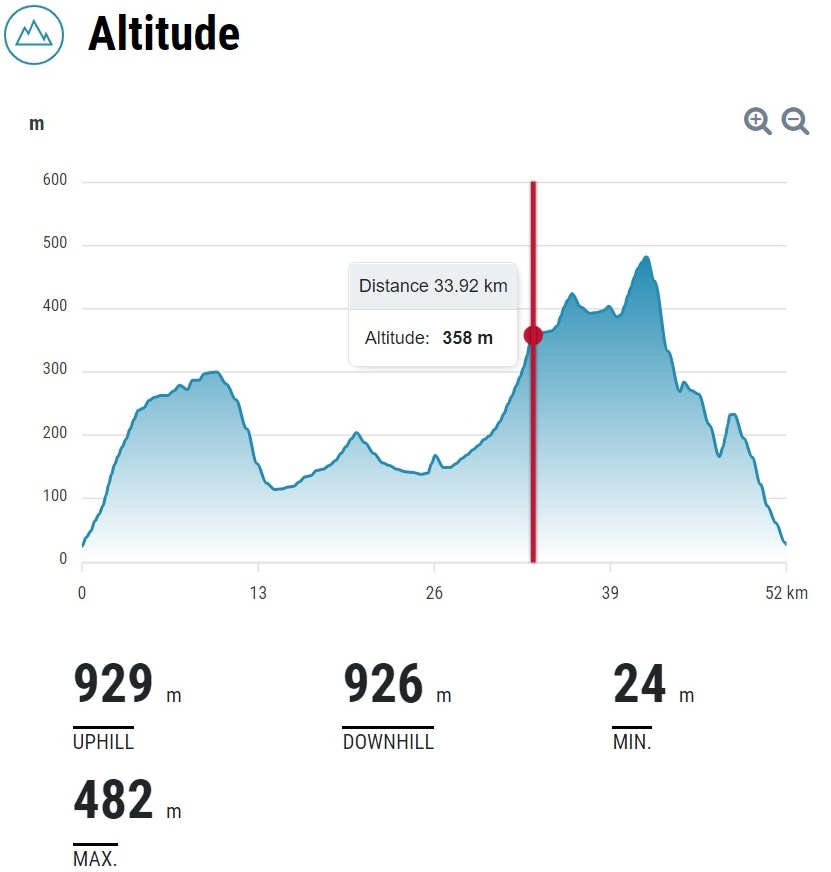
My old Sigma Sport uploaded its ride files to my phone over NFC (near-field communication) which was kind of a manual process and took a little while. The new one uses BLE (Bluetooth low-energy) and is swift and automatic. Look at the pretty display of my ride today:


I can share the ride, in Strava-like detail, via a URL to a (presumably) private website, with a much larger map, and I can drag my mouse along the graphs and such. (The units shown here are, alas, metric but I’ve already figured out how to fix that.)


I even figured out how to export these rides into a format that my old Sigma Data Center software can import, so I can still have an unbroken record of my rides going back years. And I think I’ve mastered the various features of this thing (other than integration with komoot, which I may never need).

And now it’s time for a few more rock band names:

Pack Shrapnel

Clear Rectal Discharge

The Harried Parents

Dark Yarn

Now that the Android app and PC software are dialed in, and I know how to operate the computer, the only remaining problem is…

The speed & mileage mystery

I’ve got this fancy sensor mounted on my hub to provide “even greater accuracy,” so why do all the totals for my standard loop come out low? And why does my reported speed suddenly drop from 28 to 14 mph and then pop up to 32? I decided to query my bike team, to see if they have this issue, and if it’s even worth having that sensor on there (since it’s kind of ugly).

Right away, I received replies from six teammates. Two of them actually answered the question (short answer: no difference between GPS and sensor measurement), and the others provided a variety of interesting tidbits:

  • The mph display often lags (jumps) while under tree cover, as does the elevation gain/loss. Piece of shit
  • The device connects with a satellite. The choice of satellite affects the data. The device usually has a Satellite setting. Galileo is US satellites. GLANOSS is Russian satellites. If you set your device to choose both then supposedly you’ll get more accurate data. (There may be a third set of satellites available now, too.) If you ride a lot in one location, then travel  (like if you ride from Oakland every day then one day start in Sacramento or France) this can confuse the device. The solution is to find the necessary obscure setting and leave it outside for a specified length of time. (Read the instructions. You’re on your own.) The device works better facing certain directions, like north, I think. Something to do with astronomy.
  • Dana if you get on Strava all your problems will disappear Do it! Do it! Do it!
  • GPS based measurements aren’t perfect. Absolute GPS accuracy is typically in the 5-10 meter range for consumer devices, so the GPS measurement is typically combined with an inertial measurement unit (IMU), which gives accelerations and rate of rotations that are then integrated to get linear and angular velocities using a Kalman filter. This also means that if the GPS signal is degraded due to building or tree, your velocity doesn’t suddenly read zero. Since the IMU in consumer devices generally sucks, it’s not going to be perfect.

Wow, that’s a lot to digest. I for one am not interested in having the Russian government tracking my movements, and I’m not sure which device (the bike computer or my phone) is doing the actual GPS work and would have the necessary obscure calibration setting to true it up. I’m sure I don’t want to start doing northbound-only rides and coming back on a bus or something. Above all else, I think it’s time for some more cool rock band names:

The Incestuous Mollies

The Quasi-Vegans

Leap Smear

Hard Floor Tool

Getting back to my teammates’ feedback, I reckon that the hub-mounted sensor I’m using is indeed the highly sophisticated IMU described, and it’s just not engineered well enough to be that accurate … which is a bit of a shame, since the old-school ones, which had a magnet attached to a spoke that passed by a sensor that counted the wheel rotations, was utterly simple and infallible. Perhaps part of my problem is that I’ve mounted this IMU on the rear hub (so I don’t have to look at it). I have just discovered (via a video buried within its website) that Sigma Sport recommends front hub mounting for “optimum reception.” Is it worth moving it, or do I ditch it entirely? That brings me to my next question.

Does any of this matter?

My friend Craig, who wrote about the IMU, went on to say:

Of course, you never precisely defined what you’re trying to measure. Do you want to know how far the tire patch of your front tire travelled? Or, do you care more about your rear tire patch? Even a rider trying to go in a straight line makes micro adjustments while pedaling, so the front tire travels ~0.25% farther! The more you turn, the greater the difference between the front and rear tire path will be. Or, perhaps you care more about your center of gravity? In that case, every time you rail a corner, your center of gravity takes a route that might be ~1% less (depending on the radius of the turn and your lean) than your rear tire patch. Of course, does it matter? Did you do less work because your new device showed that your ride was 2% shorter?

I think he’s being diplomatic here; the more direct version of his question might be, “Who cares what your mileage and speed are when the bigger question is, when are you going to start training harder so you don’t fall off my wheel when I’m trying to be nice and drag you through a headwind?” And he would have a point.

The answer is, at least in the short term, I want credit for every last foot of my rides because I’m doing a friendly competition called Cycle Around the Globe to raise awareness around the problem of suicide, and to engage in the collaborative effort to help prevent it. (My personal fundraising page is here.) Currently I’m sitting in 15th place with 540 kilometers ridden, though the leader has 14,000 kilometers, which he achieved in a single ride … so I’m guessing he’s not using a consumer-grade IMU. In fact, I think he’s even worse than those mopeds and e-bikes on Strava … he’s just making shit up. But for a good cause!

Lap timer

Alas, there is no lap timer on the Rox 4.0 (even though this very basic feature is available on a $14 Casio watch). I think I know why: the vast majority of cyclists are on Strava, which tells them their time on any segment they could want, automatically. But no, I won’t join Strava. That kind of thing’s not my bag.

—~—~—~—~—~—~—~—~—
Email me here. For a complete index of albertnet posts, click here.

Thursday, December 29, 2016

Product Review - Inside Ride E-motion Rollers


Introduction

This isn’t one of those consumer-oriented blogs dedicated to reviewing products—which is a shame in some ways, because if it were I’d probably reach a lot more people.  (A post last year in which I bagged on a teakettle) was very popular.)  That said, if you’re in the market for a set of rollers and would consider the Inside Ride E-motion setup, you’ve totally come to the right place (and may want to focus on the second half of this post—search on the text “What makes these rollers different” and start from there).  On the other hand, if you don’t even know or care what rollers are, but enjoy a good laugh at somebody else’s expense, you’ve also come to the right place (and will want to focus on the first half of this post).


Rough start

I got these E-motion rollers via a friend who has no use for them anymore, and I was looking forward to trying them out.  I already own regular rollers and you can read here about some of the difficulties I had jerry-rigging resistance on them, because in this one small area of my life I actually need more resistance.  What’s worse, with the old rollers I kept getting flat tires, which makes zero sense, being the bike equivalent of shoes whose soles spontaneously fail due to contact with carpet.  My solution to this flat tire problem was to ride outdoors, which has become less attractive as winter (albeit the mild California version) has set in.

My first ride on the E-motion rollers started off very badly.  First of all, I didn’t have the owner’s manual and was too lazy to look online for it—so when adjusting the wheelbase setting I just winged it.  The process is actually completely intuitive for anybody with a cool head, but I hadn’t ridden in like a week, was totally stressed out for various reasons, and was impatient.  So I fiddled with the knobs quickly and recklessly and cut my finger.  (Due to age, I guess, my skin has become very flimsy, somehow combining the soft delicateness of moss with the dry, brittle, diaphanous fragility of baked phyllo.)


I got the bike and the fan set up and then, because I cannot ride indoors without music, I spent 20 minutes in vain looking for my MP3 player.  I never did find it and had to use my smartphone, which I hung from the ceiling (to protect it from sweat).  Then I started riding but my heart rate monitor wouldn’t work.  I cannot ride indoors without knowing my heart rate.  I had to troubleshoot.  I am not the kind of person, particularly when I’m stressed out, who can just move on.  It isn’t in me.

I went looking for my daughter’s heart rate monitor.  I gave up after 10 minutes.  I did find her HR monitor chest strap.  I didn’t want to adjust the strap to fit me because it’s really hard to dial those in just right.  So I had to hold the strap against my chest with one hand, which is awkward because I had to stretch out my hand so both electrodes would contact my skin.  The HR monitor still wouldn’t pick up my heart rate, but when I walked across the room it started working.  WTF?!

The troubleshooting was exacerbated because the HR monitor is also a bike computer, and won’t always show the heart rate if the wheel isn’t spinning.  It will show it for a little while after the wheel stops spinning, but I don’t know what this interval is.  I really needed to actually ride the new rollers while holding the strap across my chest.  Super-awkward.  Impossible, in fact.  I felt like a doomed, hapless idiot.

I decided to try a new battery in my heart rate monitor strap.  There’s a special tool needed to remove the battery cap, and I spent 5 minutes finding it.  Then I dropped it.  I spent another 5 minutes looking for it, in vain.  (It’s small and black, kind of a “household camo” form factor.)  Between my failing eyesight, which is infuriating, and the fact that I was already furious, I gave up looking for the little tool.  I did grasp the absurdity of this, which increased my fury.  (The tool did turn up a week later, in a box of Clif bars on a high shelf in the kitchen.  A mystery, as I hadn’t gone near the Clif bar box that morning.)

I spent another 10 minutes looking for my backup battery cap tool, which I did, amazingly, find.  I removed the battery and tested it:  it had a full charge.  I spent another 3 minutes looking for a new battery anyway.  Amazingly, the individualized packaging on my backup batteries had failed en masse so the new batteries and their defective packaging were all mixed up with merely new-ish batteries.  I tested all the batteries and installed the best one.  No change:  the heart rate monitor still wouldn’t pick up within 6 feet of the new rollers.

I needed to determine if the magnetic field generated by the resistance device on the new rollers was interfering with the heart rate monitor’s signals.  This would presumably only happen when the bike is in motion.  So I decided I had to use the HR monitor in hiking mode, so that I could compare its performance when merely seated on the bike vs. while pedaling on it, without needing to worry about the HR monitor’s pointless idiosyncrasy of ignoring HR signals when the bike is stopped.  But hiking mode only works when the monitor is mounted to the wrist strap.  There are two wrist straps in this household:  mine and my daughter’s.  I looked for 15 minutes for either one of these.  My rage was so extreme by this point that I was almost literally blind.  Finally I managed to stop racing around peeking under things and just thought for a moment, and realized that my strap would be wrapped around the handlebars of my backup bike from the last time, many months ago, that I rode rollers.  There it was!  My satisfaction at finding it was considerably reduced by absurd amount of time I’d spent on the search.

I tried the HR monitor in hiking mode.  Even when just sitting on the bike, on the rollers, the monitor would not pick up my heart rate.  The crux, it seemed, was that the HR monitor just didn’t like my new rollers.  Which is a problem.  It seemed that no matter how much these rollers might outperform my old ones, it wouldn’t matter because I need that heart rate feedback or I’ll just loaf.  It’s human nature (mine, at least).

At this point I arrived at a crossroads.  If I didn’t succeed in solving the HR monitor issue, I’d have to eat the sunk cost of my hunt:  that is, I’d have to concede that I’d spent like an hour futzing with all this (in addition to the 20 minutes looking for my MP3 player and another 10 or so suiting up, digging the fan out of the garage, finding the extension cord, etc.) and would have nothing to show for my efforts.  On the other hand, if I spent one more minute of my precious weekend dinking with the HR monitor, I was probably going to blow.  I had to get on that bike, period.

But first I decided I needed to do one more thing:  look for help on the Internet.  How long could that take, right?  Alas, no Google search produced any results whatsoever.  I am evidently the only person who had ever had problems using his HR monitor with these rollers.  I did learn from the manufacturer’s FAQ that, due to the little wheels positioned at either side of each roller drum, “It’s not possible to ride off the drums.  You can try as hard as you want and it won’t happen.”  In my enraged state, I took this as some kind of dare.  A double-dog dare, in fact.


I climbed on, started riding, noted again the infuriating absence of heart rate data, started riding harder, and then steered my front wheel into the little guide wheel at the edge of the drum.  The tire touched it, started it spinning, and the bike just stayed in position.  So yeah, the guide wheel works.  But “it’s not possible” to ride off the drums?  And “you can try as hard as you want”?  I hadn’t yet tried as hard as I wanted.  So I started slamming the front wheel violently into the guide wheel.  I increased my speed and tried again.  On the 4th or 5th try I had so much sideways momentum I kind of high-sided.  What is high-siding?  Imagine riding on a rain-slippery road or trail and turning so hard that the tire starts to slide out—but then it suddenly catches, and flips you like a pancake.  That’s high-siding.  I basically flipped my bike right off the rollers.  I managed to stick the landing, but in the process of this crazily abrupt dismount I clotheslined myself on my headphone cord (because my smartphone was hanging from the ceiling, remember?).

This was the proprietary cord of my $300 Bose noise-canceling headphones, and it was now ruined.  This angered me.  And if memory serves, I had been kind of angry already.  (Is my comic understatement working here?)  I had to find some other headphones.  After 5 minutes I found some, remounted the bike, and then discovered that the headphones’ cord was too short.  So I hunted around for my headphone extension cord (yes, I actually have one) and tried that, but it was too long, and no scheme I could contrive to take up the slack would work (since my brain was melting down due to anger).  So I decided to put the smartphone in my jersey pocket, which meant finding a plastic bag to put it in.

Finally I got back going.  As you can see, I began my first E-motion roller ride with a level of fury surely unrivaled in history.  It would take a pretty special product to earn a glowing review under these circumstances.  Not since Richard III set about wooing the widow of the man he’d just murdered had a deck been stacked so unfavorably.

What makes these rollers different?

Regular rollers consist of a rigid frame that holds the three drums.  Riding these rollers requires a fair amount of balance (significantly more than riding a bike on the road).  The bike doesn’t automatically stay straight so you have to kind of steer to keep it more or less in the middle of the roller.  If you drift too far to either side you’ll go off the drum, which causes a very abrupt dismount that, while not terribly dangerous, is unpleasant and breaks your stride.

This difficulty increases if you contrive some kind of resistance and really start hammering.  If your body rocks or bounces at all, the bike wants to creep forward on the rollers and is destabilized.  Riding out of the saddle is possible on traditional rollers, but it’s really tricky going from sitting to standing without pitching forward.  Rocking the bike back and forth, meanwhile, is basically impossible. 

Anybody who tells you that riding rollers is a cinch is probably accustomed to riding them without resistance.  Riding rollers this way is pretty easy—but also pointless.  I have found, over the last year or two of riding rollers with resistance, that my back gets sore, probably because I am a bit tense and having to keep my upper body too still.  Moreover, I have really missed being able to ride out of the saddle in a natural way.

The E-motion rollers are different.  The drums still mount to a rigid frame, but this frame doesn’t sit right on the floor.  Instead, it rides a second frame (that does sit on the floor).  There is “float” between these two frames, so the rigid, spring-loaded top frame can move forward and backward.  So even if you are hammering so hard your form is crap, and your upper body is rocking up and down, the bike is stable, and the ride smooth and natural, with the rollers’ floating mechanism taking up all the slop.  Moreover, there are these smaller-diameter guide rollers positioned fore and aft of the rear wheel, which come into play when you stand up on the pedals.  The bike moves quite a bit when you stand up, but then the rear wheel hits the little guide roller, which shifts the floating frame forward, again taking up the slack so your bike doesn’t leave the rollers behind and crash into your fan (which has in fact happened to me with my old setup).


The floating frame also makes it possible to really shove on the pedals when out of the saddle, and to rock the bike from side to side like you would on the road.  In short, riding these rollers is just like real riding, except the air around you is warm and dry instead of cold and wet, and you don’t have to restrict your training to daylight hours.  (The other difference is that it’s still not as interesting as real riding, but music can help with that.)

These rollers are so easy to ride, I haven’t suffered my usual back pain when riding them.  With the old rollers I could ride no-handed, even with some resistance, but doing so made me a bit nervous; with these new ones, I not only can ride no-handed with ease, but when the zipper of my jersey got jammed, I was able to sit up and un-jam it while riding.

Here’s a video showing how well the E-motion rollers work.  This isn’t footage of some specially trained stunt double with impeccable form, either … it’s your randomly selected blogger, who likes to mosh big gears, doesn’t do yoga on the side, and isn’t overly concerned with being super-smooth.  Go ahead and view this video in full-screen mode and look at how much the top frame floats on the bottom one.


So … these rollers really work?

Yes, they really work.  They’re amazing, in fact.  The innovative design absolutely does achieve everything I’ve described above.  Also, the drums are really quiet, much more so than my old aluminum rollers which tended to “sing” at high speeds.  (Apparently these E-motion drums are aluminum as well, which is better than plastic because it’s more durable and has a more perfectly round cross-section.  But these are coated somehow which I think is why they’re so quiet.)  The magnetic resistance also works really well and is silent.


It is very rare, I’ve found, for one manufacturer’s product to be so obviously superior to every competing product on the market.  These rollers are such a huge step forward, I was almost laughing with delight.  This reaction is particularly noteworthy considering how enraged I was prior to riding these for the first time.  (If you didn’t read the first half of this review, maybe it’s time to go do that.)  Because by this point I hated everyone and everything in the universe, including myself, I perversely wanted to find fault with the E-motions but the fact is, I could not.  These rollers are a total game-changer.  At the end of my workout, I was in a really, really good mood because I was (and am) so stoked to own such a sweet set of rollers.

I don’t think I’ve been so completely satisfied with a product in 30 years (since I bought my first English-made Simplex teakettle, whose perfection is matched only by the utter uselessness and almost criminal crappiness of its modern Chinese successor … but that’s another story).

Is there any downside to the E-motion rollers?

The main problem with this product is that it has, for most people, no practical use.  The vast majority of people lack the desire and/or skill to ride rollers, and/or don’t have the psychological stamina (or is it mere tolerance of tedium?) to train indoors regularly.  Rollers in general are a total niche product.  There’s something almost Quixotic about setting out to produce the best rollers on the planet … kind of like if somebody decided the state of the art in steel-toed, waterproof, chainmail-reinforced, Internet-connected, antibacterial golf shoes was in need of an overhaul.  Of course this isn’t really a criticism of the Inside Ride E-motion rollers; it’s more of a critique of rollers in general, and of my fellow man.

There’s also the matter of price.  These rollers are about 50% more expensive than the second-most-expensive brand on the market, Al Kreitler.  The E-motions would be a pretty decadent purchase in most cases, given that they probably wouldn’t get much use.  On the other hand, for a serious cyclist with the tenacity to actually do a lot of training indoors, who spends all kinds of money on lighter wheels, fancy clothing, and other state-of-the-art gear, the price of the E-motions is reasonable.  (Good luck making this case with your significant other, though.)

These rollers do not fold up, so it would be hard to take them in your car to warm up before a race or before riding the track.  But who among us doesn’t have an old stationary trainer for that purpose?

If you think I’m going to complain about the tendency of these rollers to jam heart rate monitor signals, I have good news there as well.  Oddly, though I didn’t get consistent heart rate data during my first workout, I discovered I could spot-check my heart rate by standing up on the pedals.  (My theory is that riding out of the saddle moved the HR transmitter far enough away from the rollers’ magnetic resistance unit to work properly.)  I made peace with the idea that I wouldn’t have average HR, max HR, time-above-HR-target-zone, and other data to sift through after my roller rides, because everything else about these rollers is so kickass.  And then, upon riding them a second time a few days later, I was surprised to see that the HR monitor worked perfectly.  Two more flawless rides confirmed that the HR monitor problem was just a fluke thing, like the missing battery-cap tool.  Sometimes life is like that.

There is only one other possible downside to these rollers.  I live in the San Francisco Bay Area, where we occasionally have earthquakes.  If an earthquake were to happen during a workout, when I’m rocking out to my workout megamix via noise-canceling headphones, the E-motions’ floating frame might be so effective that I fail to notice the earthquake, which could put me in some kind of danger. (As you can see, you have to work pretty hard to find fault with this product.)

--~--~--~--~--~--~--~---~--
For a complete index of albertnet posts, click here.