Showing posts with label S.M.A.R.T goals. Show all posts

Tuesday, August 18, 2026

DUMB Goals in Action!

Introduction

If you were a cyclist in your mid- to late-50s, and I promised I could help you improve your average riding speed by 5%, and/or lower the time of your 20-mile evening loop by an average of six minutes, while maintaining or even lowering the amount of time you spent training, would you be interested? Now let’s assume you aren’t a cyclist: would you still like to know how I’ve actually achieved these strides—among others—simply by setting a DUMB goal and working casually toward it? Well, read on. That’s what this post is about.


But first … what is a DUMB goal?

Years ago in these pages (here!) I derided the ballyhooed but also hackneyed “SMART” goals that motivational speakers like to trot out. SMART generally stands for  Specific, Measurable, Attainable, Relevant, and Time-bound. I dislike this framework because it makes you decide in advance what success really looks like, when so often we have no idea. Consider workplace revenue goals: their feasibility is at the mercy of industry trends, the economy in general, and the skill of those trying to decide what a reasonable target really is. Only once in my thirty-plus-year career did a director push back; after a missed revenue goal, he told his leadership, “We don’t have a performance problem—you have a forecasting problem.” (He didn’t last long.)

Let’s consider a SMART goal of losing fifteen pounds by December 1. That’s specific, measurable, possibly attainable (depending on the person and how overweight he or she is), perhaps relevant (if a doctor recommended the weight loss and/or the person feels bad), and clearly time-bound. But is it a good goal? I think not. Suppose a person exercises a bunch, eats really well, and ends up only ten pounds lighter on December 1. He or she might feel bummed out at having failed. But what if he or she had actually lost fifteen pounds of fat and gained five pounds of muscle, but doesn’t know it? The specificity becomes a setback. The person may feel demoralized and less inclined to bother with the new lifestyle—which brings up another issue, which is that making this goal time-bound kind of suggests the project  is over, when of course a noble goal like a better lifestyle  should be a lifelong habit, regardless of silly metrics.

That’s why in a subsequent blog post (here!) I proposed an alternative: DUMB goals. This type of goal is Duplicate,  Unimpressive, Mealy-mouthed, and Best-effort. Am I kidding? Well, of course I always seek to amuse, but actually, I’m completely serious. Consider:

  • Duplicate: A goal you failed at already—never mind what anyone else tells you—is a great goal to try again at because if an attempted improvement was important to you before, that probably hasn’t changed. Failing to achieve something attests only to its difficulty and is no excuse for giving up.
  • Unimpressive: Too often, a goal puts too much emphasis on getting credit, on getting noticed. By gaining too much social payoff just for stating your flashy goal, you can actually reduce the likelihood of achieving it, because your ego gets stroked before you’ve even succeeded (as described here).
  • Mealy-mouthed: Being too specific, as with the weight loss example described above, can set you up to feel like a failure even when real progress is being made. Being more vague gives better elasticity to the tricky, messy business of self-improvement.
  • Best-effort: Defining success as pass/fail can lead to a sense that you’re done, or conversely that a goal is futile … and either way, you may be inclined to check—or strike—the goal off your list. Treating your goal as an ongoing attempt at improvement can keep it alive indefinitely.

But do DUMB goals actually work?

My original post about DUMB goals, being on the theme of New Year’s Resolutions, was more hypothetical than empirical. The idea was to shift the reader’s thinking about how to formulate a better resolution. But over the last two years—and especially the last ten months—I’ve actually made startlingly good progress on a DUMB goal of my own.

Here’s the goal: as I age, I want to build and maintain as much strength and vigor as possible, on and off the bike, while improving my balance so I don’t fall and break a hip when I’m 80.

How DUMB is this? Very. Is it Duplicate? Well, I’ve been fretting about the ravages of age for, well, ages—my first blog post on this (here!) was over 17 years ago. Is the goal Unimpressive? Yeah, I’d say—it’s not as bold as planning my first Tough Mudder or marathon; I mean, who doesn’t want to age gracefully? And is it Mealy-mouthed? Sure—it doesn’t apply any metrics. And it’s clearly Best-effort, with the vague “as much as possible” element that gives me all kinds of wiggle room.

Now, this isn’t to say a DUMB goal is no better than no goal at all. Instead of breaking a lofty aim down into very time-bound and measurable milestones, with progress tracked carefully, as one would with traditional goals, a DUMB goal like mine can be simply directional: without getting too meticulous about it, what general lifestyle changes might take me in the right direction?

And this, as I learned kind of by accident, is the secret sauce of DUMB goals: you can make huge strides by selecting just a few general behaviors which should bring the goal closer, and then focusing on the process of executing these behaviors as well as possible. Getting feedback on your progress in the  moment, as opposed to periodically measuring yourself against some (frankly kind of arbitrary) goal, turns out to be incredibly powerful. I love this quote from an article about parenting in the NY Times: “A Dutch father of three told me about his Buddhist-inspired approach: total commitment to the process, total equanimity about the outcome.”

General behavioral change #1: balance saucer

I wrote already about my balance saucer, here. And it’s been great. I ditched the directions and started with just a vague idea of the kinds of motion I wanted to do (e.g., tapping the front edge of the saucer on the floor with both feet on the saucer; tapping the back edge; tapping forward on one foot; backward on one foot). At first I couldn’t even do them all; the backward-on-one-foot seemed impossible. But it wasn’t, and when even that got too easy, I started adding in other stuff to do on the saucer: standing on one foot pulling a knee to my chest; standing on one foot and sticking a leg out straight; doing a slow, all-the-way-down squat; putting on my shoe and tying it while standing on the other foot. I avoided the drudgery of trudging toward milestones; my saucer tricks are more like what the Cat in the Hat would do (e.g., now I’ll balance on the saucer with this fishbowl on my cane!) or the ways Tom, of Captain Najork fame, enjoys just messing about. Maybe I’ll work up to a one-legged squat, or juggling while tapping on one foot, or doing all this while drunk (kidding!).

Though I had no objective other than to buy this saucer and use it, I can tell you now my balance has improved significantly. For example, I can now ride the white line of the road shoulder on my bike, not just coasting, but pedaling at full power, even out of the saddle. (It’s rare to learn a new trick after forty-five years in this sport.) Not only that, my core seems a lot stronger: my back never hurts anymore (knock wood), and basic tasks like putting on socks and shoes have become easier and more fun.

General behavioral change #2: join a gym

Lots of people join gyms, and then they don’t go, and they feel bad, and they fall behind in their SMART goals, and the whole thing is just a big drag. But I’m the world’s cheapest man, so when I join a gym I actually go, just to get my money’s worth. Meanwhile, half the reason I joined is that my wife wanted me to, so I could go with her and, as needed, kick the asses of any creepy guys there. (That’s the theory, anyway; so far everyone has behaved, which is a big disappointment.) So when my wife signs up for a class, I head over there with her, because honestly I seldom have a good excuse not to.

Now, I could ruin all this by making SMART goals around the gym workout, like gaining or losing some number of pounds, or adding some measurable amount of visible bulk, or being able to bench press some specific weight. But I’m too DUMB for that, so all I did is get a tour from the gym staffer, showing me a generic circuit training regimen that is popular, and that’s all I do, with no real programmatic rigor other than always being in motion. I get it that if you want to become huge and swole via a specific machine, you have to sit there for fifteen minutes between sets, scrolling on your phone, so your muscles “recover” or some damn thing, but that’s not a good use of my time.

I started off setting the machines to really low weight, just to keep from maiming myself, on the assumption that anything is better than nothing. I do fifteen minutes of cardio on  the elliptical machine to warm up, then do my circuit training, in order of whatever weight machine is open next so I don’t have to stand around waiting for some dude on his phone working toward a SMART goal. My routine takes almost exactly an hour. Now, as long as I’m there I might as well do a good job, which means paying attention to how my body handles each exercise so I can gradually, but safely, increase the weight over time. And since all the muscles in my body other than my legs have been neglected my entire life, progress is swift even at my advanced age. On the leg press I’ve gone from 90 pounds last October to 155 pounds today; on the rowing-esque machine I’ve gone from 35 to 80; on the shoulder press from 20 to 55; and so on. As with the balance saucer, working toward a DUMB goal helps keep things fun and stress-free. It’s hard to miss developmental milestones when the only one you have is “go to the gym a few times a week.”

And has all this paid off? It sure has. It’s a fun new routine with my wife, biking to the Y and back for our workouts; the improved core and back strength I touted earlier is probably partly due to this regimen; and, believe it or not, the arm warmers in my cycling costume stay up better than they used to. In fact, my biceps look a bit less like the almost two-dimensional blades of an oar and more like normal arms (though I dare not suggest they’re muscular, at least not yet). I’ve gained seven pounds, and it’s not in my belly so I’m going to call it an improvement. And, as you’re about to find out, the weight room circuit training might actually be helping with my cycling.

General behavioral change #3: use a power meter

About a year ago I bought a new road bike. As detailed here, it’s a totally sweet machine, and even came with a built-in power meter (that is, a strain gauge in the crankarm), which measures my output in watts and sends it to my bike computer. The power-meter-capable bike computer is sold separately, and after a brief struggle—dragged out by misplaced faith in AI—I got it working just in time for the new year, so I could switch platforms without messing up last year’s stats. Figuring that this new tool could probably help me somehow in my DUMB goal to age more gracefully, I started fiddling with it during my rides, studying the numbers and wondering vaguely, in the spirit of Alice as she tumbles down the rabbit hole toward Wonderland, how its data could help me improve. What I eventually realized is that my average power output for a ride exceeds what I’m doing at various points during it, and this represents a major area for improvement.

Let me explain. On a typical ride, my power output will average around 210 watts (or 250 “normalized” watts, meaning the average after all the very low readings from almost coasting, etc. are discarded). So I have been challenging myself during rides by asking, “Why is my output below 200 watts right now?” And for that matter, why should it ever be below 200, if I know I’m capable of maintaining that? Unless I’m doing a tricky descent, there’s really no good reason. To have a wide variance in effort during a ride just boils down to laziness (albeit a less drastic version than coasting when you could pedal). Despite my long tradition of making myself suffer during rides, I also have the human habit of conserving energy where possible, instinctively. Once I started paying more attention to my power output in the moment, throughout the ride, I started seeing the duration of my standard evening loop drop, and then drop some more.

Now, managing my effort better on a ride, nipping and tucking the lazy bits, might not seem like a game-changer; I mean, I get home a couple minutes earlier but so what? Well, as I eventually realized, going harder, consistently, all the time, actually improves your fitness. I mean, duh! It kills me how long I took to realize this actually, since it’s so obvious. But what I found is that the more I managed to keep the intensity up, ride after ride, the faster I got, and the more fun I had, and the more motivated I got. I discovered that the biggest improvement was in my power output while riding in the saddle, probably due to the increase in my core strength from the balance saucer. The muscular strength from the gym must be a factor too, because my fitness just seem to start to compound, like a freakin’ 401(k).

Improvement by the numbers

Here are some numbers to illustrate how crazy my progress has been. It’s a bit hard to compare my performance since a year ago (since during that period I had to alter my evening route due to a road closure), but my average speed over my longer (mostly weekend) rides went from 15.1 mph last August to 16.0 now, with most of the improvement coming since March, when my average was 15.2 mph. That’s a 5% improvement in speed, for the longer rides, in about four months.

But you know, my average speed during longer rides is a bit diluted, because loafing is naturally a bigger part of a 65-mile weekend ride with friends. My 20-mile after-work solo spin represents about three fourths of my rides, so this is where most of my fitness is built. It’s also where my improvement has been the most dramatic: last March my solo loop took me, on average, 1:24 (an hour 24 minutes), and this past month only 1:18. Can you imagine shaving six minutes off a 20-mile loop? And it’s not just that I’m bothering to ride faster; I’m capable of riding faster—much faster. My best time for this loop last March was 1:23, and a couple weeks ago I did it in under 1:14. Nine minutes faster. Are you kidding me?

But wait, this gets even better. I happen to track my total exercise duration pretty closely because I do an online DIY training contest with my family, and when I compare July 2025 to this past July, I see that my total duration actually declined significantly, from 58:12 (58 hours 12 minutes) in July 2025 to 45:26 last month. It’s nuts: I’m training less and my performance is soaring. All because I keep adding balance saucer tricks, gradually upping the weight on the gym exercise machines, and striving to maintain higher power throughout my rides. All in the service of this one DUMB goal.

And here’s probably the best part: all of my improvement has been, ultimately, gravy. Sure, I’m closely measuring and tracking my power, time, and speed on the bike, and my weight selection in the gym, but not in the service of holding myself accountable to anything. If this rate of improvement levels off next month, or even starts to drop, I won’t get discouraged, because remember my goal: to build and maintain as much strength and vigor as possible, while improving my balance, as I age. All I have to do is not decline. Actually, to not decline too fast. Best-effort!

Unimpressive

A final note: I want to emphasize the “U” in this DUMB goal: unimpressive. Consider how bored you’ve been getting over the last few paragraphs. That’s because, as important as my progress is to me, you couldn’t care less—and shouldn’t. This is why I think goals should be personal, and essentially private. I only present my experience to you as an illustration of what you yourself may achieve if you stop beating yourself up with SMART (or even just traditional) goals, and start thinking DUMB! Good luck with it!

—~—~—~—~—~—~—~—~—
Email me here. For a complete index of albertnet posts, click here.

Thursday, January 8, 2026

New Year’s Resolutions — AI Edition

Introduction

It’s that time of year again, when you start planning out how you’ll be better this year. This can be really annoying, especially when you have to read about “SMART” goals even though you know in your soul that “DUMB” ones are better. And now you’ve stumbled across this post. Well, fear not – I’m just as fed up as you, and will try to make this as painless as possible.

As with everything now, I will consider the topic through the prism of Artificial Intelligence. That satisfies the “T” in “SMART” because it’s timely—and for this I apologize. But I must press on, because there are many ways in which we could resolve to use AI better, more responsibly, or less annoyingly. I’ve managed to winnow this post down to five key resolutions.


Resolution #1: Do not pass off AI work as your own

This recommendation probably seems self-evident, and yet it needs to be said. How many times have you read something ostensibly written by a human but obviously ghost-written by AI? It’s kind of amazing to me how brazenly people will paste straight from ChatGPT or another AI chatbot and think they can get away with it. Only an AI could fail to spot the nuances that betray AI-generated text.

Even if AI worked perfectly as a ghost-writer, by using it you would suffer from the neglect of your own intellect. There is an intrinsic value in learning to represent your ideas in your own words, just as you would do when speaking. Ideally, over time, by doing your own work, you will develop a writing style—a unique voice—and this is what makes you you, and ought to keep you from being easily replaced by AI. And the more you write, on your own, the better this voice will be developed, and the better you will do at in-person communication, which is almost always ad hoc. This capability ought to take precedence over the convenience of outsourcing to AI.

I asked ChatGPT to weigh in on this matter, and it said, “If AI helped draft, summarize, or rephrase something substantial, acknowledge it—especially in professional, academic, or published contexts. For your blog, this might mean a light disclosure like: ‘Drafted with AI assistance; final edits and opinions are mine.’” I cannot imagine using AI for drafting, summarizing, or rephrasing anything substantial. I assume that you are reading albertnet right now only because you trust that I can do more for you than an AI chatbot, and that I’m willing to put in the hard work to make the writing witty, entertaining, and concise. ChatGPT’s disclosure would be like the cook greeting you at his or her restaurant and saying, “My gravy is from a mix and my apple crisp is Sarah Lee.”

Resolution #2: Do not trust AI with any info you cannot verify

Obviously one of the fundamental benefits of AI chatbots is that unlike a single-query Google search, you can have a dialogue to get very specific about your question or problem and provide all kinds of context. When this works, it’s great. The trouble is, as we all know AI hallucinates. And to make matters worse, it hallucinates very confidently and feeds you incorrect information very convincingly and assuredly. I spoke with a doctor recently who described a bizarre and yet increasingly typical dialogue with a patient: she asked him why she shouldn’t just take x amount of such-and-such medication, as ChatGPT suggested.  He replied that that dosage would be lethal.

Of course you, gentle reader, are too wise to use AI like that, but it’s surprisingly how poorly it can do even with very basic information. Recently I asked two different chatbots, ChatGPT and Copilot, if my Sigma Sport bike computer is compatible with the power meter on my new bike. I provided the make and model of each, and both chatbots assured me they were indeed compatible. So I tried to pair them and got nowhere.

Both chatbots dragged me further off into the weeds when I started troubleshooting. Copilot determined, definitively (or so it claimed) that my power meter was defective. Based on blinking colored lights, it declared that “your 4iiii is doing exactly what a unit does when it can power on briefly but fails its internal startup test” and that the cause is most likely “internal hardware failure” that is “unfortunately not rare with brand-new 4iiii units.” It then offered to draft a note to the manufacturer to get the device replaced. Its voice was that of the expert advisor, when it was actually swinging wild based on training data of unknown and unverifiable provenance.

Of course the whole reason I reached out to AI on this in the first place is that I’d never messed with power meters before, and knew nothing. And yet, just having human-grade intuition and skepticism ended up being more valuable than all that training data and lightning-fast research capability. I distrusted Copilot’s conclusion, figuring hallucination on its part is more likely than a hardware defect. So instead of wasting any more time online, I tried a different bike computer to see if it would sync, and it did instantly. What a relief, that I didn’t start some needless warranty replacement process and waste some tech support person’s time, only to end up looking like a jackass. I’m still grieving over the fifteen or twenty minutes I’d spent pointlessly troubleshooting with AI. I should have experimented with the second bike computer in the first place, before asking AI for help. (Why didn’t I? I was intimidated and wanted my hand held. This was a poor instinct.)

This isn’t to say AI is never an appropriate tool, of course. As I’ve blogged about before, it can be very helpful in all kinds of technical matters, such as scripting HTML. But you should only use it when you can verify its output experientially instead of blindly trusting it. For example, when ChatGPT helped me implement the copyright footer on this blog, I knew the instructions were valid because I could see the footer for myself (as can you, below).

Resolution #3: Limit the influence of “secondhand AI”

Now that we’re all using AI chatbots more and more, it’s easy to forget that most of the AI that affects our lives is behind the scenes. We think of AI as a productivity tool, but that’s just the chatbots; most AI is developed by corporations to drive algorithms that try to grab and hold our attention, which ends up reducing our productivity. To make an analogy, a chatbot is like smoking a cigarette and getting all the benefits it provides—e.g., the drug, the rich and satisfying smoke, and the coolness—while AI-driven algorithms are like secondhand smoke that doesn’t taste good, doesn’t make us cool, and just gives us cancer. I hereby nominate for widespread adoption the term “secondhand AI,” meaning the AI that drives us instead of responding directly to our queries. (Yes, I was being facetious about the “benefits” of smoking. Just making sure you’re awake.)

So the gist of this resolution is to try to limit our exposure to secondhand AI, or at least the extent to which we let it shape our behavior. Instead of looking at the books Amazon suggests, get more of them out of those little free libraries, or from the “Staff Picks” section of your bookstore or library, or ask your friends for recommendations. Stop letting YouTube and TikTok thrust content in your face. And instead of letting Spotify choose the music after your selected album or playlist is finished, configure it to just stop (i.e., turn Autoplay off). Why? Because the crap it chooses doesn’t belong in your ears or brain. All these algorithms share the same central flaw: they select for stickiness, not quality. They can’t judge quality because they have no taste  … just the ability to carry out endless A/B tests and learn from the results.

Resolution #4: keep AI out of your messy human stuff

The most sensitive human interactions—consoling, arguing, advising, listening—might present the most tempting use cases for AI. After all, here’s a platform that can give you guidance, suggestions, actual written content, etc. without judging you or getting distracted or running out of time or patience. But this is also the area where I exhort you to close the laptop, lock your phone, and sort things out on your own. (Using a close friend as a sounding board is fine.) Why? Three reasons.

First, what if AI came up with the perfect thing to say, and in just the right way, and you couldn’t resist and just delivered its sensitive message verbatim? This might work, but what if the person you’re having the difficult dialogue with detects the distinctive AI diction and figures out you used a chatbot? This sends the message that you cut corners, that you couldn’t bother being sincere and authentic—that you outsourced your role in the interaction. This could (and probably should) be deeply offensive to the other person.

Second, if you struggle during the dialogue, and the other person perceives your vulnerability, I think that can only help. Instead of being perfectly articulate and glib, why not let your difficulty be plain to see, so that the other person can tell the struggle is mutual? Meanwhile, if you have “your” thoughts perfectly rendered with the help of AI, won’t you be more inclined to doggedly stick to that script, instead of letting the dialogue go where it needs to?

Finally, engaging in this struggle on our own is good for us. Inhabiting this discomfort, instead of trying to settle the dialogue with maximum efficiency, is bound to lead to the kind of soul searching we ought to be doing anyway. And, like with anything, we get better with practice, which is important, because we won’t always have the opportunity to stop and consult AI during a social crisis. Thinking on the fly will go a lot better if you’ve done the time working through the messy human stuff on your own.

Resolution #5: don’t replace humans with chatbots

According to this article, about half of the teens in a Common Sense Media study reported they use AI bots “regularly, not just for entertainment, but for venting, emotional support, and companionship.” And according to this article, “About one-third (31%) [of American teenagers] actually claim that dealing with AI companions is more satisfying than talking to a human being.” It seems incredible to me—that is to say, I’m amazed that I find myself even  weighing in here—that anybody should need to be advised against using AI in this way. How did we get here?

I cannot get past the most obvious issue which is that every minute a person spends typing into a void (or talking, I guess they have voice mode now) is a lost opportunity to bumble around in the real world and have the opportunity to meet people, one or two of whom could potentially become a friend. Can’t we all agree that there is a nonzero chance of making friends just by leaving the house? And that the chance of forging a real friendship with an AI chatbot is zero?

Okay, fine, I don’t personally struggle with social anxiety, and I should try to empathize with those who do, but it’s difficult, particularly since I myself was a social pariah in grade school, and then things got worse in middle school, and I’m constitutionally shy, but I did manage to eventually learn how to get along. But setting all that aside, how good is the strategy of replacing human interaction with programmatically easy, safe AI companionship? I’ll cite one article, from the Columbia Teachers College:

According to research from MIT, for example, people who are lonely are more likely to consider ChatGPT a friend and spend large amounts of time on the app while also reporting increased levels of loneliness. This increased isolation for heavy users suggests that ultimately, generative AI isn’t an adequate replacement for human connection. “We want to talk to a real person and when someone's really suffering, that need to feel personally cared for only grows stronger,” says George Nitzburg (Ph.D. ’12), Assistant Professor of Teaching, Clinical Psychology. 

Gosh, this last resolution seems like the literary equivalent of a plate of bulgur wheat salad with a side of kale. I hope it has so little to do with your life that you can just flick it off your sleeve like a booger. And then resolve to get fewer boogers on your sleeve to begin with. In fact, why not resolve to get that number down to zero?

 Other candidates for New Year’s resolutions

If you don’t overmuch care about AI and are just looking for general inspiration as you contemplate your own resolutions, here is a wide assortment of suggestions: 

Further reading 

—~—~—~—~—~—~—~—~—
Email me here. For a complete index of albertnet posts, click here.

Sunday, January 22, 2023

Ask a Fitness Dweeb

Dear Fitness Dweeb,

I read somewhere that I should always do my weight training before my cardio. Do you agree?

Justin D, Asheville, NC

Dear Justin,

I doubt it matters very much. According to the CDC, more than 60 percent of U.S. adults don’t get the recommended amount of physical activity, which is 150 minutes per week. Fixating on the order of your activities seems like gilding the lily to me. I will say that doing cardio first might help you warm up, which can prevent injury when lifting weights.

Dear Fitness Dweeb,

OK, I get that you work out a lot. So I’m wondering: do you still have some clothes that fit too tight, and/or some that are baggy?

Whitney P, Santa Monica, CA

Dear Whitney,

Sure I do! Don’t stress if you have this issue. It’s not you, it’s the clothes. Some stretch, some shrink, and even if we’re fit our bodies still do change over time. For example, my suit pants are super tight … I must have been biking up a lot of hills when I had them tailored. But I’ve also got these jeans that I’m practically swimming in, so having those fit better will be a nice silver lining when I gain some weight at some point.

Dear Fitness Dweeb,

During these short, dark, cold winter days my husband works out indoors on his bike trainer, and it’s almost scary to watch. He’s thrashing around with such intensity, and breathing so hard, it’s like an act of violence. Should I be worried? Could he have a heart attack or something?

Kim A, Berkeley, CA

Dear Kim,

As long as your husband is in good shape and warms up properly, it’s probably harmless. It could be that to reach his desired intensity he just needs a super high cadence, or resistance, or both. Maybe he’s working through some stress. See how he is afterward … if he seems mellower, that hammer-fest could be exactly what he needs (click here for details). As far as heart attacks, these do afflict sedentary people who suddenly exert themselves too intensely (for example, every winter you hear about people suffering heart attacks while shoveling snow). There is also some anecdotal evidence of ultra-fit athletes having heart problems, but I don’t think that’s widespread … click here for details. (I’m no real authority, of course … everyone is advised to consult a medical doctor before embarking on a fitness regimen.)


Dear Fitness Dweeb,

Walking is so low-intensity … does it even count as exercise?

Charles D, New York, NY

Dear Charles,

Any activity is better than nothing. Sure, you’ll be better off if at least some of your exercise is vigorous, and if you’re trying to lose weight intensity will definitely help. But it’s so simple to go for a walk, even if you have only 5 or 10 minutes, and it’s such a nice way to shift gears, get some air, etc., it would be absurd to denounce it. I use walks as a way to keep a perfect track record of getting activity every day. Even if you don’t get a chance for a proper workout, it’s never too dark, rainy, or cold to get out for a quick stroll.

Dear Fitness Dweeb,

I’m trying to increase my exercise consistency. Some of my fittest pals tell me the trick is gamification—that is, using a scoring system and/or friendly competition as a way to motivate them. They mention Strava, Zwift, etc. Do you employ gamification and if so is there a specific platform you recommend?

Brad H, Austin, TX

Dear Brad,

In general, I have found gamification to be very powerful. I haven’t tried Zwift (until recently, I thought it was a floor mop of some kind), nor am I on Strava. From what I’ve seen of Strava, it looks great for budding athletes because improvement over time can be very motivational. But as much as I exercise, age is slowing me down year by year, and in the Bay Area where I live there are so many dedicated bike racers, getting a KOM or even a top 50 would be pretty difficult. But regardless of age, level, talent, etc. you can totally employ DIY gamification. This could be as simple as sticking a gold star on your calendar for each day you exercise.

I have a really cool DIY gamification scheme. I host a quarterly online contest with over a dozen participants, all friends or family members, using a shared online spreadsheet. Here’s how it works: we simply enter the duration of our activity each day, and select the activity type from a pull-down menu. The spreadsheet calculates a score based on the difficulty. Here’s a snapshot (click to enlarge):


Formulas, graphs, etc. do the rest. The contest works really well for a lot of us, being very fun and motivational. The youngest participant is 17, and the oldest is almost 85. All but two of us are at or above the CDC exercise guideline, and three of us have more than tripled it. I’m happy to share the spreadsheet template—just email me here. (For what it’s worth, I used to do a far more complex contest that rewarded high intensity, based on heart rate, which led to absurd levels of fitness and suffering as detailed here.)

Dear Fitness Dweeb,

Given how much time you apparently spend exercising, do you ever contemplate what your regimen is displacing? In other words, what are you giving up to worship at the altar of fitness?

Laura M, Minneapolis, MN

Dear Laura,

I have contemplated this, but not at length, because for me it is an article of faith that exercise is worth making time for. I suppose there are insanely busy people, like the scientists who developed the COVID vaccine, or single mothers working two jobs to feed their families, who really cannot afford the luxury of daily workouts. But for the rest of us, trying to reduce exercise hours would make sense only after first cutting back on all the time wasted indulging in clickbait, binge-watching video entertainment, and being glued to the 24-hour news cycle.

Dear Fitness Dweeb,

Why do you settle for such an unflattering moniker? Don’t you feel demeaned? Why not “Exercise Advisor” or something? Just curious…

Rob R, Topeka, KS

Dear Rob,

When I first pitched this column to my editor, I proposed something like “guy who actually exercises.” He laughed in my face and said, “Sounds pretentious, which is especially annoying coming from a dweeb like you.” He reluctantly agreed to let me do the column, but only if I called myself The Fitness Dweeb.

Dear Fitness Dweeb,

My girlfriend wants to get an e-bike, not just for commuting but for actual exercise. If the point is fitness, isn’t an e-bike kind of like putting an escalator or moving walkway in a health club? Can you set her straight?

Monica L, Phoenix, AZ

Dear Monica,

Actually, I disagree with you. If an e-bike makes your girlfriend more likely to exercise, it’s a good thing. We all have to fight our natural aversion to unpleasant duress, and if that one big hill on her route is just too much to face before or after a long workday, why not get a little help surmounting it? I tried out a friend’s high-end electric-assist road bike once, and it was a total blast. I was still pedaling, still working, but I just flew along; more than anything, it made me feel young again. My impulse wasn’t to loaf; it was to go even faster. Look, when you compare cycling to a truly difficult sport like running or swimming, it could seem like the bicycle itself is cheating. Where pedal-assist bikes are concerned, I say go for it. (But that other kind of e-bike with no pedals, that’s like a scooter … forget it, that’s just a vehicle.)

Dear Fitness Dweeb,

Do you get a lot of hate mail?

John P, Detroit, MI

Dear John,

Of course I get some negative feedback, but most of it is positive. Here are a couple of recent comments:

I admire this article for the well-researched content and excellent wording.I got so involved in this material that I couldn’t stop reading.I am impressed with your work and skill.Thank you so much. 情趣用品 

With up to as} $3000 up for grabs as a new new} participant, DoucheyBetOnline has one of the best on line casino bonuses round. Remember that 25x playthrough requirements apply and every one|that every one} video games besides craps and stay dealer video games can be played.

Dear Fitness Dweeb,

I am an avid runner but don’t have the ambition to do any races. Can you suggest some S.M.A.R.T. goals to help me improve over time?

Jill M, Lafayette, CO

Dear Jill,

To be honest, even when I was a pretty serious bike racer, I didn’t put much stock in long-term goals. As detailed here, that approach covers the rest of my life as well. I think that devoting myself to the process, without worrying about where that might take me, has always been enough. For example, instead of worrying about next year or five years out, why not just make each run as fun and challenging as you can? More recently, I’ve concluded that SMART (i.e., specific, measurable, achievable, relevant, and time-bound) goals might be the worst kind. As I describe here, when setting long-term goals such as New Year’s Resolutions, I favor DUMB ones: duplicate, unimpressive, mealy-mouthed, and best-effort. For example, my goal for this quarter is to try again to beat my brother Geoff in the humble online contest I described earlier … and if I fail, who cares, because it means he got a lot of exercise too! All this being said, if you want extra motivation for your running, maybe sign up for a Fun Run that’s longer or hillier than what you normally do.

Dear Fitness Dweeb,

After a workout I feel so good, I’m already looking forward to the next time … but then when the next time comes around, I find I’m dreading it. What gives?

Thomas B, Seattle, WA

Dear Thomas,

I struggle with that myself, and have for decades. It’s just the way we humans are wired, I’m afraid. But as I describe here, it may be possible to mitigate this dread a bit by making sure your workouts aren’t too long or too intense. In the moment, when we’re caught up in all the adrenaline and endorphins of a great workout, we’re often tempted to dig deeper and/or go longer, which is all well and good until we viscerally recall that experience later, when the adrenaline and endorphins have worn off. Then we seem to mainly remember the brutality of it. So I make a point to keep my regular workouts more reasonable, to exercise self-compassion, and to save the big efforts for when I ride with friends (i.e., when I struggle to keep up).

Dear Fitness Dweeb,

I had a gym membership for years because I thought shelling out the money for it would make me actually go … but it didn’t. So now I’ve quit, and I’m thinking hey, maybe I can put the money I’m saving toward something else, like nice gear, that can help motivate me to work out. But part of me thinks that might just be throwing good money after bad. What’s your take? Am I just being crazy?

Sarah D, Portland, OR

Dear Sarah,

No, you’re not crazy. Obviously spending money on fitness doesn’t guarantee results, but if any of your gear isn’t up to snuff, and thus makes your workout less fun, by all means replace it. Are your shoes completely comfortable? And given how much rain Portland gets, do you have the all-weather gear (i.e., groovy technical fabrics) you need? I have zero regrets about the super-cool bike wheels I bought a few years back, and I’m already dreaming of a new yoga mat that’s long enough that I don’t clonk my head on the hardwood floor during the full-body stretch…

The Fitness Dweeb is a syndicated journalist whose advice column, “Ask the Fitness Dweeb,” appears in over 0 blogs worldwide.

—~—~—~—~—~—~—~—~—
Email me here. For a complete index of albertnet posts, click here.

Saturday, January 8, 2022

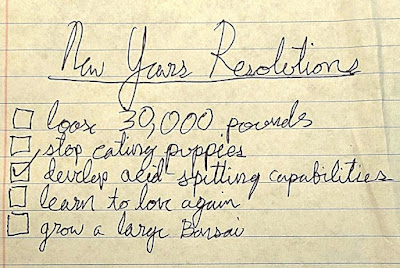
The DUMB Approach to New Year’s Resolutions

Introduction

Well, it’s that time of year again, when people start sentences with “it’s that time of year again.” What’s worse, it’s the time for countless articles about New Year’s Resolutions, and why people fail at them, and how to finally get them right. As you can see, I’m just adding to the problem—but this post is different because I’m right, whereas all those other articles are wrong. So keep reading!


Why not SMART resolutions?

One of the most hackneyed mnemonics for setting the right resolutions is taken from preexisting theory about goal-setting (another quagmire of behavioral theory). We’re told to make our resolutions SMART: that is, specific, measurable, achievable, relevant, and time-bound. Even the New York Times published a New Year’s Resolution article on that theme, here. Now, to be fair, that article does go into some other stuff that is useful, like breaking bad habits down into cues, routines, rewards, and alternatives (for example, if the cue is you’re tired, and the routine is you light a cigarette, and the reward is you feel stimulated, the proposed change in behavior is, “Instead of smoking a cigarette, replace the stimulus with something else, like cocaine”). But all the stuff about SMART is so tired (the NYT cited it in another article here, for example), and it’s empirically ineffective. People have been touting SMART goals since 1981 and yet it’s still just this hypothetical notion of what behavioral framework people should adapt to. If it were that great an idea, its actual practice would be commonplace.

(Note: my fact-checker has just alerted me to a typo in the preceding paragraph. The NYT did not in fact recommend cocaine as a nicotine alternative. They recommended coffee. But it’s too late to go back and fix my error now. Also, my fact-checker has just pointed out that “hackneyed mnemonics” would be a good name for a rock band. Fair enough, but this guy is starting to bug me.)

So, where was I? Oh yeah: it’s bad enough how old and tired SMART is, but actually, I think most New Year’s Resolutions fail because they’re SMART. So I’m going to teach you how to succeed by making DUMB Resolutions.

DUMB? Am I kidding? No, for once I’m not. I believe the best New Year’s Resolutions are duplicate, unimpressive, mealy-mouthed, and best-effort. I shall explain.

Duplicate

This article in Forbes declares that the #1 “really bad” New Year’s Resolution is something you’ve failed at before. The writer snarks, “If you haven’t been able to keep a resolution before, what makes you think that things will be different this year?” To me, this is just defeatist thinking. Is that how life works—if you ever fail at something, you should just give up? I’m reminded of Homer Simpson’s advice to Bart (which I’ve repeated, albeit ironically, many times to my children), “If something’s hard to do, then it’s not worth doing.”

This “fail fast” notion is specifically refuted in another article, in the New York Times, which points out that many Resolutions fail because the new behaviors are difficult and have to be worked up to gradually. The writer advises, “No marathon runner ever steps up to the start line in a big race without putting in the training miles. He or she has been practicing for months, if not years. You should do the same with your New Year’s resolutions.” He recommends starting on your Resolutions in December, so that even if you stumble at first and your Resolution feels futile, January hasn’t even started yet so you won’t get discouraged.

Great point, but why limit yourself to starting a month in advance? If you spent the first three months of last year trying to implement a lifestyle change but abandoned it, you surely learned a lot in that time and there’s no harm making adjustments and trying again. I doubt many smokers have kicked the habit on their first try, but many have indeed kicked their habit eventually.

(Note: my fact-checker has just asserted that “duplicate” might not be exactly the right “D” word here, because a recycled-but-tweaked Resolution isn’t in fact an exact replica. He suggests the D should be for “derivative,” and though he has a point, you may be pleased to learn that I just whacked him and told him to shut up.)

Unimpressive

That’s right, I’m actually going to explain why impressive Resolutions are more likely to fail. Why? Well, the question to ask yourself is, why am I even doing this? If your goal is to be able to tout something, that Resolution will probably only last as long as the annual chatter about Resolutions. I read some article ages ago (and I tried to have my fact-checker go chase it down, but he’s not talking to me) which was really interesting: it asserted that boasting in advance can actually lower your chances of achieving something, if the approval of your peers is the main point. Why? It’s because, having enjoyed the accolades already, the person no longer has much motivation to actually do the thing.

I have seen this play out. I worked with a guy over twenty years ago who was, it must be said, kind of a douche. For example, he once called in sick so he could go skiing, instead of just using his vacation time like an honest person, and was found out because when he left his “cough-cough gosh I’m feeling too sick to come in today cough-cough” voicemail for his boss, he was calling from the ski lodge and accidently put the call on hold instead of hanging up, and instead of hold music they had a running ad for the various amenities of the resort. His boss played the voicemail for all of us in the lunchroom, following which another colleague called the guy’s cell phone and left a voicemail of his own: “Enjoy the slopes, dude!” with all of us laughing in the background. (No, that has nothing to do with bragging-in-advance; it’s just to convey this guy’s douchiness.)

So anyway, that spring the douche announced to the whole office that he was going to run some local marathon on such-and-such a date. Seems like a SMART goal, right? And then for the next two or three months I had to endure all his updates about how the training was going, etc., and everyone was really interested and supportive and impressed, which got old since the guy was such a douche. Finally, the day of the marathon came and went but I didn’t hear any updates. So I asked him about it and he said, “Oh, I didn’t end up running it. I got sick.” Where had I heard that before?

An unimpressive Resolution won’t lead you into this scenario, and besides, self-improvement should be private anyway, and its benefits should be their own reward, rather than anything you’d tout. For example, I could resolve to bore people less. You could never try to impress people by sharing this Resolution with them (i.e., admitting something lame about yourself), and isn’t that kind of the point? Instead, if I’m successful with this, people might gradually decide, “You know, I always thought that Dana guy was kind of a tool, I mean just totally boring, always blathering about stupid stuff like farting, or the spelling of “kindergartner,” or his frickin’ colonoscopy or whatever, but lately I find him a lot less annoying somehow … maybe he’s okay.”

Mealy-mouthed

Yes, I sincerely contend that your Resolutions should be mealy-mouthed—that is, I refute the idea that Resolutions should be specific and measurable. Consider this: the NYT article says, “If, for example, you want to stop biting your nails, take pictures of your nails over time so you can track your progress in how those nails grow back out.” Doesn’t this seem like exactly the kind of fussy and annoying task that would cause somebody to abandon this Resolution? You’d have to be really organized to achieve this, and I speak from experience. Last year I went to a dermatologist to have some moles looked at. She said they looked fine but need to be monitored to make sure they don’t change, so she took some photos of them as a benchmark and scheduled a follow-up exam six months out. Just because I’m a very thorough person, I asked her to snap photos with my phone as well, which she seemed slightly annoyed by, but nevertheless did. Well, I went in for my follow-up and she breezily confessed she’d lost the original photos. And this is a medical doctor! Who does this for a living! And melanoma is a matter of life and death! It’s a good thing I’m so organized I had my own photos with me for the follow-up … but of course this is a very rare thing (and I can see why you hate me for it). It’s just not practical to add a lot of extra accounting bullshit to a behavior change that’s already hard to make.

But even if measuring your progress isn’t hard to do, it’s a bad idea. Why? Well, for one thing, when your goals are specific and data-driven, that makes it easier to decide you’ve failed, when in fact you may have made some progress. For example, let’s say you’ve resolved to lose five pounds by February, and so you’ve cut out dessert, and cream in your coffee, and are eating out less, and meanwhile you’ve really increased your exercise. Then you step on the scale on February 1 and you’ve only lost three pounds. Despondent, you cry out, “It’s hopeless! Eating right and exercising don’t work!” and then you chalk up another failure, feel bad about yourself, and go back to your previous habits. And yet what if you’d actually (but unknowingly) lost five pounds of fat and added two pounds of muscle, thus improving your lean-to-fat ratio, which is more important than weight anyway? You just let specificity and measurability ruin a perfectly good health improvement trajectory!

That’s why mealy-mouthed goals are better. For example, you could resolve to eat more fruit—and gauge your performance via something vague, like thinking, “Hey, I was still a bit hungry after my main course and saw that bowl of fruit and actually grabbed an apple, I’m doing okay!” or, conversely, “Oh, crap, I just ate a bunch of chips when there’s a bowl of fruit right over there—next time I’m going for that.”

(My fact-checker, seeing an opening to deride me, has just pointed out that I myself keep detailed digital records of my bike ride data, which practice complies with the M in SMART. To this, I’d like to point out that the data about my rides is actually trivial. I’m not measurably fitter, based on average speed and the times I’m clocking on climbs, than I was a year ago, despite riding a whopping 87% more miles in 2021 than in 2020. So you can see how setting a specific goal, such as “improving fitness,” and measuring it using data, can be demoralizing as we age. A truly mealy-mouthed goal like “stay in shape” or “age well” is clearly better. Take that, fact-checker!)

Best-effort

The NYT confidently asserts, “There’s no single reason that most people fail to stick to their New Year’s resolutions.” This is false. There is a single reason: we fail because we assess. A college student could take a midterm and fill out the multiple-choice bubbles completely at random, but won’t get an F on the test unless somebody grades it. Grading exams is necessary for deciding who passes a class and ultimately gets a degree, but judgment is totally unnecessary where New Year’s Resolutions are concerned.

Instead, we should just consider our Resolutions best-effort. I can decide I’m going to try to eat more fruit and be less boring, and not worry about whether I can ever check these off as “done.” I mean, what if, in late December of this year, I look back and decide I nailed these? Does that mean I can stop now, and go back to eating chips and droning on about Simplex bike shifters or my vasectomy? No, that would undo the Resolution!

Meanwhile, if on March 31 I look back and realize that I haven’t had a bite of fruit in months, and that all winter I’ve been blathering nonstop about family shibboleths and high school wrestling, should I now just give up and conclude that my Resolutions weren’t good ones? Of course not. It’s never too late to try harder.

Finally, if I realize at this time next year that I’ve become truly carpophagous, and that everybody hangs on my every word, I can come up with new Resolutions (though without any fanfare or celebration that would suggest completion of the previous ones). On the other hand, if I’m as boring as ever, still prattling on about mirrorless cameras, epic bike rides, and the metric system, I’ll have my first duplicate/derivative Resolution identified for 2023 … and I already know it’ll be DUMB!

(A final note: my fact-checker, still sulking, has just announced that he’s found a factual error in this post but won’t tell me what it is. If you find anything, please let me know.)

Further reading

—~—~—~—~—~—~—~—~—
Email me here. For a complete index of albertnet posts, click here.

Friday, March 8, 2013

The Importance of Goals - Debunked!


Introduction

I’m often reminded how important it is to make goals.  Specific, Measurable, Attainable, etc.  But I don’t buy this.  I’m not trying to say long-term goals are bad, or worthless … just that they may be overrated.  So:  maybe you haven’t achieved your goals in the past?  Or can’t think of any now?  I say don’t worry about it. 


The case for goal-setting

I googled “importance of goals” and here are some highlights of the sites I found.  (I’ve selected these from the first page of hits.)

From LIVESTRONG:  “The effects of setting goals can empower a person to believe in the outcome and maintain a positive attitude while in the process of achieving that goal. A seemingly large feat can be broken down into specific manageable steps.”

A site called Personal Excellence starts with a quote from Bill Copeland.   (Have you heard of him?  I haven’t.)  He says:  “The trouble with not having a goal is that you can spend your life running up and down the field and never score.”  This site goes on to describe the “six reasons why setting goals is so important:”
  • Gives clarity on your end vision
  • Drives you forward
  • Gives you laser focus
  • Makes you accountable
  • Be the best you can be
  • Live your best life
The final site I checked out wields its advice like a bludgeon:  “If you don’t have a goal today, you’re just like a lost sheep and you are dangling in nowhere.  You wake up everyday without purposes or reasons.  You live your life meaningless and you will waste your life…  However, with a clear goal in your mind, it will direct you in the right direction.  This is why successful people are able to achieve what they want lightning fast.”

Some semantic housekeeping

The “running up and down the field and never score” platitude is clever, but really doesn’t apply here.  Scoring in a game isn’t a goal per se, it’s the fundamental point of the activity.  We need to differentiate between an immediate result that we seek vs. a lofty, distant vision of where we’d like to end up.  Scoring in a football game means being in the moment, which is very different from vowing to make it into the NFL one day.

For the same reason, achieving what you want “lightning fast” cannot possibly refer to the kind of goal that makes a life worthwhile.  In the context of this post, and the wider context of goal-setting advice, I’m talking about long-term goals requiring organization, stepping stones, feedback, and such.

Many behaviors described as goals are what I prefer to think of as “practices.”  For example, I mentioned in a recent post that I seek to blog four times a month.  But that’s not really a goal; it’s a practice—that is, an ongoing activity carried out with specific, immediate results in mind.  (A true blogging goal would be more like “become rich and famous” or “have my best posts published as a book.”)

Problems with goal-setting

Here’s  a quick list of the issues I have with goal-setting: 
  • Too much focus can keep you from highly productive dabbling.  How can we discover what activities we really love without experimenting?
  • If life balance is a key to happiness—which I happen to believe it is—couldn’t laser-like focus on a specific long-term goal be a bit problematic?  You might ask this of the child of a workaholic, who wishes his parent would exchange that laser for a lamp or some nice area lighting.
  • Our ability to set meaningful goals can be limited by our imagination, which is in turn limited by our life experience.  What if we set the wrong goals?
  • Goal setting doesn’t necessarily “give clarity on end vision.”  Often the extent of what we can achieve isn’t clear until we’ve done it. 
  • The people in our lives are important to our happiness – but who those people are, and what we mean to them, isn’t really under our control.  Close friendships, harmony with our siblings and parents, and starting a family of one’s own aren’t the stuff of stated goals and specific step-by-step planning.  (The philosopher Martin Buber has much to say about treating people as opportunities.)
  • Many goals cannot be met by one person acting alone, and yet for most of us, who aren’t managers or quarterbacks or platoon leaders, it’s all but impossible to charter a course for others that is aligned with our own goals.  It’s just as likely we’ll (help to) achieve great things by attaching ourselves, or being attached, to some larger goal we didn’t think up.
  • Not having a specific goal is often equated with laziness or inactivity, which I think is inaccurate.  A solid work ethic can thrive with or without a specific expectation of what the hard work may eventually lead to.  This approach may provide particularly fertile ground for taking advantage of unexpected opportunities.
  • The proponents of goal-setting seem to assume that all goals are achieved.  What happens when a long-term goal is not achieved (perhaps due to its having been unrealistic in the first place)?  According to a study by two “leading researchers in the field of subjective well-being” cited in an AARP survey, “happiness may [hit] bottom in midlife because people come to terms with failed dreams.”
A couple other voices

For decades I’ve assumed that I’m alone in eschewing goal-setting.  And yet, I don’t often see real-life examples of its benefits.  So before embarking on this exploration, I chatted about it with a couple of persons close to me.

First, I asked my sixth-grade daughter if she has set any goals lately.  (I know, she’s a little young to be looked to as a guru on such matters, but I do consider her a powerful individual.)  She described how, on the first day of school, her teacher had each student draw two lines across a post-it to divide it into quarters, and then had them write down a goal in each, to be achieved (or at least attempted) by the end of the school year.  He assigned four categories:  school, extra-curricular, family, and planet.  Alexa wrote “straight As,” “first stand in violin,” “fight less with my sister,” and “recycle more,” respectively.

I challenged her on the first goal.  “Is that really a goal?” I asked.  She conceded that getting good grades was more like an expectation.  “Right,” I said.  “I expect you to get straight As just like I expect water to come out when I turn on the faucet.”  (No, I’m not like a Tiger Mother; as I’ve described in another post I’m the kind of touchy-feely, modern, sensitive parent who only wants his kids to do their best.  It’s just that my daughter has already demonstrated that if she does her best, she gets As, which means if she doesn’t continue to get As, she’s probably not doing her best.)

“Now, is fighting less with your sister really a goal?” I went on.  (This is more of a practice, in my book.)  “Not really a goal … maybe more like just behaving better,” she replied.  I asked if she recycled every recyclable item she could already, and she rolled her eyes.  “Yeah, but what else was I going to put?” she asked.

I moved on to the “first stand in violin” goal.  After she explained what this meant (I still don’t understand it completely), I said, “That sounds like a good, solid, challenging goal for this year.”  She said, “Well, it actually doesn’t have that much to do with my playing.”  She described how her friend, a first violinist whom she’s assigned to sit next to, is vying for first stand, and if this friend makes it, my daughter will simply ride her coattails (according to the standard seating practice of the orchestra).  Other than hoping her friend succeeds, and continuing to practice her own playing, she contends, she doesn’t have much influence on her fate.  So this goal , too, doesn’t quite fit the classic goal-setting model.

It didn’t seem Alexa had taken this assignment all that seriously—but who am I to judge her?  I asked if she thought the goal-setting exercise was valuable.  She replied, “Well, it took up some time that we’d otherwise have spent doing math, so, yeah…”

My wife hasn’t historically talked much about whether she sets goals, but that doesn’t mean she doesn’t.  So I asked her if she puts much importance on goal-setting.  After a pause, she replied, “I’m aware that many people have done it to good effect.”

My first goal-setting failure

In first grade, we did a big unit on careers.  Various parents came in to talk about theirs.  (Oddly, the only one I remember well was a long-haul truck driver.)  Then we kids had to decide what we were going to be when we grew up, and draw a picture of ourselves on the job.  The year before, my brother Max had chosen “ambulance driver,” mainly (I believed then, and continue to believe) because he thought he could draw a pretty cool picture of an ambulance.  My parents were pleased at his choice and made a nice fuss over him.

When it was my turn, I thought about the project for about thirty seconds before deciding I could probably draw a TV set, and that it would be fun to draw a TV showroom with not only a few TVs in it, but also a big picture window, out of which you could see the street and a cyclist riding by.  I thought it would be a nice challenge to draw this well enough for the window not just to look like another TV.  So I chose the career goal of TV salesman.

I guess it hadn’t occurred to me that anybody would take this goal seriously.  My teacher kind of snorted and didn’t say much, while lavishing praise on the students who chose lofty, important careers like firefighter and doctor.  When my parents saw the picture and essay, they were disgusted at my lack of ambition, and it showed.  (In my family, you weren’t even allowed to watch TV.  My dad hid the cord and removed the knobs from the TV set to keep us from watching it, so when we found a replacement cord and used needle-nosed pliers to operate the set, we’d get these huge electric shocks.)

I tried to explain myself, but couldn’t articulate my position.  It was as though, at age six, I’d signed a contract and my future was set in stone.  So all that this goal achieved was to make me feel bad about myself, and make my parents feel bad about me (and perhaps feel bad about themselves).  All this, just because I followed my natural inclination, which was to work hard on the present activity and let the future take care of itself.  As it turns out, I’ve never really abandoned this approach, and yet I don’t actually sell TVs for a living today.  And I think it’s worth pointing out that the field I work in now didn’t even exist in 1975 when TV-Gate went down.

My college goal vacuum

In college I chose English as a major.  This isn’t the same thing as setting a goal, really:  you have to declare something, after all.  But a college major and a career goal can be interrelated.  Choosing English is different than going for something practical like Engineering, which naturally (or, at least, supposedly) equips you for a specific career.  With my choice I was making a statement:  that I didn’t know what I wanted to be when I grew up, and I didn’t care what prospects my major may or may not present me with.

This bothered some people.  It bothered my dad, for example.  And it led to people bothering me.  “English?” they’d say.  “What are you going to do with that?”  I got so sick of hearing that.  You know who didn’t ask me that?  The companies that ultimately hired me. 

I did get to ask this kind of question, though, in the late ‘90s when I was interviewing a candidate for a job where I worked.  Perusing his résumé, I said, “Double major in Philosophy and Political Science, huh?  What makes you think that will serve you in an engineering job?”  (I was half-joking, but also seeing how well he did under pressure.)  He replied, “Well, it’ll make me a more interesting colleague.”  Right answer!  We’ve been working together for over fifteen years now.

What if I’d created a long-term career goal and then, with laser focus, selected a major that would help get me there?  Would that have given me “clarity on the end vision”?  Probably not, given the way industries have changed since my college days.  But I might have decided English wasn’t a “safe” major, and done something else—and that would be a shame, because I enjoyed my liberal arts education and am glad I got it. 

Extracurricular goal vacuum

In college, I rode for the cycling team.  I had never had any long-term goals in bike racing; I just rode and raced as much as my schedule would allow, got what coaching I could, and suffered a lot. I certainly never expected to be recognized for my overall efforts in the sport.  I was taken by surprise, therefore, when I won the UC Santa Barbara Club Sports Top Scholar Athlete award.  I didn’t even know there was such an award.  Had I known about it, and had I set a goal of winning it, would I have behaved any differently?  No:  getting good grades and racing my bike were standard practices for me, not a means to any end.


The next year, our team won the gold medal in the National Championship Team Time Trial event.  I guess I could retroactively pretend that this had been an achievement years in the making.  But really, it wasn’t.  Sure, when we headed to Nationals we were aiming to win, but TTT victory wasn’t a goal we’d written on a piece of paper at the beginning of the season and worked out a strategy to fulfill.  Nationals wasn’t really different than any other TTT that we’d ever ridden.  It’s a race, and the whole team goes all-out the whole time, just like every other team.

What’s more, winning that championship wasn’t a goal I could have achieved by any standard methodology.  It was built, in fact, on failure:  I’d wanted to attend UC Berkeley as a freshman, but they didn’t take me.  (I later transferred there.)  If I’d made it to Berkeley as a freshman, I wouldn’t have been on that winning UCSB team.  Another happenstance that led to that victory was that a new student transferred to UCSB that year, seemingly from out of nowhere, and ended up being one of our strongest guys.  Sure, we helped him learn the ropes, and when we realized how good a TTT team we were, we practiced more at it, but our victory was really more an opportunity we exploited than a perfectly executed plan based on the collective long-term goal of the five of us.  (In fact, we didn’t even select the fifth rider until the week before the race.)


I think it’s important to note that it took me five years of losing bike races before I got any decent results.  If anything, setting big goals year by year would have been a demoralizing endeavor.  Had I set a goal to win a race, I probably would have set my horizon at two or three years tops, and then been let down when I failed.  The success I ultimately had has a lot to do with my approach, which was to do the best I could, keep at it, and hope for the best, year after year.  It’s easier to be patient, I think, when you’re not officially failing in your goals.

Career goals

More than seventeen years ago I interviewed extensively for the job I still have.  I’d started out interviewing for one position, and failed to get it, but was asked if I’d consider a totally different position that the company thought would better suit me.  That was just fine, since I hadn’t had a specific goal in the first place, other than to work for this particular company.  So when it came time for the man who would be my boss to ask the classic interview question—“Where do you see yourself in five years?”—I was in a bit of a bind.

Probably no employer wants to hear that you have no goals and just hope to drift rudderless through your career.  And yet, what could I tell this guy?  Since they’d changed up the very position I was applying for, I couldn’t exactly pretend that everything was unfolding according to my master plan.  So I just answered as honestly as I could:  “Five years out, I see myself still working here, working really hard, doing stuff that’s far cooler than anything I can currently imagine.”  To my great relief, my future boss replied, “I like that answer.  I’ve always hated this question—I don’t believe that most people have any idea where there career is going, especially in this industry.”  (If you’re curious what I do for a living, click here.)

Family goals

If the phrase “family goals” causes you to snort or snicker, good.  Given how complicated family life is, it would be kind of amazing if everybody could agree on any goal, much less cooperate to fulfill it.  I’m not saying families are lame or anything; on the contrary, my greatest satisfaction comes from mine.  It’s just that having this rich family life doesn’t represent the achievement of any goal I could ever have set.

Sure, I always hoped to get married, and hoped to have kids, but there’s no step-by-step plan for such major life scenarios.  (Okay, some cultures still have arranged marriages, but not ours; meanwhile, successful pregnancy either happens or it doesn’t.)  When I first met the woman who eventually became my wife, I didn’t think, “I will make you mine!”  I didn’t run home and write on a piece of paper, “I will get this woman to become my wife and bear me children!”  And when she and I were dating, I didn’t solicit feedback on my progress.  What would that even sound like?  “So … are you starting to think I’m marriage material?  And do you think you’re fertile?”

Just to recap…

Again, I’m not telling you not to set big goals and strive to achieve them.  Maybe I’d have a better and/or more important life if I did this myself.  What I am saying is that if, like me, you’ve gone through life ignoring all the conventional goal-setting wisdom, and this has bothered you, perhaps you can stop worrying.  My philosophy has been something like “Okay, life, I’ll throw everything I’ve got at you, and in return … well, surprise me.”  That’s worked out okay so far.